The world of work is evolving at breakneck speed. By 2025 and in the years ahead, jobs that sound futuristic today could become everyday careers, while many of today’s standard positions may fade away. Below is an in-depth look at ten unusual STEM (Science, Technology, Engineering, Mathematics) professions that already exist—and are likely to dominate tomorrow’s market. If you’re wondering where to invest your energy and skills, these fascinating options can help you anticipate the shifting landscape of science and technology.

Core Skills Needed: Biology, medicine, robotics, software engineering
What They Do:
Neural-Interface Engineers develop advanced devices that link the human brain to external systems such as computers, robotic arms, or assistive technologies. These experts work on both hardware and software, creating solutions to help individuals regain motor functions after injuries or enhance existing human capabilities.
Why It Matters for the Future:
Rehabilitation Revolution: Brain-controlled prosthetics and communication aids are becoming more sophisticated.
Potential for New Communication: As research deepens, we could see entire “thought-to-text” typing systems or even direct mind-to-machine interaction.

Core Skills Needed: Physics, environmental science, structural engineering, design
What They Do:
Space Architects craft habitats, laboratories, and workspaces for off-world environments like the Moon and Mars. Their work involves balancing life-support requirements, radiation shielding, and resource constraints, all while making these extraterrestrial homes as safe and livable as possible.
Why It Matters for the Future:
Expanding Frontiers: Agencies like NASA and ESA, plus private ventures like SpaceX, are gearing up for permanent lunar or Martian stations.
Multidisciplinary Demand: Combining physics, ecology, and design to create fully functional “mini ecosystems” in space will require creative, adaptable minds.
Core Skills Needed: AI programming, philosophy, psychology, legal frameworks
What They Do:
An AI Ethics Specialist ensures that machine-learning tools and autonomous systems operate responsibly. They set ethical guidelines, tackle biases in data, and safeguard user privacy, often working alongside technical teams to make sure “smart” algorithms remain fair and transparent.
Why It Matters for the Future:
Massive AI Integration: As everything from healthcare to autonomous vehicles relies on AI, ethical guardrails become essential.
Avoiding Algorithmic Bias: Proper oversight can prevent discrimination and protect fundamental human rights.
Core Skills Needed: Biology, chemistry, biomedical engineering, 3D printing
What They Do:
Tissue-and-Organ Engineers use specialized printers to create everything from living skin for burn victims to custom-designed organs for transplant. This blend of biology and fabrication has the potential to address organ shortages and advance medical research.
Why It Matters for the Future:
Healthcare Breakthroughs: Quick, customized production of vital tissues could save countless lives.
Cosmetic and Pharmaceutical Testing: Bioprinted tissues offer alternatives to animal testing, improving both ethics and accuracy.

Core Skills Needed: Genetics, archaeology, data science, statistics
What They Do:
Archaeogeneticists study ancient DNA to unravel how past civilizations lived, migrated, and evolved. By comparing modern genomes with historical remains, they provide insights into disease origins, agricultural practices, and cultural shifts over millennia.
Why It Matters for the Future:
Informed Public Health: Understanding historical disease patterns can guide today’s medical strategies.
Cultural Preservation: Reconstructing ancestral migrations shapes our sense of identity and community heritage.
Core Skills Needed: 3D graphics, programming, perceptual psychology, user-experience design
What They Do:
Metaview Designers build engaging virtual spaces where people learn, work, or relax. Whether it’s a digital-classroom model for VR education or a futuristic social hub, they integrate realism and storytelling to keep users immersed.
Why It Matters for the Future:
Immersive Collaboration: As VR in the classroom and remote work environments expand, high-quality designs will boost engagement and user satisfaction.
Extended Reality Ecosystems: From VR biology labs to virtual team meetings, designing lifelike spaces is essential for productive digital interaction.
Core Skills Needed: Mechanics, AI development, neurophysiology, electronics
What They Do:
Cyber-Prosthetics Engineers create “intelligent” prosthetics controlled by brain signals or muscle movements. Their innovations range from artificial limbs that mimic natural motion to exoskeleton suits for enhanced strength.
Why It Matters for the Future:
Restoring Independence: Advanced prosthetics empower amputees and those with mobility challenges.
Human Enhancement: Looking ahead, engineered exoskeletons could be used in fields like construction or military applications, boosting physical capabilities.
Core Skills Needed: Ecology, computational math, data analysis, geography
What They Do:
Climate-Modeling Specialists analyze vast datasets to forecast weather patterns, temperature shifts, and ecosystem changes. They also propose practical solutions to mitigate or adapt to environmental challenges.
Why It Matters for the Future:
Sustainability Efforts: Accurate climate models guide global policy, business strategies, and community actions.
Urgent Environmental Concerns: With ice caps melting and storms intensifying, real-time data and predictions can save lives and resources.
Core Skills Needed: Agriculture, programming, mechanical engineering, AI
What They Do:
Robotics Agronomists design robots to manage crops—from planting to harvesting—maximizing efficiency and reducing manual labor. They also incorporate drone technologies and sensor data to maintain soil health and resource allocation.
Why It Matters for the Future:
Feeding a Growing Population: Automated farming can boost output while minimizing waste.
Precision Agriculture: Smart robots cut down on harmful chemicals and make farming more eco-friendly.

Core Skills Needed: STEM knowledge (e.g., physics, biology, chemistry), programming, creative writing
What They Do:
Science-Simulation Game Designers blend storytelling, real-world data, and interactive gameplay to teach or advance research. Their creations range from VR chemistry labs for schools to university-level research simulations that tackle complex systems.
Why It Matters for the Future:
Hands-On Learning: Immersive science games put students in the driver’s seat—an approach proven to increase retention and curiosity.
Universal Accessibility: A well-crafted simulation can bring a full STEM lab meaning into a digital form, benefiting people regardless of geography or budget.
All ten of these careers sit at the cutting edge of science, technology in education, and societal progress. They illustrate that the “future of work” will demand interdisciplinary skills—spanning biology, engineering, ethics, and more. The path forward is about integrating knowledge, harnessing creativity, and staying flexible in a rapidly shifting marketplace.
Recent Meta & Soft Skills Article:
These meta competencies directly support the specialized roles mentioned above. For example, a Neural-Interface Engineer may need crisis-management abilities to troubleshoot unexpected hardware failures in real time, and a Metaview Designer benefits from critical thinking when balancing immersive design with user psychology.
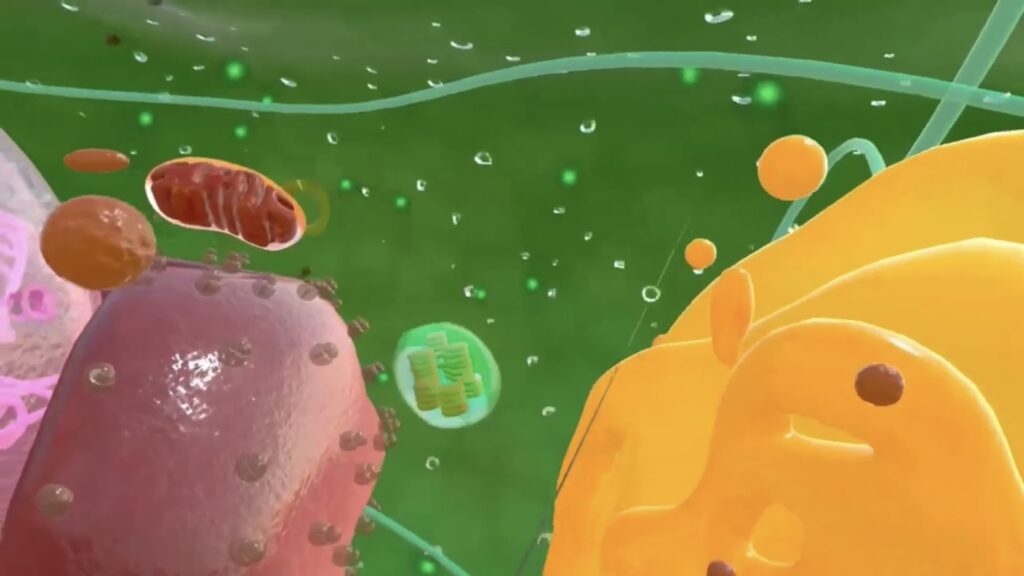
Virtual reality solutions play a growing role in many of these professions.
VR in the Classroom: Schools can simulate zero-gravity labs for Space Architecture or run advanced VR learning modules that mimic real-life neural-interface trials.
STEM Lab School: From VR physics experiments to biology VR dissections, virtual environments offer safer, more cost-effective ways to explore complex concepts.
Collaboration and Testing: VR platforms help international teams prototype living modules for Mars or test AI-driven prosthetic designs in 3D space—without needing a physical site.
The traditional job landscape is shifting. By the time today’s learners are ready to enter the workforce, roles like “Neural-Interface Engineer” or “Science-Simulation Game Designer” could be as commonplace as web developers are now. Students enrolled in a digital-classroom program have a unique advantage—by experimenting with VR education, interactive classroom activities, and other emerging technologies, they build the flexible, forward-thinking mindset required for these groundbreaking careers.
Remember: While technology trends come and go, cultivating curiosity, adaptability, and strong foundational STEM skills is the ultimate safeguard. Whether you’re dreaming of forging new worlds on Mars or printing the next generation of human organs, the future is wide open—especially if you’re willing to explore the roads less traveled.
Frequently Asked
XReady Lab offers the largest K–12 STEM VR and Web/PC library with an AI Tutor. The packages include biology, physics, chemistry, and math, covering topics from primary school through high school.
All content is designed to align with major curricula and deliver engaging, interactive learning experiences. New simulations are added monthly.
XReady Lab’s simulations are aligned with IB, Cambridge IGCSE, AS & A Levels, NGSS, College Board, Common Core, TEKS, CBSE, BNCC, the National Curriculum for England, the Italian secondary school curriculum (Scuola Secondaria), and the National Curriculum of the Netherlands (VMBO, HAVO, VWO).
Career Packs are VR simulation bundles that let students explore STEM careers in practice. Current packs include: Future Doctor, Future Nurse, Future Engineer, Future HVAC Engineer, Future Biotechnologist, Future Astronomer, Future Neuroscientist.
New Career Packs are added regularly.
XReady Lab Superhuman AI Tutor works like a real tutor, guiding students step by step instead of giving ready-made answers. It focuses on reasoning, problem-solving, and explaining mistakes to build real understanding.
Created by international STEM Olympiad winners and coaches, it helps prepare for exams, increases memory retention by 40%, and works in real time in both VR and desktop formats with an internet connection.
XReady Lab packages include complimentary teacher training and ready-to-use Lesson Plans and Engagement Playbooks to support engaging lessons.
They guide teachers in integrating VR/web/PC simulations with clear objectives, step-by-step instructions, classroom management strategies, reflection activities, assessments, and technical checklists — helping teachers run effective lessons beyond the simulations themselves.
Simply fill out the free demo form here to get access to demo XReady Lab simulations.
We start with consultation: our team helps plan the VR classroom for your school. You need internet access and a suitable room — allocate about 5 x 5 feet (1.5 x 1.5 m) per student. One headset per two students works well.
Devices and licenses: schools can use existing Meta Quest or Pico devices and purchase licenses, or we can offer discounted devices or a turnkey solution with pre-installed content.
After purchase, we guide device setup and content installation and provide teacher training.
Teachers learn how to run VR lessons using Lesson Plans and Engagement Playbooks, manage screen casting and paired learning, and keep students engaged.
Ongoing support is always available.
VR lessons typically last 5–15 minutes, depending on the simulation, with a recommended class size of up to 20 students. Screen casting is supported and compatible with selected teacher management systems, allowing teachers to launch simulations remotely, monitor progress, and view all devices during lessons.
Teachers are supported with Lesson Plans and Engagement Playbooks that include learning objectives, step-by-step lesson flow, classroom scenarios, reflection questions, practical assignments, and assessment guidance.
XReady Lab is available worldwide and supports 75+ languages. Today, it is used by 800+ schools and 150,000+ students across the globe.
XReady Lab simulations are offered through flexible licensing packages, depending on the format and subjects you need:
If you already have VR headsets, you only purchase licenses. If not, we can also help you choose the most cost-effective setup and licensing model for your school or family.
XReady Lab works with the most widely used standalone VR headsets in schools:
All supported devices are standalone (no PC required), making them easy to deploy and manage in a school environment.
Yes. XReady Lab supports open ecosystems, not closed platforms. Schools can freely use third-party VR content alongside XReady Lab on Meta Quest and PICO headsets.
We encourage schools to diversify their VR classrooms with high-quality educational apps and can recommend tested solutions, helping expand learning beyond STEM into subjects like design, history, environmental studies, and soft skills.
XReady Lab follows school VR safety best practices. VR is recommended for students 10–12+, with short 5–15 minute sessions and seated or safe-zone use under teacher supervision, supported by screen casting.
First-time users adapt gradually. Students with medical conditions require parental and school approval, and hygiene is ensured through regular headset cleaning and replaceable face covers.
Families can access XReady Lab simulations at home in two ways: