


Traditional “chalk-and-talk” lessons once carried classrooms, but in 2025 an hour-long lecture often feels like background noise to students who swipe, stream, and scroll before breakfast. William Jackson—PBL evangelist, co-founder of STEMWorx, and CEO of Bee Innovation Lab—has spent decades watching attention drift. His verdict is blunt: “Lectures no longer work; kids need participation.”
XReady Lab agrees. Every ed-tech company, we believe, should keep a direct line to educators like William, because they see the gap between what schools deliver and what modern learners actually need.
During our recent interview, William outlined three core problems in today’s classrooms:
Overreliance on recall. “Too much is tied to memorizing facts rather than doing,” he said.
Assessment overload. State exams measure short-term memory, not real-world application.
Passive pedagogy. Standing at the front and talking at students leaves curiosity untapped.
“Memorization has its place,” William conceded, “but it shouldn’t be the main focus.” Instead, he champions project-based learning (PBL)—a method that embeds content in hands-on challenges, linking theory to tangible outcomes.
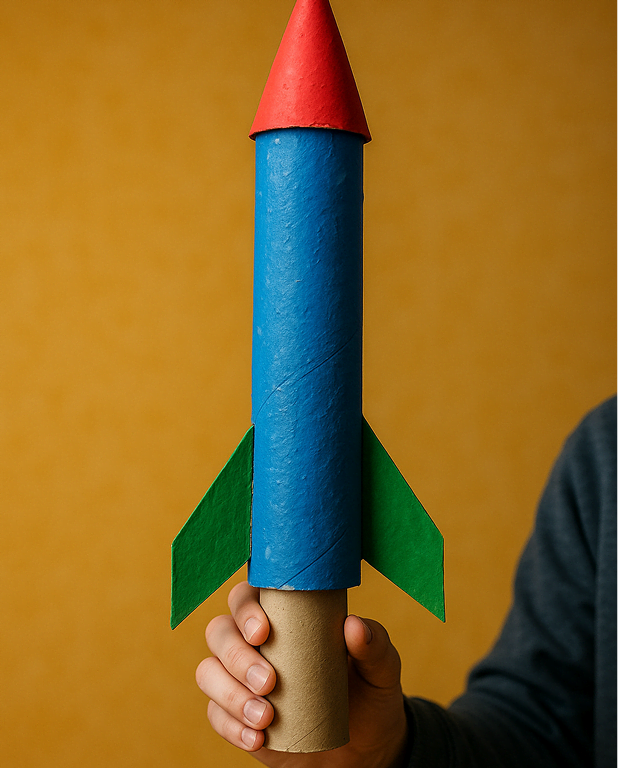
Grade level: High school
Materials: Paper-towel sleeve (body), student-made nose cone and fins
Process: Teams designed, painted, tested, and iterated their rockets
Cross-curricular links: Math (measurements, diagrams), art (custom designs), cultural studies (researching astronauts from students’ backgrounds)
“They enjoyed the creativity and the camaraderie,” William recalled. “At the end they took the rockets home, showing parents what they’d built.”
| Educational Goal | How PBL Meets It |
|---|---|
| Content mastery | Aerodynamics, measurement, Newton’s laws |
| Cultural awareness | Students researched astronauts who share their heritage, discovering Mexican and Puerto Rican pioneers they’d never heard of. |
| Meta-skills | Teamwork, design thinking, reflection on failures and successes |
| Family engagement | Finished rockets doubled as dinner-table conversation starters, blurring the line between school and home. |

Active cognition – Students do the science instead of copying notes.
Intrinsic motivation – Personal design choices and cultural connections spark ownership.
Skill stack – Communication, coordination, and creativity develop alongside core subjects.
Authentic assessment – A successful rocket launch proves understanding far better than a multiple-choice question.
“Project development skills teach communication, coordination, cooperation, and imagination,” William noted, underscoring why employers value makers over memorizers.

Hands-on projects can be resource-intensive, but William’s strategy is clear:
Tap nonprofits and local industry. Tennessee Valley Authority funds his underwater-robotics teams; St. Jude scientists mentor his students.
Leverage universities. Early-career researchers often need outreach hours for grants and gladly visit classrooms.
Integrate immersive tech wisely. A class set of headsets lets students prototype rockets in a virtual wind tunnel or tour historical launch sites—costly in real life, affordable in VR.
These partnerships echo XReady Lab’s design mantra: keep educators in the loop so technology solves real classroom challenges, not hypothetical ones.
The future of STEM education won’t be built on longer lectures or tougher tests. It will rise from paper-towel rockets, community partnerships, and digital tools that turn passive observers into active innovators.
William Jackson’s journey proves that when students design, build, and test, they learn science, self-advocacy, and possibility all at once. XReady Lab is honored to have him in our STEM Innovators community—and we’re committed to amplifying voices like his until every classroom moves from talk-and-test to build-and-believe.
Frequently Asked
XReady Lab offers the largest K–12 STEM VR and Web/PC library with an AI Tutor. The packages include biology, physics, chemistry, and math, covering topics from primary school through high school.
All content is designed to align with major curricula and deliver engaging, interactive learning experiences. New simulations are added monthly.
XReady Lab’s simulations are aligned with IB, Cambridge IGCSE, AS & A Levels, NGSS, College Board, Common Core, TEKS, CBSE, BNCC, the National Curriculum for England, the Italian secondary school curriculum (Scuola Secondaria), and the National Curriculum of the Netherlands (VMBO, HAVO, VWO).
Career Packs are VR simulation bundles that let students explore STEM careers in practice. Current packs include: Future Doctor, Future Nurse, Future Engineer, Future HVAC Engineer, Future Biotechnologist, Future Astronomer, Future Neuroscientist.
New Career Packs are added regularly.
XReady Lab Superhuman AI Tutor works like a real tutor, guiding students step by step instead of giving ready-made answers. It focuses on reasoning, problem-solving, and explaining mistakes to build real understanding.
Created by international STEM Olympiad winners and coaches, it helps prepare for exams, increases memory retention by 40%, and works in real time in both VR and desktop formats with an internet connection.
XReady Lab packages include complimentary teacher training and ready-to-use Lesson Plans and Engagement Playbooks to support engaging lessons.
They guide teachers in integrating VR/web/PC simulations with clear objectives, step-by-step instructions, classroom management strategies, reflection activities, assessments, and technical checklists — helping teachers run effective lessons beyond the simulations themselves.
Simply fill out the free demo form here to get access to demo XReady Lab simulations.
We start with consultation: our team helps plan the VR classroom for your school. You need internet access and a suitable room — allocate about 5 x 5 feet (1.5 x 1.5 m) per student. One headset per two students works well.
Devices and licenses: schools can use existing Meta Quest or Pico devices and purchase licenses, or we can offer discounted devices or a turnkey solution with pre-installed content.
After purchase, we guide device setup and content installation and provide teacher training.
Teachers learn how to run VR lessons using Lesson Plans and Engagement Playbooks, manage screen casting and paired learning, and keep students engaged.
Ongoing support is always available.
VR lessons typically last 5–15 minutes, depending on the simulation, with a recommended class size of up to 20 students. Screen casting is supported and compatible with selected teacher management systems, allowing teachers to launch simulations remotely, monitor progress, and view all devices during lessons.
Teachers are supported with Lesson Plans and Engagement Playbooks that include learning objectives, step-by-step lesson flow, classroom scenarios, reflection questions, practical assignments, and assessment guidance.
XReady Lab is available worldwide and supports 75+ languages. Today, it is used by 800+ schools and 150,000+ students across the globe.
XReady Lab simulations are offered through flexible licensing packages, depending on the format and subjects you need:
If you already have VR headsets, you only purchase licenses. If not, we can also help you choose the most cost-effective setup and licensing model for your school or family.
XReady Lab works with the most widely used standalone VR headsets in schools:
All supported devices are standalone (no PC required), making them easy to deploy and manage in a school environment.
Yes. XReady Lab supports open ecosystems, not closed platforms. Schools can freely use third-party VR content alongside XReady Lab on Meta Quest and PICO headsets.
We encourage schools to diversify their VR classrooms with high-quality educational apps and can recommend tested solutions, helping expand learning beyond STEM into subjects like design, history, environmental studies, and soft skills.
XReady Lab follows school VR safety best practices. VR is recommended for students 10–12+, with short 5–15 minute sessions and seated or safe-zone use under teacher supervision, supported by screen casting.
First-time users adapt gradually. Students with medical conditions require parental and school approval, and hygiene is ensured through regular headset cleaning and replaceable face covers.
Families can access XReady Lab simulations at home in two ways:
