


How do I support my kid when they get frustrated with math homework?
This happens often because summer break wipes out a big part of last year’s progress. Fractions, multiplication, even basic problem-solving can suddenly feel like brand-new topics. The result is frustration, anxiety, and tears. The best way to help is twofold: first, support them emotionally so they don’t feel “dumb,” and then use simple, confidence-building strategies to gradually rebuild math skills.
Every September, millions of families hit the same wall. After a long summer, kids sit down for their first assignments and discover they can’t remember what once felt easy. According to research, students lose 25–39% of their academic progress over the summer. That gap is especially painful in math, where each step builds on the previous one.

So when a 10-year-old stares at fractions and says, “I forgot everything, I’m dumb,” it’s not just about numbers. It’s about identity and confidence. Early struggles can make kids believe they’re “bad at math” even when they’re perfectly capable of catching up.
Telling a child “this is easy” or “don’t cry” usually backfires. Instead, acknowledge the difficulty:
“Yes, fractions can be tricky. That doesn’t mean you’re dumb. It just means your brain is warming up after summer.”
Validation helps kids feel safe enough to keep trying.
Parents shared strategies that turn negative self-talk into humor or perspective. One mom pretended to get “angry” at her daughter: “Nobody calls my baby stupid! She’s amazing and we’ll figure this out together.” It made her laugh and broke the emotional spiral.
Abstract worksheets often fuel anxiety. But the same child who cries over fractions may happily double cookie recipes, cut pizza slices, or measure flour for pancakes. Cooking is a powerful way to bring math into the real world. Try this progression:
Follow a recipe together.
Next time, double it.
Then halve it.
Finally, figure out 2½ batches.
Suddenly fractions are no longer abstract—they’re delicious.
Ask: “If your best friend got this wrong, would you call them dumb?” Of course not. Then why be harsher to yourself? Teaching kids to treat themselves with kindness is as important as teaching the math itself.
Parents on Reddit and educators in classrooms often return to the same set of reliable resources. The mix includes traditional tutoring, digital platforms, and playful learning.
Free, structured, and adaptive. Parents recommend starting with lower levels to rebuild mastery step by step. Kids gain confidence by conquering basics before advancing.
https://www.khanacademy.org
These in-person tutoring programs emphasize repetition and mastery. Families report reduced math anxiety and stronger long-term confidence after regular sessions. They require time and cost but deliver consistency.
https://www.kumon.com | https://www.mathnasium.com
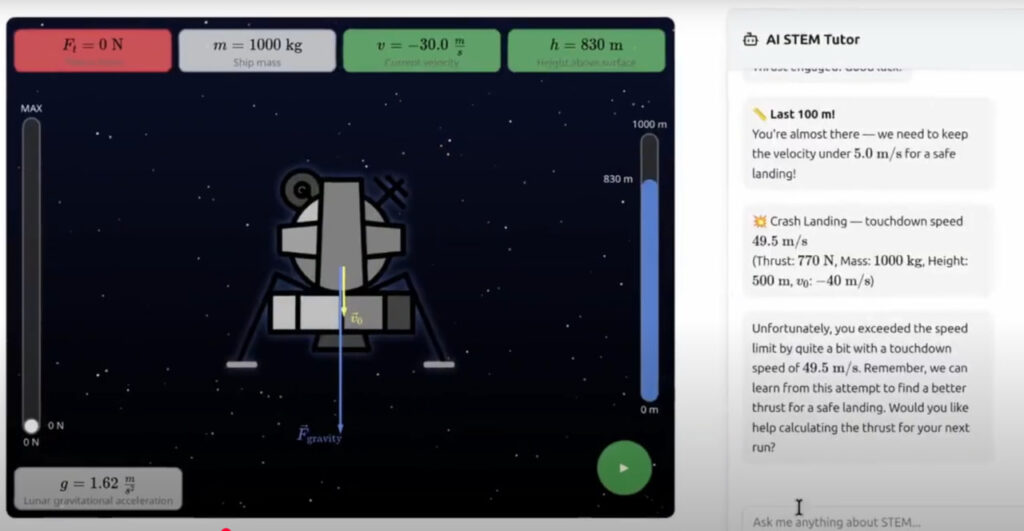
For families who prefer flexible online tools, XReady Lab offers web-based math simulations supported by an AI STEM tutor. What is an AI tutor? It is a smart assistant that adapts to your child’s pace, helps them review, explains mistakes gently, and provides practice without judgment.
Check it here: XReady Lab Platform
Don’t underestimate simple tools:
Throw a ball back and forth while asking quick addition or fraction questions.
Turn practice into a “level-up” game, where each correct answer unlocks a funny hat, sticker, or silly family challenge.
Track progress on a visible chart so improvement feels tangible.
These little tricks make practice less of a chore and more of a shared challenge.
Math tears in September don’t mean your child is “bad at math.” They mean your child is human. Everyone forgets over summer, and everyone struggles at first. What matters most is the atmosphere you create.
If you panic, your child will panic more.
If you make failure shameful, they’ll hide mistakes instead of learning from them.
But if you validate, laugh, and provide tools, their confidence will rebuild quickly.
The first weeks of school test both kids and parents. But tears over fractions can turn into smiles over cookies, laughter at silly games, and pride in small victories. With patience, smart tools, and a little creativity, math homework stops being the enemy and becomes a playground for growth.
Frequently Asked
XReady Lab offers the largest K–12 STEM VR and Web/PC library with an AI Tutor. The packages include biology, physics, chemistry, and math, covering topics from primary school through high school.
All content is designed to align with major curricula and deliver engaging, interactive learning experiences. New simulations are added monthly.
XReady Lab’s simulations are aligned with IB, Cambridge IGCSE, AS & A Levels, NGSS, College Board, Common Core, TEKS, CBSE, BNCC, the National Curriculum for England, the Italian secondary school curriculum (Scuola Secondaria), and the National Curriculum of the Netherlands (VMBO, HAVO, VWO).
Career Packs are VR simulation bundles that let students explore STEM careers in practice. Current packs include: Future Doctor, Future Nurse, Future Engineer, Future HVAC Engineer, Future Biotechnologist, Future Astronomer, Future Neuroscientist.
New Career Packs are added regularly.
XReady Lab Superhuman AI Tutor works like a real tutor, guiding students step by step instead of giving ready-made answers. It focuses on reasoning, problem-solving, and explaining mistakes to build real understanding.
Created by international STEM Olympiad winners and coaches, it helps prepare for exams, increases memory retention by 40%, and works in real time in both VR and desktop formats with an internet connection.
XReady Lab packages include complimentary teacher training and ready-to-use Lesson Plans and Engagement Playbooks to support engaging lessons.
They guide teachers in integrating VR/web/PC simulations with clear objectives, step-by-step instructions, classroom management strategies, reflection activities, assessments, and technical checklists — helping teachers run effective lessons beyond the simulations themselves.
Simply fill out the free demo form here to get access to demo XReady Lab simulations.
We start with consultation: our team helps plan the VR classroom for your school. You need internet access and a suitable room — allocate about 5 x 5 feet (1.5 x 1.5 m) per student. One headset per two students works well.
Devices and licenses: schools can use existing Meta Quest or Pico devices and purchase licenses, or we can offer discounted devices or a turnkey solution with pre-installed content.
After purchase, we guide device setup and content installation and provide teacher training.
Teachers learn how to run VR lessons using Lesson Plans and Engagement Playbooks, manage screen casting and paired learning, and keep students engaged.
Ongoing support is always available.
VR lessons typically last 5–15 minutes, depending on the simulation, with a recommended class size of up to 20 students. Screen casting is supported and compatible with selected teacher management systems, allowing teachers to launch simulations remotely, monitor progress, and view all devices during lessons.
Teachers are supported with Lesson Plans and Engagement Playbooks that include learning objectives, step-by-step lesson flow, classroom scenarios, reflection questions, practical assignments, and assessment guidance.
XReady Lab is available worldwide and supports 75+ languages. Today, it is used by 800+ schools and 150,000+ students across the globe.
XReady Lab simulations are offered through flexible licensing packages, depending on the format and subjects you need:
If you already have VR headsets, you only purchase licenses. If not, we can also help you choose the most cost-effective setup and licensing model for your school or family.
XReady Lab works with the most widely used standalone VR headsets in schools:
All supported devices are standalone (no PC required), making them easy to deploy and manage in a school environment.
Yes. XReady Lab supports open ecosystems, not closed platforms. Schools can freely use third-party VR content alongside XReady Lab on Meta Quest and PICO headsets.
We encourage schools to diversify their VR classrooms with high-quality educational apps and can recommend tested solutions, helping expand learning beyond STEM into subjects like design, history, environmental studies, and soft skills.
XReady Lab follows school VR safety best practices. VR is recommended for students 10–12+, with short 5–15 minute sessions and seated or safe-zone use under teacher supervision, supported by screen casting.
First-time users adapt gradually. Students with medical conditions require parental and school approval, and hygiene is ensured through regular headset cleaning and replaceable face covers.
Families can access XReady Lab simulations at home in two ways:
