


Question: Can VR career simulations really help students choose their future path?
Answer: Yes. Virtual reality makes professions visible, safe, and hands-on. With the right simulations, kids not only watch but experience work – whether that’s lifting boxes in a warehouse or running an industrial dishwasher in a kitchen. These immersive lessons give students respect for different roles, reduce stereotypes, and help them make smarter career choices.
Traditional career days often rely on guest talks, brochures, or short field trips. Valuable, yes, but limited. VR expands these opportunities by letting students step into real professions instantly. They can understand what the work feels like, rather than just hearing about it.
For schools, VR career simulations bring three big wins:
Accessibility: Students can test professions without leaving campus.
Safety: They explore complex or risky environments in a controlled way.
Value: Schools demonstrate innovation and prepare students for the labor market while also boosting their image among parents.
Beyond STEM classes, VR opens the door to broader career education. Whether it is a machine shop, a construction site, or a kitchen, students experience the rhythm, challenges, and responsibilities of real jobs.
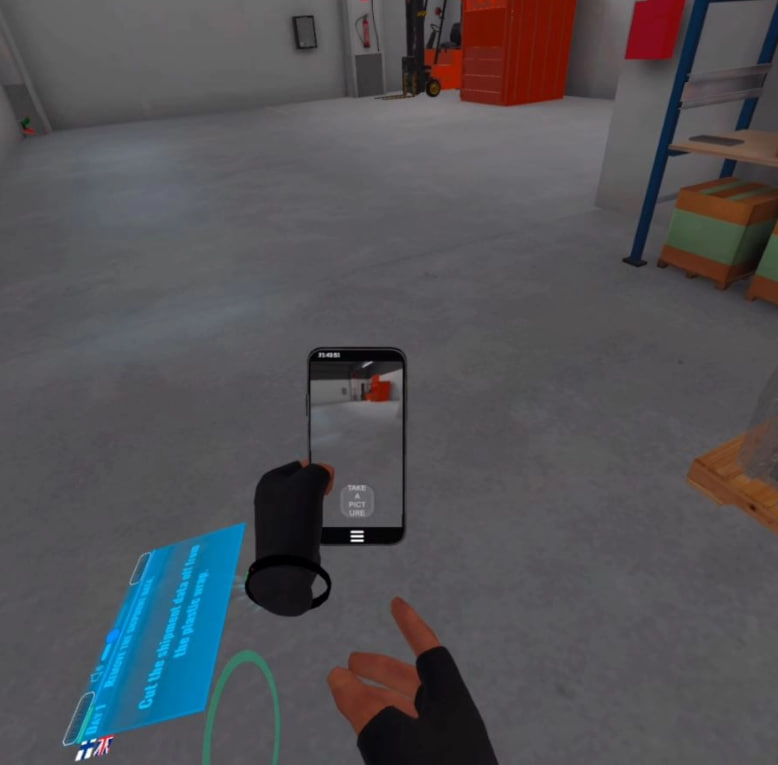
VREW Storage Worker Simulation
In this immersive warehouse simulation, students step into the role of a storage worker. They practice:
Organizing goods on shelves
Following safety protocols
Using equipment correctly to reduce errors
For schools, this module is more than “gameplay.” It develops discipline, attention to detail, and an understanding of logistics – all crucial in today’s global economy.
Suggested classroom activity:
Begin with a discussion: “Why do warehouses matter in everyday life?” (Connect to e-commerce and supply chains).
Let students try the simulation in small groups.
Afterward, hold a reflection session: What skills were needed? What was harder than expected? How does this connect to math (counting inventory) or physical education (ergonomics and safe lifting)?
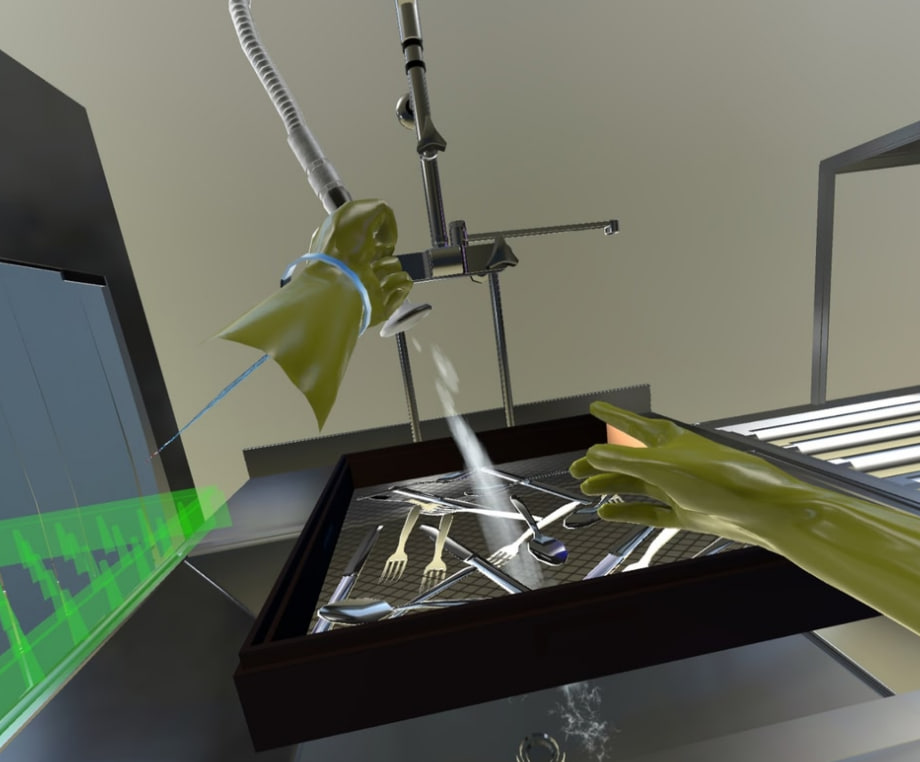
VREW Industrial Dishwasher Simulation
At first glance, dishwashing may sound simple. But in a real kitchen, it is a critical role. This simulation lets students:
Manage industrial kitchen tools
Understand hygiene standards
Work under time pressure
It teaches both practical skills and respect for professions that often go unnoticed but are vital in hospitality and food service.
Suggested classroom activity:
Start with a question: “What happens behind the scenes in a restaurant?”
Run the simulation to show the real pace and pressure.
Discuss: What skills beyond “washing dishes” did this job require? (Teamwork, speed, responsibility).
Invite a guest speaker – maybe a local chef – to talk about how every role supports the restaurant team.
Introduction: Share background about the profession, its role in society, and why it matters.
VR Experience: Students immerse themselves in the simulation in rotation.
Reflection: Group discussion about skills, challenges, and respect for the role.
Connection: Link the experience back to school subjects. For example, warehouse logistics connect to math and economics, while kitchen work relates to hygiene and chemistry.
Remove stigma: Talk openly about why every profession matters, and why no job should be dismissed.
Career guidance with VR is not just about choosing a job. It is about:
Developing empathy and respect for different professions
Broadening students’ horizons beyond “prestige” careers
Helping teenagers see the value of practical skills
Preparing students for the reality of the modern labor market
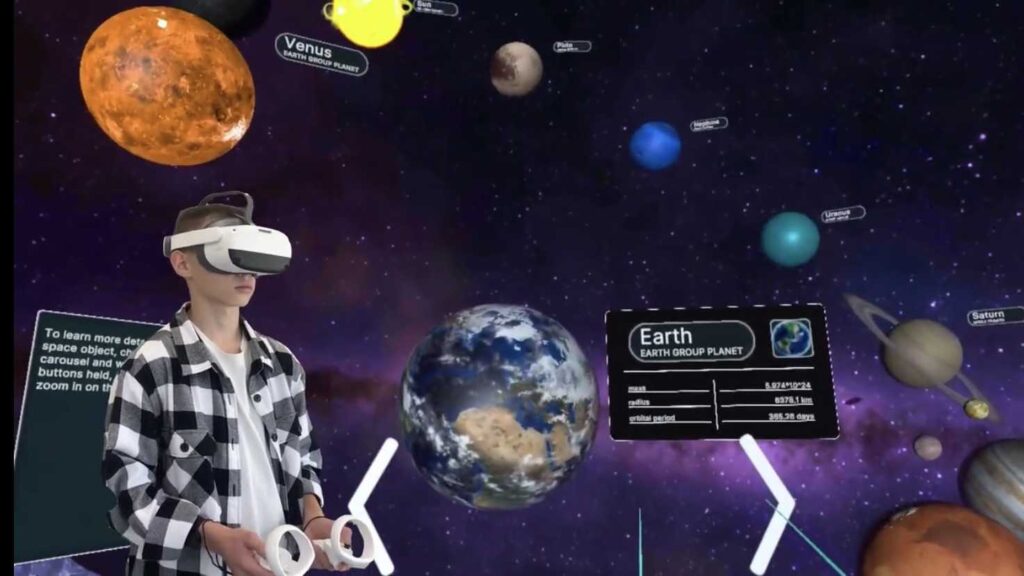
The first weeks of VR career education may start with curiosity and laughter, but they can end with something more lasting: respect, skills, and informed choices.
A warehouse simulation shows the scale of logistics, a kitchen simulation shows teamwork under pressure. Both give students more than a glimpse – they provide a safe rehearsal for real life.
Schools can contact us for advice — we will help put together a VR package that includes both STEM and other disciplines and career simulations.
Together, we can help students discover professions early, explore safely, and prepare for the future.
Frequently Asked
XReady Lab offers the largest K–12 STEM VR and Web/PC library with an AI Tutor. The packages include biology, physics, chemistry, and math, covering topics from primary school through high school.
All content is designed to align with major curricula and deliver engaging, interactive learning experiences. New simulations are added monthly.
XReady Lab’s simulations are aligned with IB, Cambridge IGCSE, AS & A Levels, NGSS, College Board, Common Core, TEKS, CBSE, BNCC, the National Curriculum for England, the Italian secondary school curriculum (Scuola Secondaria), and the National Curriculum of the Netherlands (VMBO, HAVO, VWO).
Career Packs are VR simulation bundles that let students explore STEM careers in practice. Current packs include: Future Doctor, Future Nurse, Future Engineer, Future HVAC Engineer, Future Biotechnologist, Future Astronomer, Future Neuroscientist.
New Career Packs are added regularly.
XReady Lab Superhuman AI Tutor works like a real tutor, guiding students step by step instead of giving ready-made answers. It focuses on reasoning, problem-solving, and explaining mistakes to build real understanding.
Created by international STEM Olympiad winners and coaches, it helps prepare for exams, increases memory retention by 40%, and works in real time in both VR and desktop formats with an internet connection.
XReady Lab packages include complimentary teacher training and ready-to-use Lesson Plans and Engagement Playbooks to support engaging lessons.
They guide teachers in integrating VR/web/PC simulations with clear objectives, step-by-step instructions, classroom management strategies, reflection activities, assessments, and technical checklists — helping teachers run effective lessons beyond the simulations themselves.
Simply fill out the free demo form here to get access to demo XReady Lab simulations.
We start with consultation: our team helps plan the VR classroom for your school. You need internet access and a suitable room — allocate about 5 x 5 feet (1.5 x 1.5 m) per student. One headset per two students works well.
Devices and licenses: schools can use existing Meta Quest or Pico devices and purchase licenses, or we can offer discounted devices or a turnkey solution with pre-installed content.
After purchase, we guide device setup and content installation and provide teacher training.
Teachers learn how to run VR lessons using Lesson Plans and Engagement Playbooks, manage screen casting and paired learning, and keep students engaged.
Ongoing support is always available.
VR lessons typically last 5–15 minutes, depending on the simulation, with a recommended class size of up to 20 students. Screen casting is supported and compatible with selected teacher management systems, allowing teachers to launch simulations remotely, monitor progress, and view all devices during lessons.
Teachers are supported with Lesson Plans and Engagement Playbooks that include learning objectives, step-by-step lesson flow, classroom scenarios, reflection questions, practical assignments, and assessment guidance.
XReady Lab is available worldwide and supports 75+ languages. Today, it is used by 800+ schools and 150,000+ students across the globe.
XReady Lab simulations are offered through flexible licensing packages, depending on the format and subjects you need:
If you already have VR headsets, you only purchase licenses. If not, we can also help you choose the most cost-effective setup and licensing model for your school or family.
XReady Lab works with the most widely used standalone VR headsets in schools:
All supported devices are standalone (no PC required), making them easy to deploy and manage in a school environment.
Yes. XReady Lab supports open ecosystems, not closed platforms. Schools can freely use third-party VR content alongside XReady Lab on Meta Quest and PICO headsets.
We encourage schools to diversify their VR classrooms with high-quality educational apps and can recommend tested solutions, helping expand learning beyond STEM into subjects like design, history, environmental studies, and soft skills.
XReady Lab follows school VR safety best practices. VR is recommended for students 10–12+, with short 5–15 minute sessions and seated or safe-zone use under teacher supervision, supported by screen casting.
First-time users adapt gradually. Students with medical conditions require parental and school approval, and hygiene is ensured through regular headset cleaning and replaceable face covers.
Families can access XReady Lab simulations at home in two ways:
