


Ask almost any parent what makes learning “work” at home, and the first answer is usually curriculum. Which math program? Which reading list? Which science textbook?
But in reality, before kids even touch a workbook, they’ve already decided how they feel about learning. The atmosphere sets the stage.
A cluttered, stressful environment = resistance.
A calm, inviting space = curiosity.
Think back to your own childhood: do you remember every lesson? Probably not. But you might remember the smell of pancakes before a big school day, or the feeling of your teacher hanging student artwork on the walls. These small details create the emotional connection that makes learning stick.
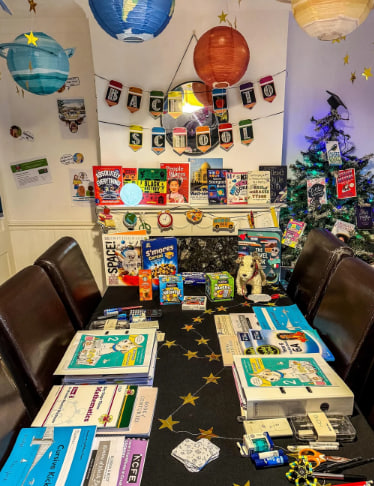
On Reddit, one homeschooling mom posted about preparing her home-ed room:
“We start back to home ed tomorrow and I’m SO excited for the new year! Just set up our home ed room all ready to go and the girls are buzzing with fun energy! Tomorrow we will have a fun breakfast, take photos, go to the park, get a hot chocolate and start our curricula for the year. We’ve got some ‘not back to school’ picnics planned too as well as an outing, cooking, crafts and group as. It’s going to be fantastic and I can’t wait.”
Other parents jumped in:
“Love this!! I bet they are so excited!!! Great job!” – Known_Conflict8492
“This is the best idea I’ve seen yet! I’m a homeschooling grandma with a 5 and 3 year old.” – globarfancy
“My daughter is obsessed with astronomy. I’m decorating our homeschool room with planet lanterns.” – MCSweatpants
Notice what they’re talking about. Not grades. Not strict schedules. But feelings, rituals, and atmosphere.
You don’t need to transform your home into a Pinterest-perfect classroom. The truth is: kids notice little things.
1. Planet Lanterns – bring the universe inside
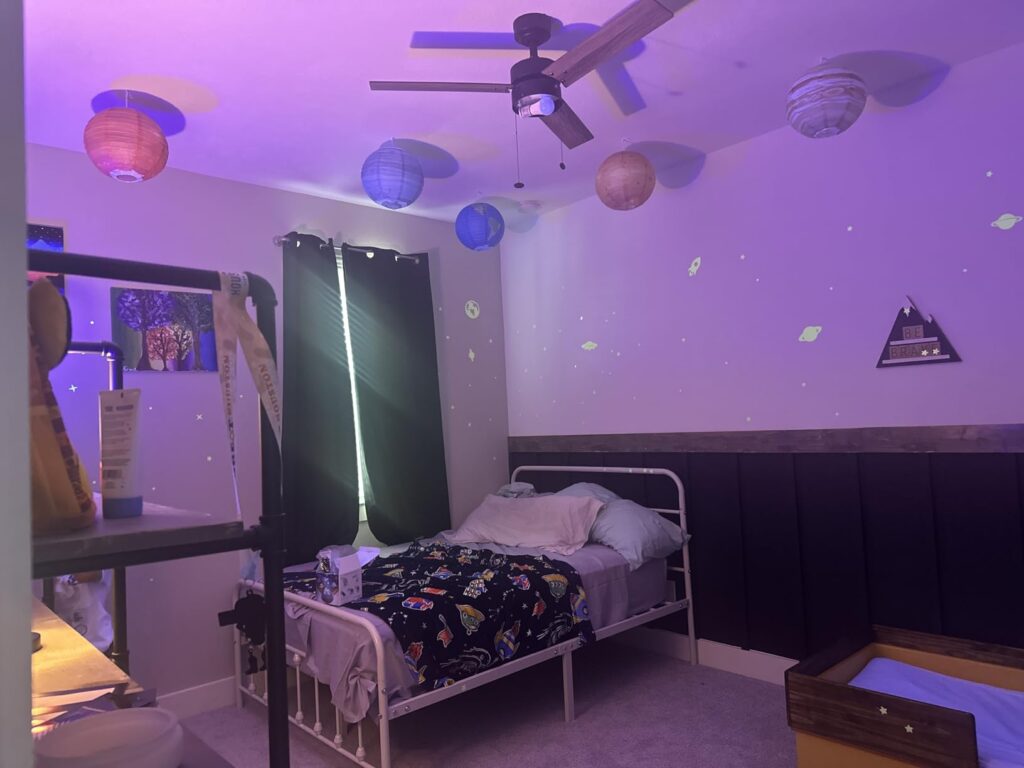
One of the most talked-about additions was a set of Solar System Paper Lanterns. Imagine a room glowing softly with Earth, Saturn, or Neptune hanging from the ceiling. Kids walk in, and instantly they feel like explorers, not just students.
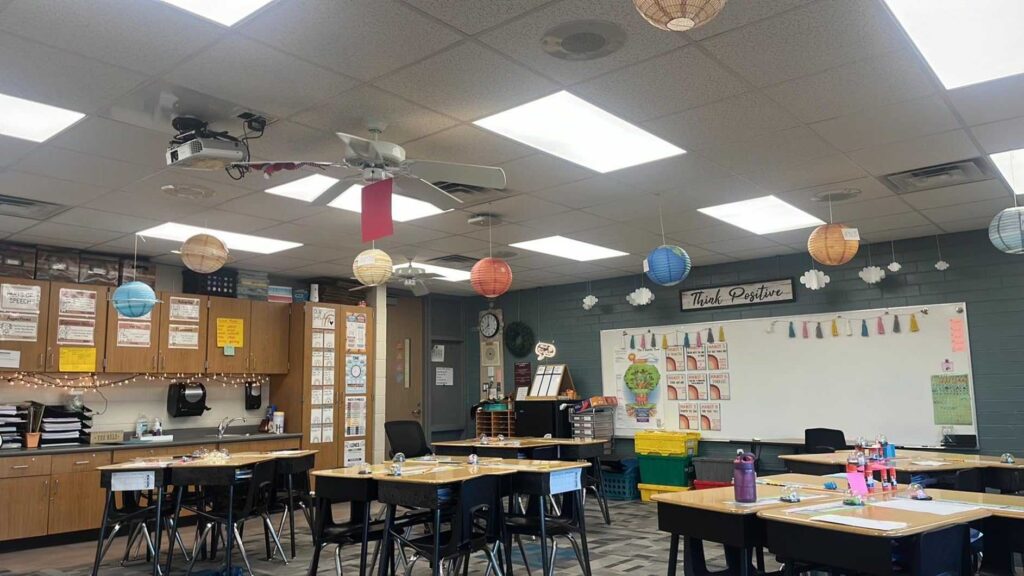
👉 Solar System Lanterns on Amazon
Why it works: thematic decor sets the mood. When the room whispers “this is an adventure,” kids absorb it without words.
2. Soft lighting changes everything
Many parents underestimate how much lighting shapes behavior. Harsh, cold lights feel like a doctor’s office. Soft, warm lighting feels like a safe nook. Even a simple string of fairy lights like these can make a math lesson feel like storytime.
3. The “pride wall”
A corkboard or whiteboard where kids can pin their drawings, science notes, or even silly doodles. This turns learning into something visible and celebrated. Children feel their work matters when it’s displayed.
4. Sensory anchors
Don’t ignore sound and smell. Play quiet background music during reading (instrumental or classical). Light a mild-scent candle when starting lessons — over time, kids associate the scent with focus and calm.
Atmosphere is not just furniture. It’s also rituals. Parents shared small habits that made their days smoother:
First-day celebration: special breakfast, family photos, maybe balloons. Kids remember “back-to-school day” as fun, not dreaded.
Weekly rhythms: Monday = reading with hot chocolate. Wednesday = outdoor science. Friday = creative projects.
Seasonal themes: autumn leaves for art lessons, Christmas decorations for winter writing prompts, planet lanterns for astronomy week.
One mom wrote:
“We have a Saturday ritual of going to the library together. The kids don’t always beg for it, but once we’re there, they light up. It’s part of our rhythm now, and it makes reading feel like an adventure, not homework.”
Educational research backs this up: children learn better when they feel safe and emotionally engaged. A good learning environment does three things:
Signals importance – decorated, organized spaces tell kids: “this matters.”
Reduces resistance – cozy lighting, fun rituals, and positive vibes lower stress.
Encourages curiosity – when the room feels playful, children explore more willingly.
In other words, atmosphere isn’t fluff. It’s strategy.
Flexible spaces: a corner with cushions for reading, a table for crafts, a rug for group activities. Movement helps kids reset focus.
Personalization: let kids choose a poster, plant, or decoration. Ownership builds pride.
Nature connection: even one plant on the desk boosts calm and focus. Or rotate outdoor lessons when possible.
And remember: it doesn’t need to be perfect. Kids don’t care if your homeschool “classroom” is a dining room with crayons on the table. They care if it feels theirs.
At the end of the day, it’s not the perfect curriculum that makes kids light up — it’s the atmosphere you create around it. A room with planet lanterns, fairy lights, and a proud wall of drawings feels like an invitation, not a chore.
As one Reddit parent put it:
“Surprise your children by treating their education as a celebration. Make day one as special as a birthday party, and the rest of the year as gentle and nourishing as your love.”
That’s the real secret: kids don’t just need lessons. They need atmosphere, rituals, and a sense that learning is worth celebrating.
Frequently Asked
XReady Lab offers the largest K–12 STEM VR and Web/PC library with an AI Tutor. The packages include biology, physics, chemistry, and math, covering topics from primary school through high school.
All content is designed to align with major curricula and deliver engaging, interactive learning experiences. New simulations are added monthly.
XReady Lab’s simulations are aligned with IB, Cambridge IGCSE, AS & A Levels, NGSS, College Board, Common Core, TEKS, CBSE, BNCC, the National Curriculum for England, the Italian secondary school curriculum (Scuola Secondaria), and the National Curriculum of the Netherlands (VMBO, HAVO, VWO).
Career Packs are VR simulation bundles that let students explore STEM careers in practice. Current packs include: Future Doctor, Future Nurse, Future Engineer, Future HVAC Engineer, Future Biotechnologist, Future Astronomer, Future Neuroscientist.
New Career Packs are added regularly.
XReady Lab Superhuman AI Tutor works like a real tutor, guiding students step by step instead of giving ready-made answers. It focuses on reasoning, problem-solving, and explaining mistakes to build real understanding.
Created by international STEM Olympiad winners and coaches, it helps prepare for exams, increases memory retention by 40%, and works in real time in both VR and desktop formats with an internet connection.
XReady Lab packages include complimentary teacher training and ready-to-use Lesson Plans and Engagement Playbooks to support engaging lessons.
They guide teachers in integrating VR/web/PC simulations with clear objectives, step-by-step instructions, classroom management strategies, reflection activities, assessments, and technical checklists — helping teachers run effective lessons beyond the simulations themselves.
Simply fill out the free demo form here to get access to demo XReady Lab simulations.
We start with consultation: our team helps plan the VR classroom for your school. You need internet access and a suitable room — allocate about 5 x 5 feet (1.5 x 1.5 m) per student. One headset per two students works well.
Devices and licenses: schools can use existing Meta Quest or Pico devices and purchase licenses, or we can offer discounted devices or a turnkey solution with pre-installed content.
After purchase, we guide device setup and content installation and provide teacher training.
Teachers learn how to run VR lessons using Lesson Plans and Engagement Playbooks, manage screen casting and paired learning, and keep students engaged.
Ongoing support is always available.
VR lessons typically last 5–15 minutes, depending on the simulation, with a recommended class size of up to 20 students. Screen casting is supported and compatible with selected teacher management systems, allowing teachers to launch simulations remotely, monitor progress, and view all devices during lessons.
Teachers are supported with Lesson Plans and Engagement Playbooks that include learning objectives, step-by-step lesson flow, classroom scenarios, reflection questions, practical assignments, and assessment guidance.
XReady Lab is available worldwide and supports 75+ languages. Today, it is used by 800+ schools and 150,000+ students across the globe.
XReady Lab simulations are offered through flexible licensing packages, depending on the format and subjects you need:
If you already have VR headsets, you only purchase licenses. If not, we can also help you choose the most cost-effective setup and licensing model for your school or family.
XReady Lab works with the most widely used standalone VR headsets in schools:
All supported devices are standalone (no PC required), making them easy to deploy and manage in a school environment.
Yes. XReady Lab supports open ecosystems, not closed platforms. Schools can freely use third-party VR content alongside XReady Lab on Meta Quest and PICO headsets.
We encourage schools to diversify their VR classrooms with high-quality educational apps and can recommend tested solutions, helping expand learning beyond STEM into subjects like design, history, environmental studies, and soft skills.
XReady Lab follows school VR safety best practices. VR is recommended for students 10–12+, with short 5–15 minute sessions and seated or safe-zone use under teacher supervision, supported by screen casting.
First-time users adapt gradually. Students with medical conditions require parental and school approval, and hygiene is ensured through regular headset cleaning and replaceable face covers.
Families can access XReady Lab simulations at home in two ways:
