


There is something quietly powerful about preparing a child for a profession long before they step into college. Not pressure. Not expectations. Just a clear sense of direction that grows slowly, the same way confidence grows. Schools often talk about helping kids find a path, but in reality a path has to be built. Brick by brick. Class by class. Choice by choice.
And one of the careers that will matter even more in the next decade is nursing. The world is aging, hospitals are overloaded, chronic illnesses are rising, and the need for skilled, calm, compassionate nurses keeps growing every year. This is not a small trend. This is a long wave that will keep pushing the demand upward for decades.
That is why schools are now creating early preparation packages for future careers. One of the clearest and most practical examples is the Future Nurse Package, built around VR simulations from XReadyLab. The goal is simple: give students real understanding of the human body and the biological processes they will deal with in medical school and later in work.
Before I go into what is inside, here is the link for schools that want to join the pilot or request a demo:
https://xreadylab.com/request-demo-page/launch-in-classrooms/?utm_source=website&utm_medium=blogeng&utm_campaign=vrfuturenurse1225
Use it if your school wants to see the package in action.
A child does not wake up at 17 and magically know that nursing fits them. They discover it by seeing, touching, exploring. When schools bring real career exploration into classrooms, a student begins to understand:
“Ah, so this is how the body works. This is what a nurse really handles. This is not just a job, it is a real-life mission.”
Medical-related careers require a specific type of thinking. Anatomy, physiology, molecular processes, cell structures. These subjects are easier when introduced early, especially in interactive formats. Passive videos do not work. Children forget. Everyone forgets.
VR changes that.
Because when a student assembles the structure of the eye like a Lego set, layer after layer, from the cornea to the retina, memory sticks. When they walk inside an alveolus, watch how gas exchange happens, or take apart the nephron piece by piece, the knowledge becomes personal, not abstract.
Studies show VR improves memory retention by up to 40 percent, and honestly, if you have ever seen a student in a headset, completely immersed in an organ or a cell, you know why.
And again, if your school wants to try it, the demo link is here:
https://xreadylab.com/request-demo-page/launch-in-classrooms/?utm_source=website&utm_medium=blogeng&utm_campaign=vrfuturenurse1225
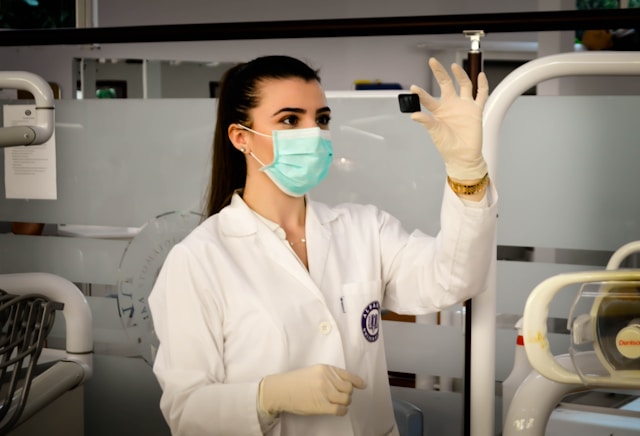
There is no mystery here. The demand curve is already visible:
This means one thing: students who start preparing now will enter a market where their skills are not only needed, but deeply valued.
Schools that prepare students early are giving them a head start. Not just academically. Emotionally too. Because medical professions require calm hands and clear thinking under pressure. The earlier these habits start forming, the better.
The package is built around a series of VR simulations aligned with:
IB, NGSS, TEKS, College Board, Cambridge, CBSE, and many national programs.
This matters, because teachers do not have to reinvent the curriculum. Everything fits into what they already teach.
Each package includes:
This is not just VR. It is a full learning ecosystem. Below is what the labs look like.
Students assemble and explore the human eye from scratch.
Understand how the body filters waste.
Piece by piece exploration of filtration and reabsorption.
Study structure, joints, and movement.
Follow airflow and understand oxygen transport.
From mouth to intestines, every step visible.
See how neurons communicate and how signals travel.
Understand hormones and control systems.
Trace blood flow and observe cardiac function in motion.
These are essential for future nurses. Without them, anatomy is only half understood.
Students explore the membrane, nucleus, mitochondria, ER, Golgi, lysosomes.
They reinforce their understanding through direct manipulation.
They learn the phases not by memorizing but by reconstructing them.
Hands on understanding of tissue regeneration.
Study type 1 and type 2 pneumocytes, macrophages, and diffusion processes.
Students work with DNA, ATP, and enzymes, exploring how the body neutralizes damage.
Nursing students who understand metabolism early enter medical school with an unfair advantage.
Identify inputs, outputs, and each step visually.
Understand acetyl-CoA, pyruvate, and NAD interactions.
Visualize enzyme sequences and energy carriers.
Watch ATP synthase work in real time, see hydrogen gradients, and understand cellular energy.
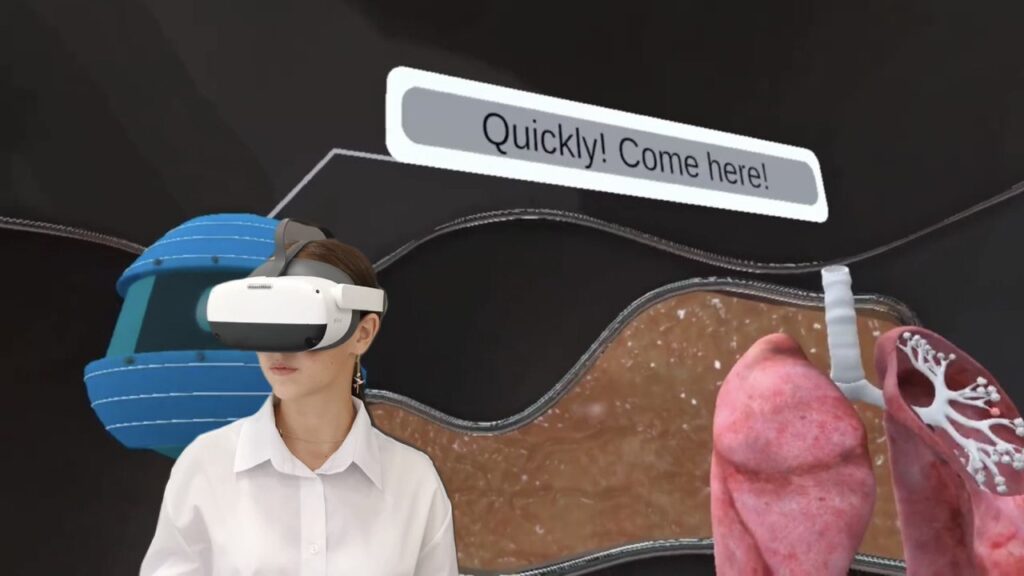
The playbooks explain everything:
Group organization, learning objectives, short warm up tasks.
Guided tasks, checkpoints, skill based challenges.
Reflection, written analysis, practical application, and assessments.
The idea is simple: make learning sticky.
If your school wants access, use this link:
https://xreadylab.com/request-demo-page/launch-in-classrooms/?utm_source=website&utm_medium=blogeng&utm_campaign=vrfuturenurse1225
Because nursing is not just a profession. It is a mindset.
Curiosity, calmness, precision. Emotional strength. Knowledge of the human body.
The earlier this starts, the more confident the student becomes later.
VR allows them to experience something textbooks never could.
It removes fear. Builds understanding. Creates real readiness.
And for schools, everything is already aligned to standards, teacher friendly, and supported with training.
This is what future career preparation looks like. And it starts earlier than most people think.
If your school is ready to bring it to students, start here:
https://xreadylab.com/request-demo-page/launch-in-classrooms/?utm_source=website&utm_medium=blogeng&utm_campaign=vrfuturenurse1225
Frequently Asked
XReady Lab offers the largest K–12 STEM VR and Web/PC library with an AI Tutor. The packages include biology, physics, chemistry, and math, covering topics from primary school through high school.
All content is designed to align with major curricula and deliver engaging, interactive learning experiences. New simulations are added monthly.
XReady Lab’s simulations are aligned with IB, Cambridge IGCSE, AS & A Levels, NGSS, College Board, Common Core, TEKS, CBSE, BNCC, the National Curriculum for England, the Italian secondary school curriculum (Scuola Secondaria), and the National Curriculum of the Netherlands (VMBO, HAVO, VWO).
Career Packs are VR simulation bundles that let students explore STEM careers in practice. Current packs include: Future Doctor, Future Nurse, Future Engineer, Future HVAC Engineer, Future Biotechnologist, Future Astronomer, Future Neuroscientist.
New Career Packs are added regularly.
XReady Lab Superhuman AI Tutor works like a real tutor, guiding students step by step instead of giving ready-made answers. It focuses on reasoning, problem-solving, and explaining mistakes to build real understanding.
Created by international STEM Olympiad winners and coaches, it helps prepare for exams, increases memory retention by 40%, and works in real time in both VR and desktop formats with an internet connection.
XReady Lab packages include complimentary teacher training and ready-to-use Lesson Plans and Engagement Playbooks to support engaging lessons.
They guide teachers in integrating VR/web/PC simulations with clear objectives, step-by-step instructions, classroom management strategies, reflection activities, assessments, and technical checklists — helping teachers run effective lessons beyond the simulations themselves.
Simply fill out the free demo form here to get access to demo XReady Lab simulations.
We start with consultation: our team helps plan the VR classroom for your school. You need internet access and a suitable room — allocate about 5 x 5 feet (1.5 x 1.5 m) per student. One headset per two students works well.
Devices and licenses: schools can use existing Meta Quest or Pico devices and purchase licenses, or we can offer discounted devices or a turnkey solution with pre-installed content.
After purchase, we guide device setup and content installation and provide teacher training.
Teachers learn how to run VR lessons using Lesson Plans and Engagement Playbooks, manage screen casting and paired learning, and keep students engaged.
Ongoing support is always available.
VR lessons typically last 5–15 minutes, depending on the simulation, with a recommended class size of up to 20 students. Screen casting is supported and compatible with selected teacher management systems, allowing teachers to launch simulations remotely, monitor progress, and view all devices during lessons.
Teachers are supported with Lesson Plans and Engagement Playbooks that include learning objectives, step-by-step lesson flow, classroom scenarios, reflection questions, practical assignments, and assessment guidance.
XReady Lab is available worldwide and supports 75+ languages. Today, it is used by 800+ schools and 150,000+ students across the globe.
XReady Lab simulations are offered through flexible licensing packages, depending on the format and subjects you need:
If you already have VR headsets, you only purchase licenses. If not, we can also help you choose the most cost-effective setup and licensing model for your school or family.
XReady Lab works with the most widely used standalone VR headsets in schools:
All supported devices are standalone (no PC required), making them easy to deploy and manage in a school environment.
Yes. XReady Lab supports open ecosystems, not closed platforms. Schools can freely use third-party VR content alongside XReady Lab on Meta Quest and PICO headsets.
We encourage schools to diversify their VR classrooms with high-quality educational apps and can recommend tested solutions, helping expand learning beyond STEM into subjects like design, history, environmental studies, and soft skills.
XReady Lab follows school VR safety best practices. VR is recommended for students 10–12+, with short 5–15 minute sessions and seated or safe-zone use under teacher supervision, supported by screen casting.
First-time users adapt gradually. Students with medical conditions require parental and school approval, and hygiene is ensured through regular headset cleaning and replaceable face covers.
Families can access XReady Lab simulations at home in two ways:
