


Search trends around future of higher education, what will university look like in 2030, and is college still worth it have been steadily rising. That alone tells us something.
People feel a shift coming.
Higher education used to be predictable. Four years. A degree. A job. A linear trajectory that felt almost mechanical.
Now the structure looks… less certain. Not collapsing. Not disappearing. But loosening.
Here are seven possible hypotheses about what higher education may look like in the near future. None of them are extreme. None of them are science fiction. Each one grows logically out of pressures already visible today.
This is not about abolishing universities. It is about observing where the system may be bending.

The four-year model has been remarkably durable. Yet its logic is historical, not biological.
In the coming years, higher education could become modular rather than sequential.
Picture a structure where:
Learning happens in blocks instead of semesters
Students pause and return without penalty
Alumni come back every five to ten years to reskill
Access operates more like a subscription than a one-time diploma
Education begins to resemble a long-term service rather than a one-time purchase.
In such a model, graduation becomes less of a finish line and more of a checkpoint.
A person might complete one cycle at 22, return at 30 for a specialization, then again at 40 when industries shift.
The degree becomes dynamic. Not static.
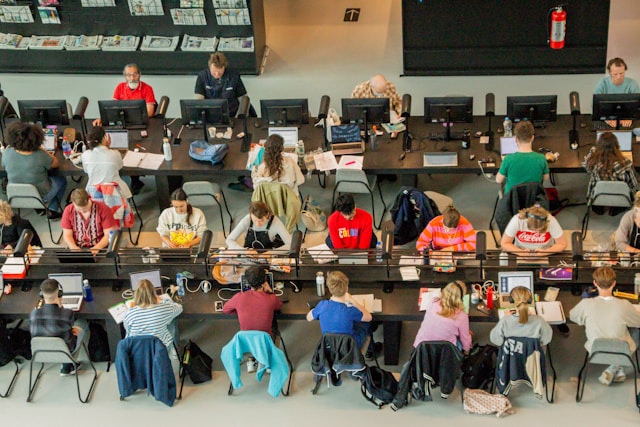
The traditional separation between “student life” and “real work” feels increasingly artificial.
A possible near-future model could look like this:
Two to three days working
Two to three days studying
Company projects embedded directly into academic modules
Tuition partially funded by employers
Under this structure, the student is not inexperienced. Experience grows alongside knowledge.
The classroom becomes less insulated from reality. Academic tasks align with real organizational challenges. The idea of graduating without practical exposure may begin to feel outdated.
Work and study blur. Not chaotically, but deliberately.
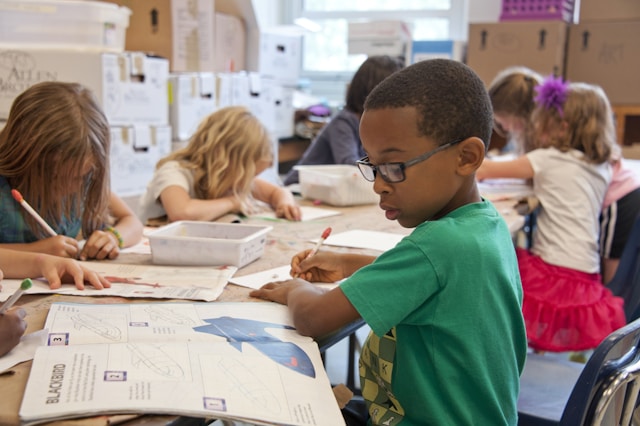
Faculties are organized around disciplines. Economics. Biology. Engineering.
Yet industries increasingly seek competencies rather than labels.
Instead of a Faculty of Economics, we might see:
Systems Thinking Track
AI and Data Track
Climate Solutions Track
Human Behavior and Decision Making
The emphasis shifts from subject identity to capability clusters.
A graduate’s profile could describe what they can do rather than what department they belonged to.
This does not eliminate disciplines. It reorganizes them around skill architecture.
Real-world problems do not arrive labeled by subject.
Climate change does not belong solely to physics. Nor to economics. Nor to political science. It sits at the intersection.
Future higher education may increasingly be built around:
Complex tasks
Real cases
Open-ended problems
Instead of “Physics 101,” a student might enroll in a problem-centered module such as “Urban Energy Systems” or “Sustainable Infrastructure.”
Foundational knowledge remains necessary, but it is embedded inside larger questions.
The structure becomes less siloed. Knowledge becomes contextual.
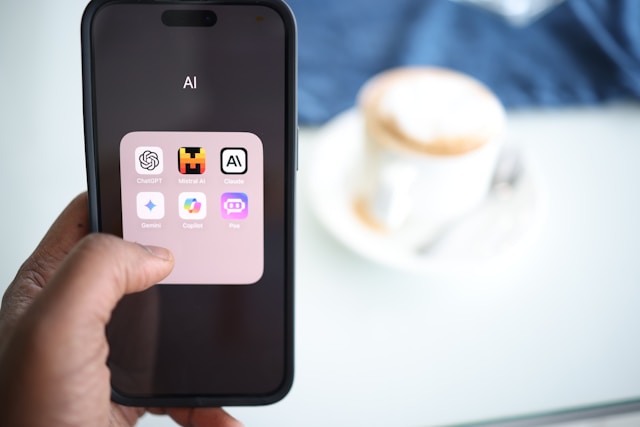
Adaptive systems are already reshaping learning outside universities. It is reasonable to assume higher education will not remain untouched.
In the near future, AI may function as:
A personalized curriculum advisor
A diagnostic tool identifying knowledge gaps
A pacing assistant adjusting workload
A portfolio builder organizing outputs
Individual pathways could become genuinely individualized.
Yet the presence of AI raises a critical question: what happens to the role of the teacher?
The likely outcome is transformation rather than disappearance.
Faculty may focus less on delivering information and more on mentoring, curating, and facilitating complex reasoning.
The teacher’s authority shifts from being the primary source of knowledge to being the architect of intellectual experience.
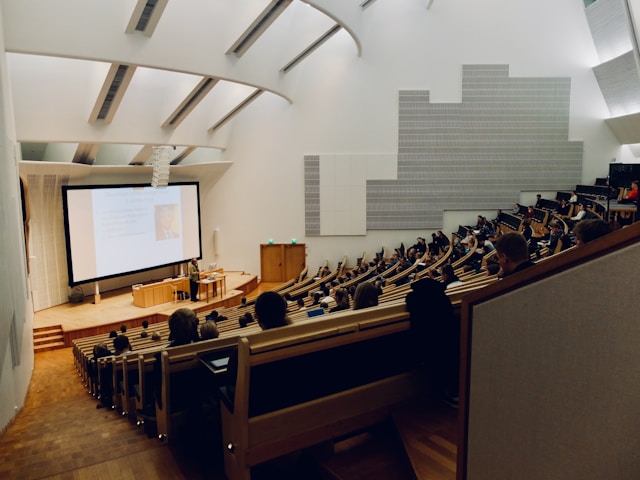
Exams have long been the dominant assessment mechanism. That may not vanish, but its dominance could decline.
A project-oriented university would prioritize:
Prototypes
Applied research
Implemented solutions
Collaborative outputs
Assessment might be based on:
What was built
What problem was addressed
What social or organizational impact was achieved
Grades become less central than demonstrable capability.
In such an environment, the campus resembles a studio or lab more than a lecture hall.
There is also a quieter possibility.
Perhaps higher education will not radically restructure. Instead, it will refine its core identity.
In a world where information is abundant and searchable, the university may increasingly position itself as:
An intellectual environment
A space for structured debate
A cultural and philosophical anchor
A place where thinking is practiced, not merely information transferred
The value of being physically present in an academic community may shift from content delivery to discourse and reflection.
The university becomes less about acquiring information and more about shaping judgment.
Across all seven scenarios, one theme appears repeatedly: higher education shifts from static structure to adaptive system.
Time becomes flexible.
Boundaries between study and work soften.
Disciplines reorganize around competencies.
Projects gain prominence.
AI personalizes pathways.
Universities emphasize thinking over transmission.
None of these require dramatic revolution. They emerge from pressures already visible in labor markets, technology, and student expectations.
The most likely future is not destruction of universities. It is redesign.
The question “Is college still worth it?” appears frequently in search queries. It reflects uncertainty.
Value in higher education will likely depend less on the diploma itself and more on:
Skill development
Intellectual growth
Practical exposure
Adaptability
Higher education may evolve from a fixed stage of life into an ongoing infrastructure supporting personal and professional reinvention.
The diploma does not disappear. It becomes one component in a larger learning ecosystem.
Predicting the future of higher education is inherently speculative. Institutions change slowly. Cultural expectations resist disruption.
Yet the pressures are real.
The job market is shifting. Technologies are accelerating. Lifespans are extending. Careers are no longer linear.
In that context, the university of the near future may look less like a four-year checkpoint and more like a lifelong intellectual partner.
Not necessarily louder. Not necessarily more technological. But more flexible, more integrated with work, and more oriented toward deep thinking rather than information transfer.
Higher education may not vanish.
It may simply become less rigid – and more alive.
Frequently Asked
XReady Lab offers the largest K–12 STEM VR and Web/PC library with an AI Tutor. The packages include biology, physics, chemistry, and math, covering topics from primary school through high school.
All content is designed to align with major curricula and deliver engaging, interactive learning experiences. New simulations are added monthly.
XReady Lab’s simulations are aligned with IB, Cambridge IGCSE, AS & A Levels, NGSS, College Board, Common Core, TEKS, CBSE, BNCC, the National Curriculum for England, the Italian secondary school curriculum (Scuola Secondaria), and the National Curriculum of the Netherlands (VMBO, HAVO, VWO).
Career Packs are VR simulation bundles that let students explore STEM careers in practice. Current packs include: Future Doctor, Future Nurse, Future Engineer, Future HVAC Engineer, Future Biotechnologist, Future Astronomer, Future Neuroscientist.
New Career Packs are added regularly.
XReady Lab Superhuman AI Tutor works like a real tutor, guiding students step by step instead of giving ready-made answers. It focuses on reasoning, problem-solving, and explaining mistakes to build real understanding.
Created by international STEM Olympiad winners and coaches, it helps prepare for exams, increases memory retention by 40%, and works in real time in both VR and desktop formats with an internet connection.
XReady Lab packages include complimentary teacher training and ready-to-use Lesson Plans and Engagement Playbooks to support engaging lessons.
They guide teachers in integrating VR/web/PC simulations with clear objectives, step-by-step instructions, classroom management strategies, reflection activities, assessments, and technical checklists — helping teachers run effective lessons beyond the simulations themselves.
Simply fill out the free demo form here to get access to demo XReady Lab simulations.
We start with consultation: our team helps plan the VR classroom for your school. You need internet access and a suitable room — allocate about 5 x 5 feet (1.5 x 1.5 m) per student. One headset per two students works well.
Devices and licenses: schools can use existing Meta Quest or Pico devices and purchase licenses, or we can offer discounted devices or a turnkey solution with pre-installed content.
After purchase, we guide device setup and content installation and provide teacher training.
Teachers learn how to run VR lessons using Lesson Plans and Engagement Playbooks, manage screen casting and paired learning, and keep students engaged.
Ongoing support is always available.
VR lessons typically last 5–15 minutes, depending on the simulation, with a recommended class size of up to 20 students. Screen casting is supported and compatible with selected teacher management systems, allowing teachers to launch simulations remotely, monitor progress, and view all devices during lessons.
Teachers are supported with Lesson Plans and Engagement Playbooks that include learning objectives, step-by-step lesson flow, classroom scenarios, reflection questions, practical assignments, and assessment guidance.
XReady Lab is available worldwide and supports 75+ languages. Today, it is used by 800+ schools and 150,000+ students across the globe.
XReady Lab simulations are offered through flexible licensing packages, depending on the format and subjects you need:
If you already have VR headsets, you only purchase licenses. If not, we can also help you choose the most cost-effective setup and licensing model for your school or family.
XReady Lab works with the most widely used standalone VR headsets in schools:
All supported devices are standalone (no PC required), making them easy to deploy and manage in a school environment.
Yes. XReady Lab supports open ecosystems, not closed platforms. Schools can freely use third-party VR content alongside XReady Lab on Meta Quest and PICO headsets.
We encourage schools to diversify their VR classrooms with high-quality educational apps and can recommend tested solutions, helping expand learning beyond STEM into subjects like design, history, environmental studies, and soft skills.
XReady Lab follows school VR safety best practices. VR is recommended for students 10–12+, with short 5–15 minute sessions and seated or safe-zone use under teacher supervision, supported by screen casting.
First-time users adapt gradually. Students with medical conditions require parental and school approval, and hygiene is ensured through regular headset cleaning and replaceable face covers.
Families can access XReady Lab simulations at home in two ways:
