Q&A: What should I do if my students fall asleep during class?
Students often get sleepy not because they don’t care, but because they’re tired, overloaded, or the class energy is too low. The best fix is to change the rhythm, not to scold them. Start your lesson with something curious or unexpected to grab attention. Break the routine every 10–15 minutes with movement, discussion, or quick challenges. Use silence or small surprises to refocus attention. If students seem exhausted, give them a short reset instead of pushing harder. In short, don’t fight the energy – redirect it.
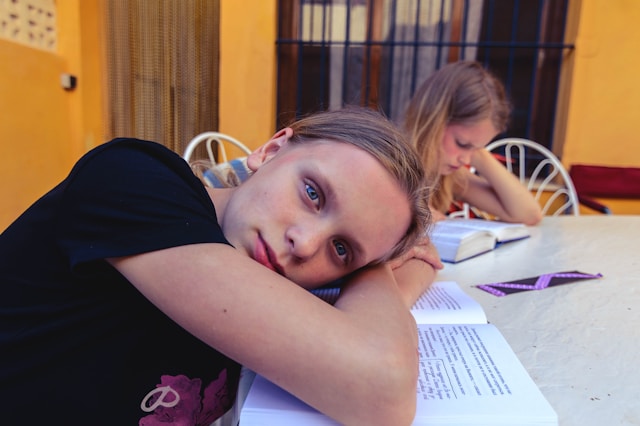
Below are their favorite techniques, tested in real classrooms and ready to use tomorrow.
1. OMAR AL-FAHAD (Saudi Arabia) – Start with Curiosity, Not Content
Omar teaches IGCSE Science in Riyadh and has one rule:
“If they’re bored in the first five minutes, I’ve lost them for the next forty.”
He starts every class with something unexpected – a quick question, a strange video clip, or an odd experiment idea.

Omar says curiosity wakes the brain better than caffeine. When students start guessing, they’re suddenly engaged.
Try this: Start your next lesson with a puzzle, a surprising image, or a hands-on object. Curiosity beats caffeine every time.
2. LYNDA (California, USA) – Change the Energy Every Ten Minutes
Lynda, a science teacher from California, treats her class like a rhythm.
“Attention has waves. You ride them, or you lose them.”
She divides lessons into short energy blocks: talk for ten minutes, then switch. Discuss, move, or observe something. Even a two-minute stretch or short brainstorm helps.
The key is not constant excitement – it’s movement.
“You don’t have to gamify everything. Just change the energy before it collapses.”
3. FRIEDRICH (Germany) – Silence Is Louder Than Shouting
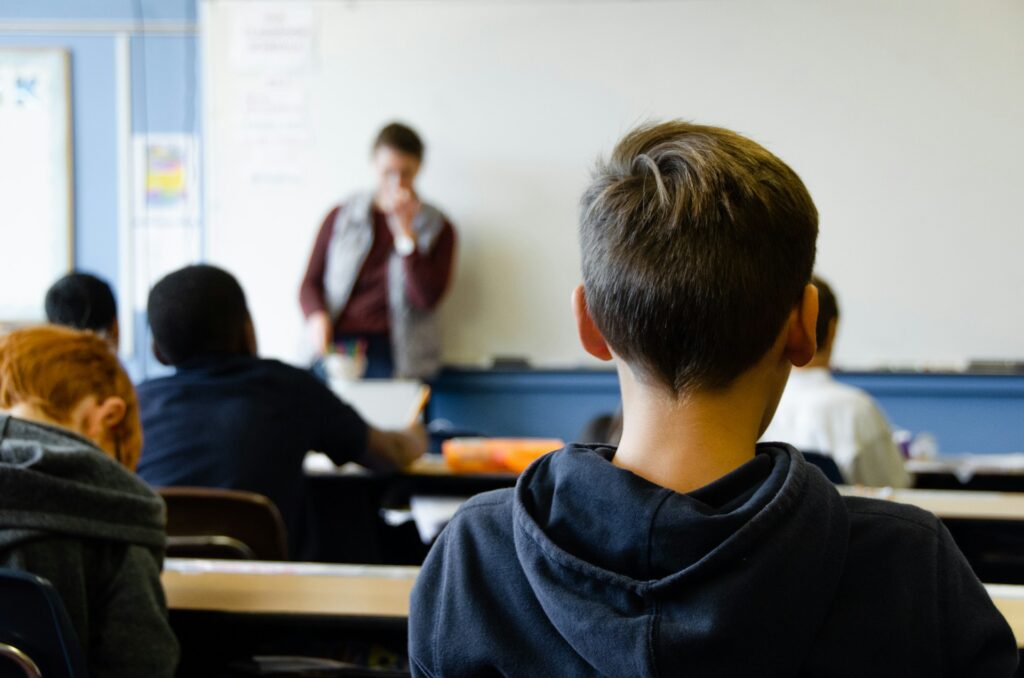
Friedrich, who teaches physics and astronomy in Munich, noticed something unusual. The louder he spoke, the quieter his students became. So he reversed it.
“I stopped talking for fifteen seconds. Total silence. They looked up immediately.”
He uses silence like punctuation. Sometimes he lowers his voice to a whisper or adds a tiny experiment without warning – a spark, a magnet trick, or a ball levitating above a pipe.
“It’s not entertainment. It’s tension. Curiosity wakes people up faster than noise.”
4. PAULA (Spain) – Movement Resets the Brain
Paula, an IB Biology teacher in Madrid, says it’s not laziness when students get sleepy – it’s physiology.
“After twenty minutes sitting still, their brains slow down. It’s just how we’re built.”
Her fix is small movement breaks:
-
Stand up and find a partner.
-
Write one idea on the board.
-
Form a quick circle and share one fact.
Even two minutes of physical change boosts oxygen flow and focus.
“You’ll see laughter, better answers, and suddenly, they’re awake again.”
5. SCOTT (New Mexico, USA) – Use Micro Challenges

Scott teaches middle school STEM. He knows his students love competition, but not in the childish sense. He turns learning into fast, smart challenges.
-
Who can explain this concept faster than me?
-
Who can find the lab mistake first?
-
Quick one-minute quiz race.
“They get sharp, focused, and loud – but in a good way. Even quiet students jump in.”
He adds a funny twist: if students win, they get to ask him one random personal question.
“It keeps them awake and curious about both the subject and the person teaching it.”
6. SAIRA (UAE) – Respect the Energy in the Room
Saira, an IB Biology teacher from Abu Dhabi, doesn’t shame students for feeling tired.
“Sometimes they’re not lazy. They’re overloaded – projects, screens, exams, no sleep.”
Instead of forcing energy, she resets it gently. She dims lights, plays a two-minute calming clip, or leads a quiet mindfulness exercise.
“Once they feel calm, they re-engage. Respect earns focus.”
Her point is simple: tired students don’t need punishment, they need restoration.
7. XREADY LAB – Let Tech Do the Heavy Lifting
Even the best teachers can’t fight fatigue forever. That’s where immersive tech helps.
Virtual Reality classrooms from XReady Lab transform passive learning into active discovery. Students explore, interact, and experiment in 3D.
-
Interactive content boosts memory retention by 40 percent
-
Works with Meta Quest and Pico headsets
-
Follows top curriculums: IB, NGSS, Cambridge, College Board, TEKS, CBSE and more
-
Trusted by 800+ schools and 150,000+ students worldwide
👉 Try it for your classroom here: Order a demo of XReady Lab
You’ll see engagement rise within minutes.
And if you want to go further, explore the full catalog of simulations for biology, physics, chemistry, and future career paths like Future Doctor, Future Biotechnologist, and Future Engineer:
https://xreadylab.com/simulations/
Final Thought
Every class is different. What wakes one group may bore another. But the rule is always the same – don’t fight the energy, redirect it.
Once students feel surprised, respected, and involved, they stop dozing off. They start thinking again.
And when that happens, learning becomes real.
02 / 05 / 2026


