Textbook cross-sections and flat diagrams once ruled the biology classroom. In 2025, though, students want to walk through a cell wall, inspect a chloroplast from every angle, and repair a leaky vacuole themselves. XReady Lab’s immersive plant-cell simulation turns that wish into a lesson plan—merging cutting-edge virtual-reality education with global syllabus standards. Below you’ll find everything teachers, parents, and ed-tech leaders need to know about bringing living, 3-D plant cells to life.
A microscope offers impressive magnification, but even high-school STEM-lab setups confine learners to a single focal plane. Students memorize ovals and circles—yet rarely connect those shapes with the dynamic roles each organelle plays. Without interactive-classroom activities, mitochondria remain abstract blobs and the endoplasmic-reticulum sounds like a spelling challenge.
With XReady Lab’s simulation, the membrane isn’t a thin line on a page. Learners glide past ribosomes, dive into the nucleus. Missions ask them to restore a failing chloroplast. That game-loop keeps curiosity high and transforms passive note-taking into problem-solving.

Whether your classroom follows IB Biology, AP standards, or the Indian CBSE board, the plant-cell tour plugs straight into lesson objectives:
Cambridge IGCSE & A-Level — organelle functions, ultrastructure, and cell-theory checkpoints
Next-Generation Science Standards — LS1 cross-cutting concepts about growth and feedback
National Curriculum for England — plant-transport systems and photosynthesis links
Dutch and Italian secondaria frameworks — cellular-life intro plus advanced molecular-biology modules
Teachers simply choose the objective set, and the simulation activates the right guided prompts—no extra prep.

The plant-cell lab was XReady Lab’s inaugural project—built over twelve months of trial-and-error. Early prototypes lacked depth cues and realistic textures.
That iterative process shaped XReady Lab’s design philosophy for every future module, from VR biology dissections to VR physics momentum labs.
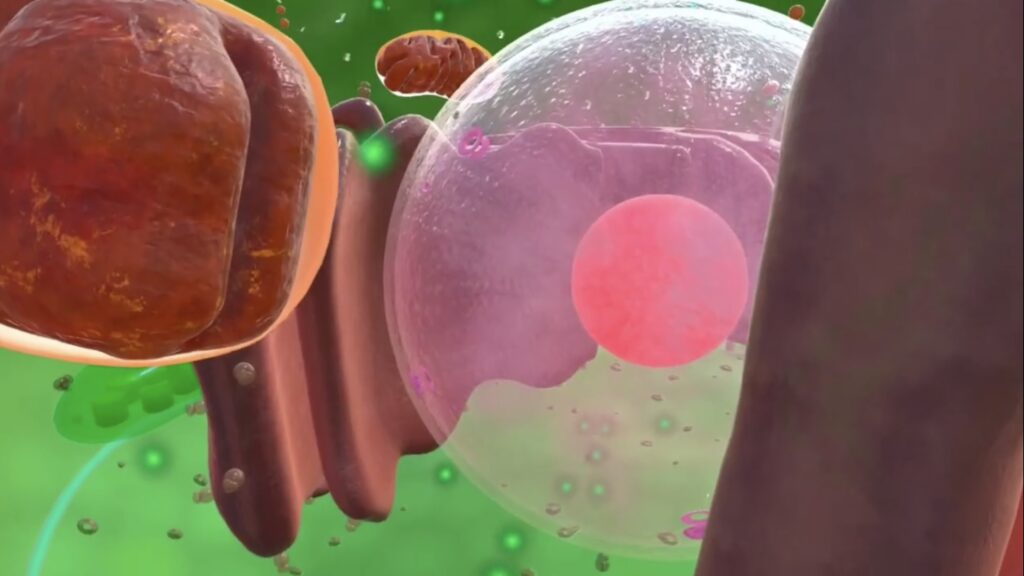
These perks echo broader benefits of virtual-reality in education: higher retention, more collaboration, and better accommodation for visual or kinesthetic learners.
Students graduate not only remembering organelle names, but also grasping how micro processes fuel macro life—crucial knowledge for tomorrow’s bioengineers and environmental scientists.
Take a no-risk tour of XReady Lab’s plant-cell world and see why schools worldwide call it the most engaging science upgrade since the smart-classroom whiteboard.
👉 Request a Free Demo and turn chalkboard sketches into immersive journeys today.
Cell-structure lessons no longer have to feel like a memorization marathon. With immersive, standards-aligned simulations, teachers convert organelle charts into living systems students can explore, tweak, and truly understand. Embrace virtual-reality learning and watch curiosity bloom—one chloroplast at a time.
Frequently Asked
XReady Lab offers the largest K–12 STEM VR and Web/PC library with an AI Tutor. The packages include biology, physics, chemistry, and math, covering topics from primary school through high school.
All content is designed to align with major curricula and deliver engaging, interactive learning experiences. New simulations are added monthly.
XReady Lab’s simulations are aligned with IB, Cambridge IGCSE, AS & A Levels, NGSS, College Board, Common Core, TEKS, CBSE, BNCC, the National Curriculum for England, the Italian secondary school curriculum (Scuola Secondaria), and the National Curriculum of the Netherlands (VMBO, HAVO, VWO).
Career Packs are VR simulation bundles that let students explore STEM careers in practice. Current packs include: Future Doctor, Future Nurse, Future Engineer, Future HVAC Engineer, Future Biotechnologist, Future Astronomer, Future Neuroscientist.
New Career Packs are added regularly.
XReady Lab Superhuman AI Tutor works like a real tutor, guiding students step by step instead of giving ready-made answers. It focuses on reasoning, problem-solving, and explaining mistakes to build real understanding.
Created by international STEM Olympiad winners and coaches, it helps prepare for exams, increases memory retention by 40%, and works in real time in both VR and desktop formats with an internet connection.
XReady Lab packages include complimentary teacher training and ready-to-use Lesson Plans and Engagement Playbooks to support engaging lessons.
They guide teachers in integrating VR/web/PC simulations with clear objectives, step-by-step instructions, classroom management strategies, reflection activities, assessments, and technical checklists — helping teachers run effective lessons beyond the simulations themselves.
Simply fill out the free demo form here to get access to demo XReady Lab simulations.
We start with consultation: our team helps plan the VR classroom for your school. You need internet access and a suitable room — allocate about 5 x 5 feet (1.5 x 1.5 m) per student. One headset per two students works well.
Devices and licenses: schools can use existing Meta Quest or Pico devices and purchase licenses, or we can offer discounted devices or a turnkey solution with pre-installed content.
After purchase, we guide device setup and content installation and provide teacher training.
Teachers learn how to run VR lessons using Lesson Plans and Engagement Playbooks, manage screen casting and paired learning, and keep students engaged.
Ongoing support is always available.
VR lessons typically last 5–15 minutes, depending on the simulation, with a recommended class size of up to 20 students. Screen casting is supported and compatible with selected teacher management systems, allowing teachers to launch simulations remotely, monitor progress, and view all devices during lessons.
Teachers are supported with Lesson Plans and Engagement Playbooks that include learning objectives, step-by-step lesson flow, classroom scenarios, reflection questions, practical assignments, and assessment guidance.
XReady Lab is available worldwide and supports 75+ languages. Today, it is used by 800+ schools and 150,000+ students across the globe.
XReady Lab simulations are offered through flexible licensing packages, depending on the format and subjects you need:
If you already have VR headsets, you only purchase licenses. If not, we can also help you choose the most cost-effective setup and licensing model for your school or family.
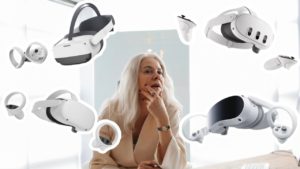
XReady Lab works with the most widely used standalone VR headsets in schools:
All supported devices are standalone (no PC required), making them easy to deploy and manage in a school environment.
Yes. XReady Lab supports open ecosystems, not closed platforms. Schools can freely use third-party VR content alongside XReady Lab on Meta Quest and PICO headsets.
We encourage schools to diversify their VR classrooms with high-quality educational apps and can recommend tested solutions, helping expand learning beyond STEM into subjects like design, history, environmental studies, and soft skills.
XReady Lab follows school VR safety best practices. VR is recommended for students 10–12+, with short 5–15 minute sessions and seated or safe-zone use under teacher supervision, supported by screen casting.
First-time users adapt gradually. Students with medical conditions require parental and school approval, and hygiene is ensured through regular headset cleaning and replaceable face covers.
Families can access XReady Lab simulations at home in two ways: