In today’s world, ensuring the safety of students and educators is more critical than ever. Schools must be prepared for various emergency situations, including the rare but serious event of unauthorized individuals entering the classroom. Knowing how to react if intruders break into a classroom can make a significant difference in protecting everyone involved.
While it’s a scenario no one wants to imagine, being prepared is essential. Many educational institutions around the world have approved protocols and algorithms to guide teachers and students during such incidents. These protocols often include:
Understanding and practicing these procedures can help minimize panic and ensure a coordinated response during an emergency. It’s important for teachers to remain calm and provide clear instructions, as students will look to them for guidance.
Regular prevention drills are crucial in preparing students and staff for emergencies. These drills help:
Moreover, involving local law enforcement in drills can provide additional insights and improve coordination between the school and emergency responders.

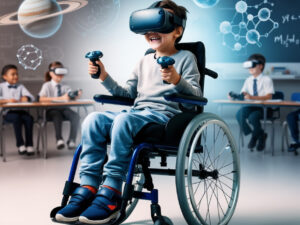
Virtual reality in education is not just transforming learning in subjects like VR biology, VR physics, and VR chemistry; it’s also enhancing school safety training. By simulating emergency scenarios in a virtual reality classroom, students and teachers can practice their responses in a controlled, immersive environment.
For more on how VR is transforming education beyond traditional subjects, check out our article on Unexpected Ways VR is Transforming School Education.
To address the challenges of practicing fire emergency procedures safely, educational institutions are adopting solutions like Fireguard VR. Developed by Chaac Technologies, Fireguard VR is a virtual reality training program that simulates fire emergencies in a safe, controlled environment. Traditional fire drills can be limited due to safety concerns and the inability to replicate realistic fire conditions without risk. Fireguard VR overcomes these limitations by providing immersive simulations where students and staff can:
By utilizing Fireguard VR, schools ensure comprehensive training that satisfies both safety requirements and the need for high-quality protocol practice. The program enhances preparedness by allowing participants to fully engage with emergency scenarios that would be too dangerous or impractical to recreate in real life. This innovative approach to fire safety training exemplifies how virtual reality can provide effective solutions for emergency preparedness in educational settings.
Integrating VR into safety training involves:
It’s also important to integrate VR safety training into the regular curriculum. Scheduling periodic VR sessions can reinforce protocols and keep safety at the forefront of everyone’s minds.
Beyond safety training, VR learning enhances the overall educational experience:
A common question is, “Is virtual reality safe?” When used appropriately, VR is a safe and effective educational tool. Guidelines for usage include:
For more on VR safety and educational applications, check out our article on Top VR Education Apps for K-12 Learning.
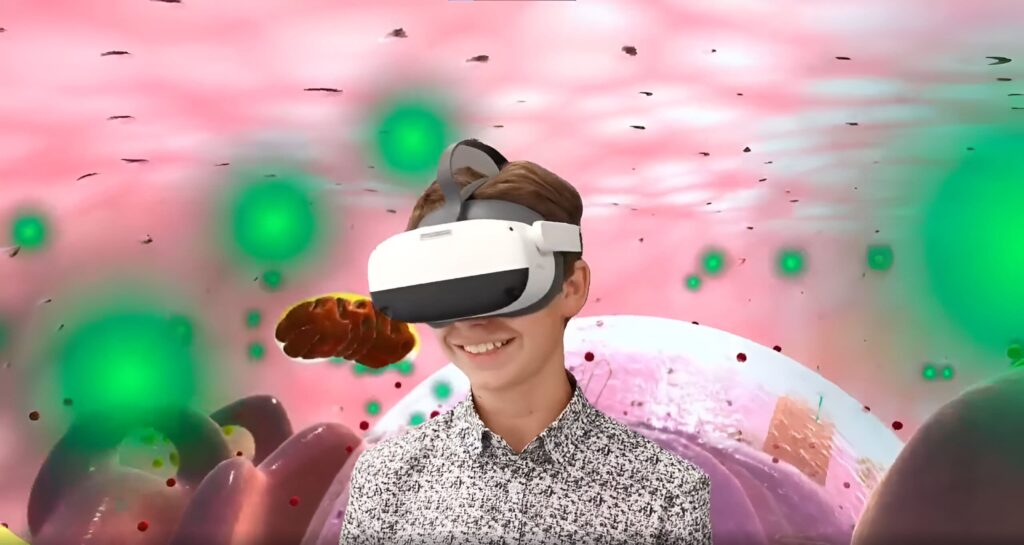
The potential for virtual reality in education extends far beyond current applications. As technology advances, we can expect:
Creating a safe learning environment is a top priority for schools, and innovative tools like VR can make all the difference. Virtual reality offers immersive, hands-on training that helps both students and teachers respond effectively in emergencies.
At XReady Lab, we’re dedicated to empowering schools with cutting-edge VR solutions in STEM education. While we specialize in STEM subjects, we’re happy to share information about other valuable VR applications that can enhance your school’s safety training and overall learning experience. We can provide recommendations on useful content to load onto your school’s VR headsets to maximize their potential.
👉 Request your free demo now and see how VR can transform your school!
Safety in schools is paramount, and being prepared for emergencies can save lives. Virtual reality education offers innovative solutions to train students and staff effectively. By incorporating VR into safety drills, schools can create a more interactive classroom environment that enhances learning and preparedness.
Embracing technology like VR not only improves safety protocols but also enriches the educational experience across various subjects. From VR biology to emergency simulations, the benefits of virtual reality in education are vast.
By investing in VR learning, schools can provide students with the tools they need to succeed academically and stay safe in an ever-changing world.
Frequently Asked
XReady Lab offers the largest K–12 STEM VR and Web/PC library with an AI Tutor. The packages include biology, physics, chemistry, and math, covering topics from primary school through high school.
All content is designed to align with major curricula and deliver engaging, interactive learning experiences. New simulations are added monthly.
XReady Lab’s simulations are aligned with IB, Cambridge IGCSE, AS & A Levels, NGSS, College Board, Common Core, TEKS, CBSE, BNCC, the National Curriculum for England, the Italian secondary school curriculum (Scuola Secondaria), and the National Curriculum of the Netherlands (VMBO, HAVO, VWO).
Career Packs are VR simulation bundles that let students explore STEM careers in practice. Current packs include: Future Doctor, Future Nurse, Future Engineer, Future HVAC Engineer, Future Biotechnologist, Future Astronomer, Future Neuroscientist.
New Career Packs are added regularly.
XReady Lab Superhuman AI Tutor works like a real tutor, guiding students step by step instead of giving ready-made answers. It focuses on reasoning, problem-solving, and explaining mistakes to build real understanding.
Created by international STEM Olympiad winners and coaches, it helps prepare for exams, increases memory retention by 40%, and works in real time in both VR and desktop formats with an internet connection.
XReady Lab packages include complimentary teacher training and ready-to-use Lesson Plans and Engagement Playbooks to support engaging lessons.
They guide teachers in integrating VR/web/PC simulations with clear objectives, step-by-step instructions, classroom management strategies, reflection activities, assessments, and technical checklists — helping teachers run effective lessons beyond the simulations themselves.
Simply fill out the free demo form here to get access to demo XReady Lab simulations.
We start with consultation: our team helps plan the VR classroom for your school. You need internet access and a suitable room — allocate about 5 x 5 feet (1.5 x 1.5 m) per student. One headset per two students works well.
Devices and licenses: schools can use existing Meta Quest or Pico devices and purchase licenses, or we can offer discounted devices or a turnkey solution with pre-installed content.
After purchase, we guide device setup and content installation and provide teacher training.
Teachers learn how to run VR lessons using Lesson Plans and Engagement Playbooks, manage screen casting and paired learning, and keep students engaged.
Ongoing support is always available.
VR lessons typically last 5–15 minutes, depending on the simulation, with a recommended class size of up to 20 students. Screen casting is supported and compatible with selected teacher management systems, allowing teachers to launch simulations remotely, monitor progress, and view all devices during lessons.
Teachers are supported with Lesson Plans and Engagement Playbooks that include learning objectives, step-by-step lesson flow, classroom scenarios, reflection questions, practical assignments, and assessment guidance.
XReady Lab is available worldwide and supports 75+ languages. Today, it is used by 800+ schools and 150,000+ students across the globe.
XReady Lab simulations are offered through flexible licensing packages, depending on the format and subjects you need:
If you already have VR headsets, you only purchase licenses. If not, we can also help you choose the most cost-effective setup and licensing model for your school or family.
XReady Lab works with the most widely used standalone VR headsets in schools:
All supported devices are standalone (no PC required), making them easy to deploy and manage in a school environment.
Yes. XReady Lab supports open ecosystems, not closed platforms. Schools can freely use third-party VR content alongside XReady Lab on Meta Quest and PICO headsets.
We encourage schools to diversify their VR classrooms with high-quality educational apps and can recommend tested solutions, helping expand learning beyond STEM into subjects like design, history, environmental studies, and soft skills.
XReady Lab follows school VR safety best practices. VR is recommended for students 10–12+, with short 5–15 minute sessions and seated or safe-zone use under teacher supervision, supported by screen casting.
First-time users adapt gradually. Students with medical conditions require parental and school approval, and hygiene is ensured through regular headset cleaning and replaceable face covers.
Families can access XReady Lab simulations at home in two ways: