In a world moving faster than ever, it’s easy to feel overwhelmed by the pressure to achieve top marks. Yet focusing on grades above all else can come at a steep cost—particularly to a student’s motivation and emotional well-being. The real “currency” in modern education is developing genuine curiosity and skill mastery, rather than merely chasing perfect scores.

Technological shifts, competitive job markets, and the constant influx of information mean that memorizing facts is no longer enough. True success hinges on one’s ability to learn, adapt, and innovate. Relying on grades alone can mislead us into thinking a child is “doing fine,” when in reality they may feel disengaged and burned out.
Teachers themselves are caught in a whirlwind. They face growing demands to cover extensive curricula, administer standardized tests, and juggle administrative tasks. The underlying structures that place heavy emphasis on theoretical knowledge and rote memorization often lead to superficial learning—where students earn high marks but lack solid understanding. It’s not that educators are irresponsible, but rather that the broader system is still evolving to meet the needs of today’s learners.
When students are interested in a topic, they explore it naturally and deeply, which leads to genuine learning that’s far more sustainable than cramming for exams. For example, many younger children show an active fascination with biology or physics by asking endless questions about animals, space, and everything in between. But as they approach higher-grade levels, STEM subjects can become increasingly abstract. Without hands-on activities or interactive methods, that initial spark fades away.
A shift toward project-based learning can reignite that lost enthusiasm. Instead of memorizing formulas or facts, students tackle real-world tasks—like simulating a STEM lab experiment or investigating an environmental issue in their community. This approach promotes critical thinking, creativity, and collaboration, all crucial in a fast-changing world.
(For more insights on practical, hands-on learning, see our recent article on project-based strategies.)

Excessive focus on grades often leads to stress, anxiety, and negative self-esteem. In an era already filled with high competition and constant digital distractions, piling on extra academic pressure can damage mental health. Schools should ideally be places that nurture curiosity and self-discovery, not just produce stellar report cards at the expense of a child’s happiness.
Parents play a huge role as well, from carefully choosing a supportive school environment to fostering a love for learning at home. Children thrive when they sense a synergy between home and classroom expectations, rather than conflicting pressures. We discussed some considerations for picking the right institution in our piece on Transforming Education through Classroom Learning.
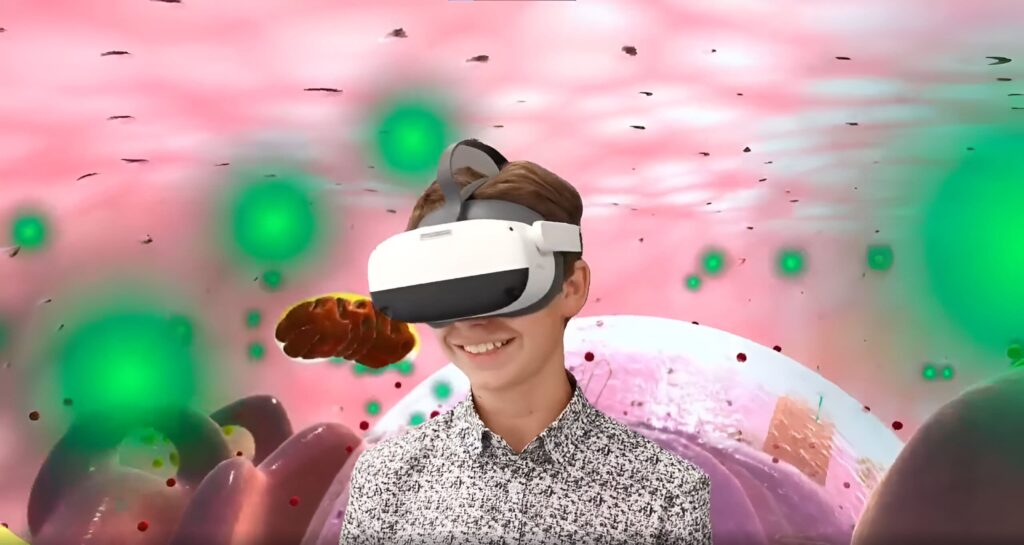
Engagement is pivotal to preventing academic burnout. One emerging avenue is the use of immersive technology to make subjects like VR biology or VR physics far more relatable. While not every topic demands cutting-edge visuals, the ability to literally “walk” inside a digital cell or manipulate a chemical experiment in a digital classroom can spark wonder.
Even teenagers, who might initially dismiss “pretend lab work,” can become intrigued by controlling 3D molecules or analyzing cosmic phenomena up-close. Once they see it as an immersive, game-like experience, motivation levels can soar.

In practical terms, the best measure of success should be a student’s ability to adapt, learn independently, and tackle challenges creatively—whether in math, engineering, or the humanities. Good grades might follow naturally when intrinsic interest and high-level skills are present, but pushing grades without passion often leads to shallow learning outcomes.
The modern world demands agility, creativity, and emotional well-being—qualities that memorized facts or inflated grades alone can’t guarantee. Genuine interest in learning yields robust skills, fosters better mental health, and prepares students for the ever-shifting landscape they’ll encounter as adults.
By rethinking educational priorities, placing emphasis on skill-building instead of grades, and leveraging immersive tech where appropriate, parents and teachers can help children find meaning and excitement in their studies. In the end, it’s that sense of curiosity and dedication that will guide them to excel academically and thrive personally—far beyond the constraints of any report card.
Interested in exploring a more immersive educational approach? XReady Lab offers interactive solutions that blend rigorous content with hands-on exploration, reigniting student passion for science, technology, engineering, and math.
Frequently Asked
XReady Lab offers the largest K–12 STEM VR and Web/PC library with an AI Tutor. The packages include biology, physics, chemistry, and math, covering topics from primary school through high school.
All content is designed to align with major curricula and deliver engaging, interactive learning experiences. New simulations are added monthly.
XReady Lab’s simulations are aligned with IB, Cambridge IGCSE, AS & A Levels, NGSS, College Board, Common Core, TEKS, CBSE, BNCC, the National Curriculum for England, the Italian secondary school curriculum (Scuola Secondaria), and the National Curriculum of the Netherlands (VMBO, HAVO, VWO).
Career Packs are VR simulation bundles that let students explore STEM careers in practice. Current packs include: Future Doctor, Future Nurse, Future Engineer, Future HVAC Engineer, Future Biotechnologist, Future Astronomer, Future Neuroscientist.
New Career Packs are added regularly.
XReady Lab Superhuman AI Tutor works like a real tutor, guiding students step by step instead of giving ready-made answers. It focuses on reasoning, problem-solving, and explaining mistakes to build real understanding.
Created by international STEM Olympiad winners and coaches, it helps prepare for exams, increases memory retention by 40%, and works in real time in both VR and desktop formats with an internet connection.
XReady Lab packages include complimentary teacher training and ready-to-use Lesson Plans and Engagement Playbooks to support engaging lessons.
They guide teachers in integrating VR/web/PC simulations with clear objectives, step-by-step instructions, classroom management strategies, reflection activities, assessments, and technical checklists — helping teachers run effective lessons beyond the simulations themselves.
Simply fill out the free demo form here to get access to demo XReady Lab simulations.
We start with consultation: our team helps plan the VR classroom for your school. You need internet access and a suitable room — allocate about 5 x 5 feet (1.5 x 1.5 m) per student. One headset per two students works well.
Devices and licenses: schools can use existing Meta Quest or Pico devices and purchase licenses, or we can offer discounted devices or a turnkey solution with pre-installed content.
After purchase, we guide device setup and content installation and provide teacher training.
Teachers learn how to run VR lessons using Lesson Plans and Engagement Playbooks, manage screen casting and paired learning, and keep students engaged.
Ongoing support is always available.
VR lessons typically last 5–15 minutes, depending on the simulation, with a recommended class size of up to 20 students. Screen casting is supported and compatible with selected teacher management systems, allowing teachers to launch simulations remotely, monitor progress, and view all devices during lessons.
Teachers are supported with Lesson Plans and Engagement Playbooks that include learning objectives, step-by-step lesson flow, classroom scenarios, reflection questions, practical assignments, and assessment guidance.
XReady Lab is available worldwide and supports 75+ languages. Today, it is used by 800+ schools and 150,000+ students across the globe.
XReady Lab simulations are offered through flexible licensing packages, depending on the format and subjects you need:
If you already have VR headsets, you only purchase licenses. If not, we can also help you choose the most cost-effective setup and licensing model for your school or family.
XReady Lab works with the most widely used standalone VR headsets in schools:
All supported devices are standalone (no PC required), making them easy to deploy and manage in a school environment.
Yes. XReady Lab supports open ecosystems, not closed platforms. Schools can freely use third-party VR content alongside XReady Lab on Meta Quest and PICO headsets.
We encourage schools to diversify their VR classrooms with high-quality educational apps and can recommend tested solutions, helping expand learning beyond STEM into subjects like design, history, environmental studies, and soft skills.
XReady Lab follows school VR safety best practices. VR is recommended for students 10–12+, with short 5–15 minute sessions and seated or safe-zone use under teacher supervision, supported by screen casting.
First-time users adapt gradually. Students with medical conditions require parental and school approval, and hygiene is ensured through regular headset cleaning and replaceable face covers.
Families can access XReady Lab simulations at home in two ways: