Modern education isn’t just about test scores and memorizing facts. In a world shaped by rapid technological change, soft skills like communication, problem-solving, and leadership have become essential for personal development and future career success. Whether students aim to thrive in a competitive job market, build meaningful personal relationships, or innovate in a global environment, these three abilities form a solid foundation.
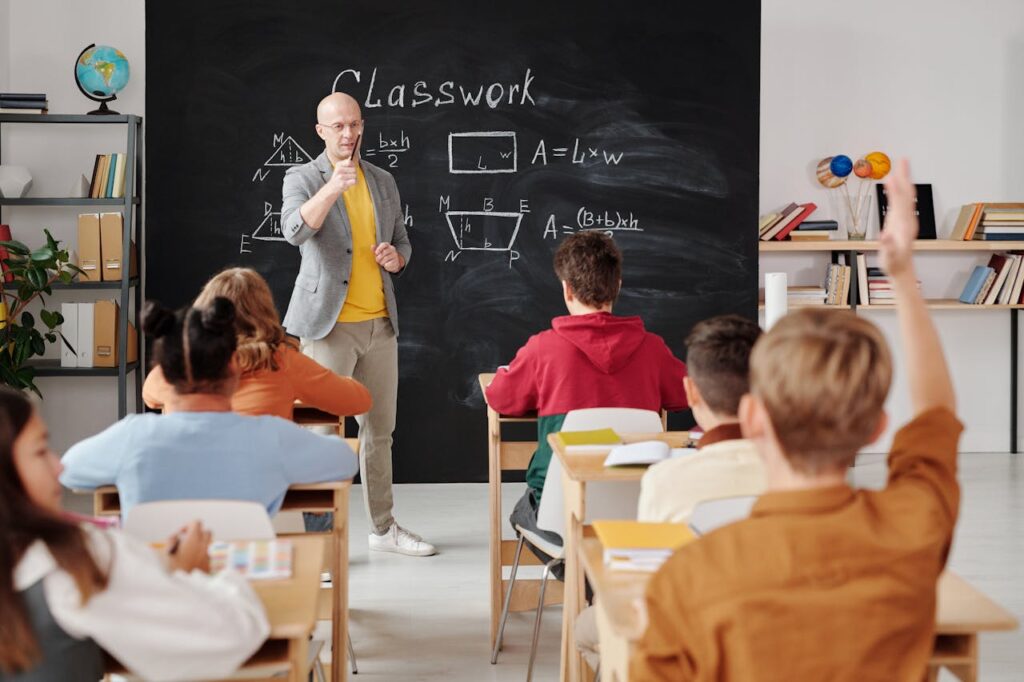
The ability to convey ideas effectively—whether verbally, in writing, or through digital channels—allows people to collaborate across cultures, industries, and disciplines. Students who learn to communicate clearly often become stronger team players, more persuasive speakers, and better listeners.
Modern careers require adaptability and creative thinking, not just rote knowledge. Problem-solving skills enable individuals to approach challenges methodically, brainstorm solutions, and adapt quickly to new information or obstacles.
Leadership is about motivating and guiding others, irrespective of official titles. Students with strong leadership traits can manage group projects, inspire peers, and eventually excel in managerial or entrepreneurial roles.

The question is: How do we integrate these skills into a system often focused on exams and standardized metrics? Fortunately, there are practical methods to encourage communication, problem-solving, and leadership in schools.

Today’s youth, often referred to as the “Alpha Generation,” have grown up with an abundance of digital tools and global connections. According to our insights on Generation Alpha, these students are accustomed to immediate feedback, interactive content, and high-tech learning methods.

While technology (especially VR) is often viewed as primarily beneficial for academic content like biology or chemistry, it can also enrich communication and leadership:
For a closer look at how immersive experiences can combat disengagement and spur deeper learning, explore why hands-on digital environments improve STEM engagement.
Some educators worry about technology overshadowing human interaction. But tools like interactive simulations or AI tutoring aren’t replacements for teachers; they’re assets that free educators to focus on genuine mentorship. By automating tedious tasks or offering quick data-driven insights, teachers can dedicate more time to building these essential soft skills.
Envision a classroom where:
As a result, young people become better communicators, adept problem-solvers, and natural leaders. When they step into higher education or the workforce, they carry both technical know-how and personal competencies that shape them into influential figures in their chosen fields.
Soft skills like communication, problem-solving, and leadership aren’t just buzzwords—they’re foundational qualities that set students on a path to success in school, careers, and life. Incorporating these competencies into the educational framework requires thoughtful planning, project-based methods, innovative technologies, and an openness to new ideas.
At XReady Lab, we embrace the potential of cutting-edge solutions to nurture these vital traits. By blending traditional pedagogy with modern strategies—ranging from AI-driven personalization to immersive simulations—educators can unlock every child’s potential for deeper engagement, empathy, and leadership.
Frequently Asked
XReady Lab offers the largest K–12 STEM VR and Web/PC library with an AI Tutor. The packages include biology, physics, chemistry, and math, covering topics from primary school through high school.
All content is designed to align with major curricula and deliver engaging, interactive learning experiences. New simulations are added monthly.
XReady Lab’s simulations are aligned with IB, Cambridge IGCSE, AS & A Levels, NGSS, College Board, Common Core, TEKS, CBSE, BNCC, the National Curriculum for England, the Italian secondary school curriculum (Scuola Secondaria), and the National Curriculum of the Netherlands (VMBO, HAVO, VWO).
Career Packs are VR simulation bundles that let students explore STEM careers in practice. Current packs include: Future Doctor, Future Nurse, Future Engineer, Future HVAC Engineer, Future Biotechnologist, Future Astronomer, Future Neuroscientist.
New Career Packs are added regularly.
XReady Lab Superhuman AI Tutor works like a real tutor, guiding students step by step instead of giving ready-made answers. It focuses on reasoning, problem-solving, and explaining mistakes to build real understanding.
Created by international STEM Olympiad winners and coaches, it helps prepare for exams, increases memory retention by 40%, and works in real time in both VR and desktop formats with an internet connection.
XReady Lab packages include complimentary teacher training and ready-to-use Lesson Plans and Engagement Playbooks to support engaging lessons.
They guide teachers in integrating VR/web/PC simulations with clear objectives, step-by-step instructions, classroom management strategies, reflection activities, assessments, and technical checklists — helping teachers run effective lessons beyond the simulations themselves.
Simply fill out the free demo form here to get access to demo XReady Lab simulations.
We start with consultation: our team helps plan the VR classroom for your school. You need internet access and a suitable room — allocate about 5 x 5 feet (1.5 x 1.5 m) per student. One headset per two students works well.
Devices and licenses: schools can use existing Meta Quest or Pico devices and purchase licenses, or we can offer discounted devices or a turnkey solution with pre-installed content.
After purchase, we guide device setup and content installation and provide teacher training.
Teachers learn how to run VR lessons using Lesson Plans and Engagement Playbooks, manage screen casting and paired learning, and keep students engaged.
Ongoing support is always available.
VR lessons typically last 5–15 minutes, depending on the simulation, with a recommended class size of up to 20 students. Screen casting is supported and compatible with selected teacher management systems, allowing teachers to launch simulations remotely, monitor progress, and view all devices during lessons.
Teachers are supported with Lesson Plans and Engagement Playbooks that include learning objectives, step-by-step lesson flow, classroom scenarios, reflection questions, practical assignments, and assessment guidance.
XReady Lab is available worldwide and supports 75+ languages. Today, it is used by 800+ schools and 150,000+ students across the globe.
XReady Lab simulations are offered through flexible licensing packages, depending on the format and subjects you need:
If you already have VR headsets, you only purchase licenses. If not, we can also help you choose the most cost-effective setup and licensing model for your school or family.
XReady Lab works with the most widely used standalone VR headsets in schools:
All supported devices are standalone (no PC required), making them easy to deploy and manage in a school environment.
Yes. XReady Lab supports open ecosystems, not closed platforms. Schools can freely use third-party VR content alongside XReady Lab on Meta Quest and PICO headsets.
We encourage schools to diversify their VR classrooms with high-quality educational apps and can recommend tested solutions, helping expand learning beyond STEM into subjects like design, history, environmental studies, and soft skills.
XReady Lab follows school VR safety best practices. VR is recommended for students 10–12+, with short 5–15 minute sessions and seated or safe-zone use under teacher supervision, supported by screen casting.
First-time users adapt gradually. Students with medical conditions require parental and school approval, and hygiene is ensured through regular headset cleaning and replaceable face covers.
Families can access XReady Lab simulations at home in two ways: