


That’s why XReady Lab designed a full classroom management system where one teacher computer can control every headset, monitor progress, and guide the session in real time.
No… if you had asked that question a few years ago.
But in 2025–2026, the answer is absolutely yes.
For a long time, the idea of a VR classroom sounded revolutionary on paper but collapsed in practice. Schools tried to integrate it — and quickly abandoned it. The reason wasn’t lack of curiosity or funding. It was that VR education simply wasn’t ready yet.
Let’s be honest about why.
A few years back, “VR in education” meant something very different from what it does today.
It looked exciting in press releases but chaotic in real classrooms.
Here’s what the early versions were like:
Low-quality graphics that distracted rather than inspired
Heavy wired headsets that overheated and tangled students in cables
Limited content libraries that covered maybe a few topics
Dead-end purchases – companies sold one-time content, then vanished, leaving schools with useless devices
Passive 360° videos that were more like YouTube in a helmet than true interaction
No teacher control – chaos broke out because teachers couldn’t monitor what each student was doing inside VR
It’s easy to see why schools got frustrated.
VR came from the gaming industry, not education. Developers didn’t understand teachers, classrooms, or lesson structure. There was no system to manage a group of 20 students exploring the same simulation at once.
So schools gave up.
Now, in 2025–2026, the story is completely different.
VR has evolved from a “cool demo” to a serious educational tool.
There’s still plenty of low-quality material floating around, but the gold standard is finally clear — and that’s where XReady Lab comes in.
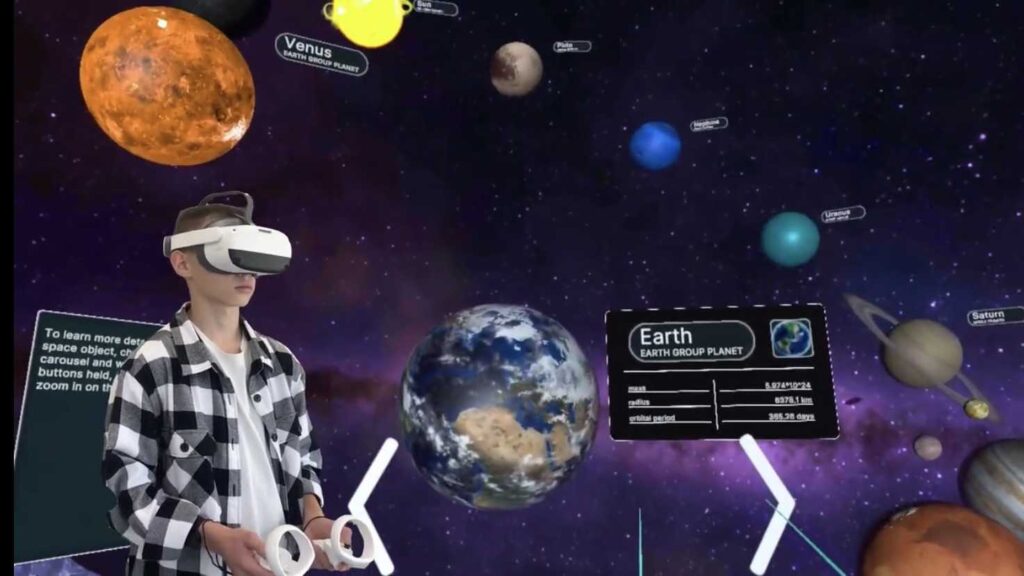
Forget passive videos.
The new generation of VR learning is hands-on and responsive.
Students perform virtual experiments, manipulate 3D models, and receive instant feedback.
Built-in knowledge checks keep students engaged
Interaction boosts memory retention by up to 40% compared to traditional learning
Students move, explore, and learn with their hands — not just their eyes
(You can see it in action in our “Mitosis and VR Anatomy” video on YouTube.)
Want to see what this feels like in your classroom?
👉 Book a live demo with XReady Lab today and experience how interactive learning really looks in 2025.
Each simulation at XReady Lab aligns with major international programs:
IB
Cambridge
NGSS
College Board
TEKS
CBSE
NCE
BNCC
…and many others used in the Netherlands, Italy, and beyond.
That means schools don’t have to reinvent lesson plans or worry about compliance — everything already fits the curriculum.
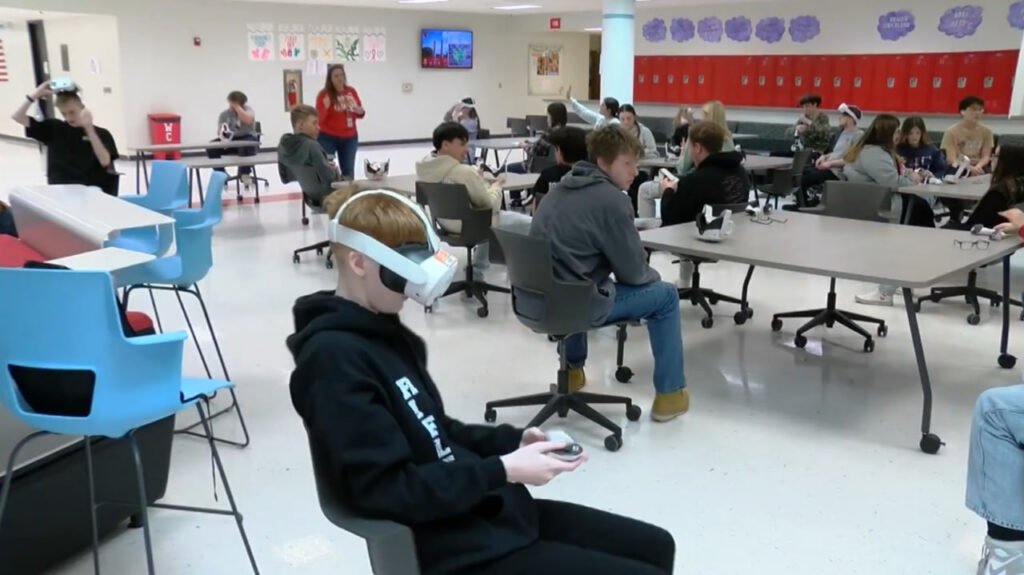
Teachers shouldn’t have to fight with technology.
That’s why XReady Lab is fully compatible with the leading classroom management systems already used in schools.
Each simulation comes with:
A Lesson Plan and Engagement Playbook
Clear guidance for before, during, and after the VR session
Reflection and analysis questions
Troubleshooting checklists
It’s everything teachers need to transform VR from a “tech gadget” into an actual learning environment.
One of the biggest mistakes early VR companies made was locking schools into proprietary headsets that only worked with their content.
We believe that’s completely wrong.
XReady Lab does not sell its own closed headsets. Instead, our simulations work perfectly with the most popular and affordable devices on the market:
Meta Quest
Pico
These headsets open access to huge content libraries across subjects — not just ours.
We even encourage schools to explore third-party educational VR content in design, history, and other STEM areas.
Our goal isn’t to trap schools in one ecosystem. It’s to make them successful and flexible.
Take a look at our VR simulation catalog — biology, physics, chemistry, and even “Future Career” packages like Future Biotechnologist and Future Astronomer.
Today, 800+ schools and 150,000+ students across the world use XReady Lab’s simulations to make learning immersive, measurable, and unforgettable.
From biology and physics to chemistry and future careers, our labs help schools modernize their curriculum without losing structure or quality.
Curious how it could look in your school?
👉 Schedule a short demo with our team — we’ll walk you through everything and tailor a plan to your needs.
In 2025–2026 – yes, absolutely.
If your last experience with VR in education was a clunky headset and a static 360° video, it’s time to see how far the technology has come.
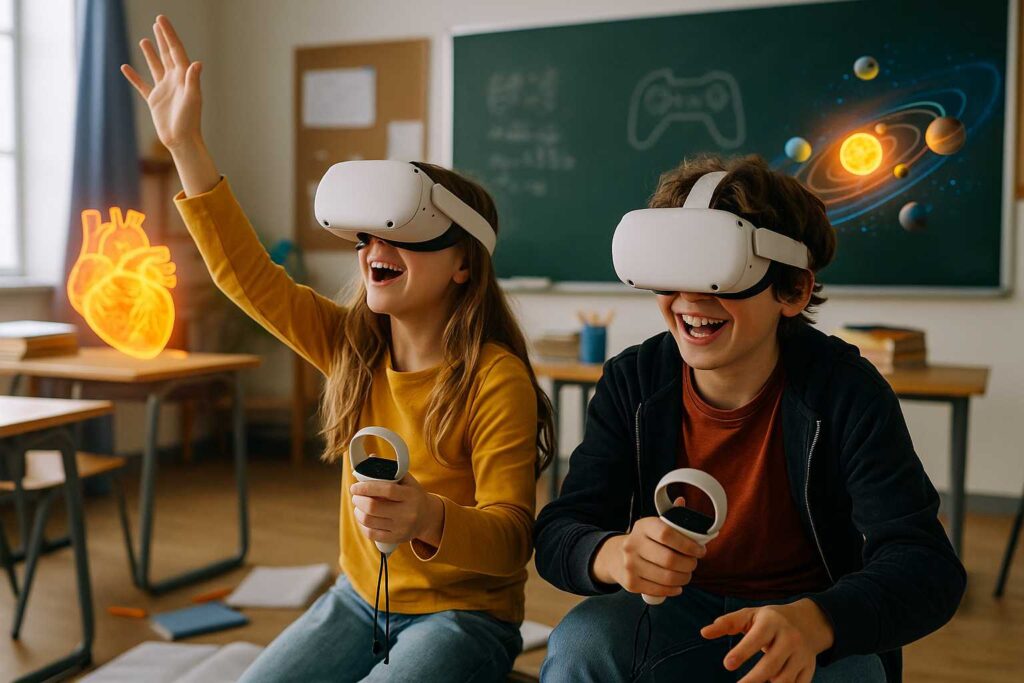
Modern VR is not about watching. It’s about doing.
Not about isolation, but collaboration.
And not about flashy tech demos, but sustainable, standards-aligned education.
The fastest way to see that difference?
👉 Book your school’s free demo now and get personalized recommendations from the XReady Lab team.
VR classrooms failed once because the industry misunderstood what schools actually need.
Today, with platforms like XReady Lab, the gap between innovation and education is finally closing.
So, the real question is no longer
“Should schools implement VR classrooms?”
It’s:
“How soon can they start?”
Frequently Asked
XReady Lab offers the largest K–12 STEM VR and Web/PC library with an AI Tutor. The packages include biology, physics, chemistry, and math, covering topics from primary school through high school.
All content is designed to align with major curricula and deliver engaging, interactive learning experiences. New simulations are added monthly.
XReady Lab’s simulations are aligned with IB, Cambridge IGCSE, AS & A Levels, NGSS, College Board, Common Core, TEKS, CBSE, BNCC, the National Curriculum for England, the Italian secondary school curriculum (Scuola Secondaria), and the National Curriculum of the Netherlands (VMBO, HAVO, VWO).
Career Packs are VR simulation bundles that let students explore STEM careers in practice. Current packs include: Future Doctor, Future Nurse, Future Engineer, Future HVAC Engineer, Future Biotechnologist, Future Astronomer, Future Neuroscientist.
New Career Packs are added regularly.
XReady Lab Superhuman AI Tutor works like a real tutor, guiding students step by step instead of giving ready-made answers. It focuses on reasoning, problem-solving, and explaining mistakes to build real understanding.
Created by international STEM Olympiad winners and coaches, it helps prepare for exams, increases memory retention by 40%, and works in real time in both VR and desktop formats with an internet connection.
XReady Lab packages include complimentary teacher training and ready-to-use Lesson Plans and Engagement Playbooks to support engaging lessons.
They guide teachers in integrating VR/web/PC simulations with clear objectives, step-by-step instructions, classroom management strategies, reflection activities, assessments, and technical checklists — helping teachers run effective lessons beyond the simulations themselves.
Simply fill out the free demo form here to get access to demo XReady Lab simulations.
We start with consultation: our team helps plan the VR classroom for your school. You need internet access and a suitable room — allocate about 5 x 5 feet (1.5 x 1.5 m) per student. One headset per two students works well.
Devices and licenses: schools can use existing Meta Quest or Pico devices and purchase licenses, or we can offer discounted devices or a turnkey solution with pre-installed content.
After purchase, we guide device setup and content installation and provide teacher training.
Teachers learn how to run VR lessons using Lesson Plans and Engagement Playbooks, manage screen casting and paired learning, and keep students engaged.
Ongoing support is always available.
VR lessons typically last 5–15 minutes, depending on the simulation, with a recommended class size of up to 20 students. Screen casting is supported and compatible with selected teacher management systems, allowing teachers to launch simulations remotely, monitor progress, and view all devices during lessons.
Teachers are supported with Lesson Plans and Engagement Playbooks that include learning objectives, step-by-step lesson flow, classroom scenarios, reflection questions, practical assignments, and assessment guidance.
XReady Lab is available worldwide and supports 75+ languages. Today, it is used by 800+ schools and 150,000+ students across the globe.
XReady Lab simulations are offered through flexible licensing packages, depending on the format and subjects you need:
If you already have VR headsets, you only purchase licenses. If not, we can also help you choose the most cost-effective setup and licensing model for your school or family.
XReady Lab works with the most widely used standalone VR headsets in schools:
All supported devices are standalone (no PC required), making them easy to deploy and manage in a school environment.
Yes. XReady Lab supports open ecosystems, not closed platforms. Schools can freely use third-party VR content alongside XReady Lab on Meta Quest and PICO headsets.
We encourage schools to diversify their VR classrooms with high-quality educational apps and can recommend tested solutions, helping expand learning beyond STEM into subjects like design, history, environmental studies, and soft skills.
XReady Lab follows school VR safety best practices. VR is recommended for students 10–12+, with short 5–15 minute sessions and seated or safe-zone use under teacher supervision, supported by screen casting.
First-time users adapt gradually. Students with medical conditions require parental and school approval, and hygiene is ensured through regular headset cleaning and replaceable face covers.
Families can access XReady Lab simulations at home in two ways:
