menu

Critical Thinking: The Soft Skill That Future-Proofs Every Career

Modern workplaces are evolving at breakneck speed. A child dreaming of becoming a social-media influencer today might find that role obsolete by the time they finish college. Meanwhile, entirely new professions—unheard of just a decade ago—are reshaping the global job market. In this swirl of change, there’s one type of skill set that remains essential no matter how industries transform: soft skills. Among them, critical thinking stands out as a powerful tool for cutting through uncertainties, filtering out misinformation, and making well-informed decisions.

Soft Skills vs. Metacompetencies: A Quick Refresher

This article continues our exploration of soft skills, following previous discussions about crisis management. Many people conflate soft skills with metacompetencies, yet they’re fundamentally different:

  • Soft Skills: Practical abilities—like communication, problem-solving, or leadership—that help individuals excel in various contexts.

  • Metacompetencies: Inherent personal traits (e.g., resilience, adaptability) that shape a person’s overall approach to learning and growth.

A study cited by the National Soft Skills Association reveals that 85% of job success comes from well-developed soft skills and interpersonal abilities, while only 15% depends on technical knowledge. Despite this, the majority of training budgets often focus on hard skills alone. This imbalance persists even though the world keeps changing—and keeps demanding agility above all else.

Why Critical Thinking Rises Above the Rest

Critical thinking is the capacity to question, analyze, and draw reasoned conclusions based on evidence. In a future filled with jobs that don’t yet exist, the one sure bet is that people who can distinguish facts from fiction and truth from clickbait will remain in high demand.

  1. Navigating Uncharted Careers
    Kids today may end up in positions that don’t fit traditional roles. Regardless of the job title, being able to evaluate new information and solve unique problems is universally beneficial.

  2. Shielding Against Information Overload
    We live in an era of constant news streams and viral social posts. Critical thinking helps cut through the noise, ensuring that crucial decisions—personal or professional—are based on credible sources.

  3. Empowering Future Innovators
    Whether they’re designing code for virtual reality education solutions or heading a brand-new department in a tech startup, critical thinking paves the way for meaningful innovation and sustainable growth.

From STEM Labs to VR Biology: Integrating Critical Thinking

A major reason soft skills often take a back seat in the classroom is that schools struggle to keep pace with shifting demands. However, educators can weave critical thinking exercises directly into subjects like math, physics, or biology:

  • STEM Lab Investigations
    Present students with puzzling results—like unexpected data in VR physics or VR chemistry simulations—and challenge them to deduce the underlying causes. This approach strengthens problem-solving and analytical reasoning.

  • VR in the Classroom
    Immersive activities engage students more deeply than lectures alone. With VR for learning, schools can simulate complex real-world scenarios that push learners to think logically and evaluate multiple perspectives. For example, a VR biology task might simulate an evolving ecosystem, prompting students to identify which variables influence species survival.

  • Project-Based Learning
    Assign open-ended projects—like designing a mini greenhouse or analyzing viral online claims—where students must gather evidence, brainstorm solutions, and defend their conclusions. Let them experiment with digital tools or VR in schools to foster active exploration.

Hands-On Training Activity: Spotting Fake News

An effective way to develop critical thinking is to let students practice on the cluttered online landscape they already navigate daily. Here’s a fun, classroom-ready exercise:

  1. Prepare Headlines
    Gather headlines—both genuine and outlandish—from various sources. This can tie into an existing biology topic (e.g., “British scientists discover new bacteria that ‘kills kidneys’”) or a math theme (“Student calculates a ‘flaw’ in the Pythagorean theorem”).

  2. Team Competition
    Split the class into groups. Give them a set of headlines and ask them to categorize which are real and which are fake. Each group must justify their reasoning, focusing on language cues, source credibility, and factual accuracy.

  3. Mini-Debate
    After sorting headlines, hold a quick debate. One team defends the fake headline as if it were real, while the other team tries to expose the flaws. This approach trains learners to see both sides of an argument—boosting their analytical and communication skills.

  4. Linking to Daily Lessons
    This extra activity can seamlessly fit into a biology, math, or other subject area. For instance, if the topic is evolution in science class, incorporate a bizarre headline about a newly discovered amphibious cat—students must use their knowledge of genetics and ecosystems to refute (or confirm) the claim.


Why Schools Should Embrace Critical Thinking Now

  1. Future-Proofing Students
    As careers shift, the timeless qualities of analyzing data, questioning assumptions, and reaching logical conclusions remain essential.

  2. Building Confidence
    Being able to sift through falsehoods and stand by evidence-based decisions fosters an inner sense of security—students trust their ability to handle complicated tasks.

  3. Nurturing Responsible Citizens
    Beyond professional settings, critical thinking helps individuals navigate social issues, media biases, and civic responsibilities, creating engaged citizens.

Enriching Minds with Technology

Schools can enhance critical thinking by using emerging tools. For instance, a digital classroom that integrates interactive classroom activities or even advanced VR technology helps students visualize challenging concepts:

  • VR classrooms: Transport learners into historical events or hypothetical science scenarios. They’re forced to interpret details, weigh evidence, and solve problems organically.

  • STEM lab meaning: Goes beyond test tubes and circuit boards; it expands into digital experiments that motivate students to look deeper, ask the right questions, and form evidence-based conclusions.

Through the right mix of thoughtful lesson design and immersive tools, children become not just good students but inquisitive thinkers capable of innovating in any field—existing or yet to be invented.


Final Thoughts

Critical thinking isn’t a trend. It’s an enduring, fundamental soft skill that empowers young minds to adapt in an ever-changing career environment. Schools, educators, and parents can seamlessly incorporate it into subjects such as math or biology, reinforcing real-world relevance. Whether through fending off clickbait in a mock news exercise or using VR in the classroom to examine data from virtual experiments, every instance of practice makes tomorrow’s adults more adept, resilient, and innovative.

If we’re serious about preparing children for a future of unpredictable job markets, we need to give critical thinking its rightful place alongside technical skills. The world may shift, but the ability to question, analyze, and reason will never go out of style.
Communication Superpower: The One Soft-Skill Every Future Career Needs

The World Keeps Spinning—Talkers Keep Winning

Autonomous trucks, AI lawyers, lab-grown meat—careers transform so quickly that a sixth-grader’s dream job could be extinct by college graduation. In this whirlwind, communication stands tall. A clear idea, phrased the right way, still moves hearts, lands funding, and turns a rough prototype into a global product. Code may compile in seconds, but people still negotiate, reassure, and persuade at human speed.


Soft-Skills vs. Meta-Skills: Ground and Growth

Meta-skills—adaptability, curiosity, resilience—are the fertile soil. Soft-skills are the crops you plant and harvest: leading a meeting, debating a hypothesis, or smoothing a tense chat thread. A quick reminder from Harvard-backed research cited by the National Soft Skills Association: 85 percent of job success links to interpersonal abilities, yet only about a quarter of training budgets address them. In 2025—an era of remote-first teams and AI co-workers—that gap is downright risky.


Anatomy of 21st-Century Communication

Element 1995 Classroom 2025 Reality
Audience Reach Essays read by one teacher Global Slack channels & livestreams
Tone Detection Face-to-face only Emojis, GIFs, and cross-culture nuances
Feedback Loop Weekly report cards Instant push-notifications

Modern communicators juggle text, voice, and holographic avatars. They shift tone from a TikTok explainer to a grant-proposal—sometimes in the same hour. Teaching kids to hop smoothly among formats is now as critical as teaching them to multiply fractions.


HandsOn Classroom Blueprint for the Communication Soft Skill

Activity A — Impulse vs. Intent


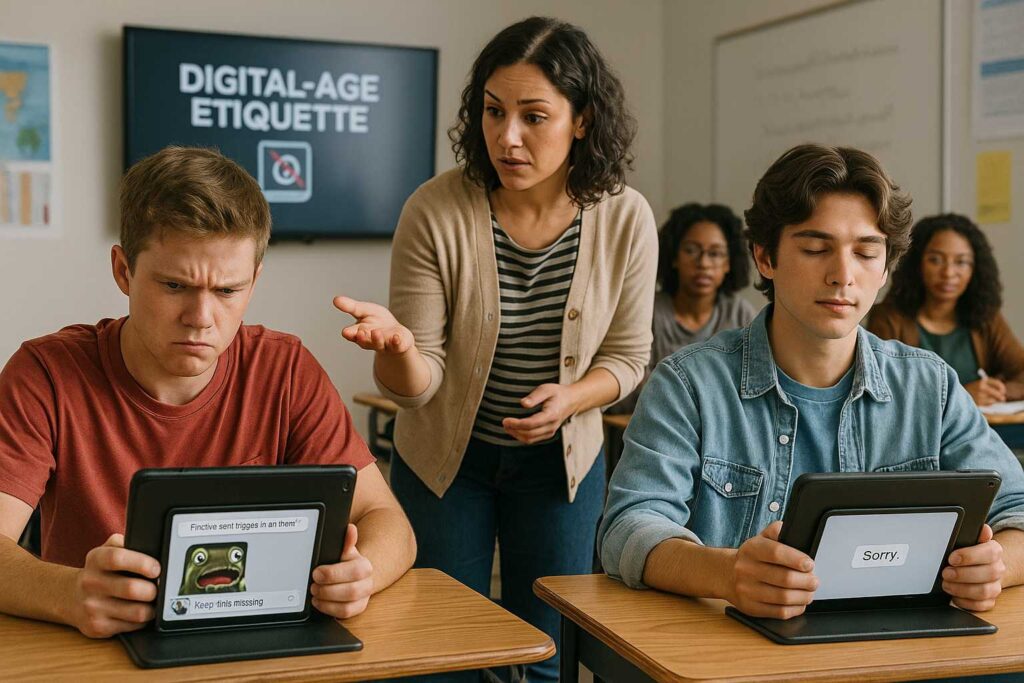
Start with a short video on digital-age etiquette, then hand out situation cards such as “A classmate tags you in a meme you find offensive.” Students type a knee-jerk response on their tablets—no self-editing. Next, they pause, breathe, and reread the scenario through an empathy lens: What might the sender be thinking? What clarification could prevent conflict? Learners rewrite a calmer message aimed at understanding, not winning. Close with a five-minute debrief on the “emotional shield” toolkit—controlled breathing, mental reframing, and curiosity-driven questions. A side-by-side screenshot of both drafts drives home how strong communication soft skills reshape outcomes.

Activity B — Biology Broadcasts


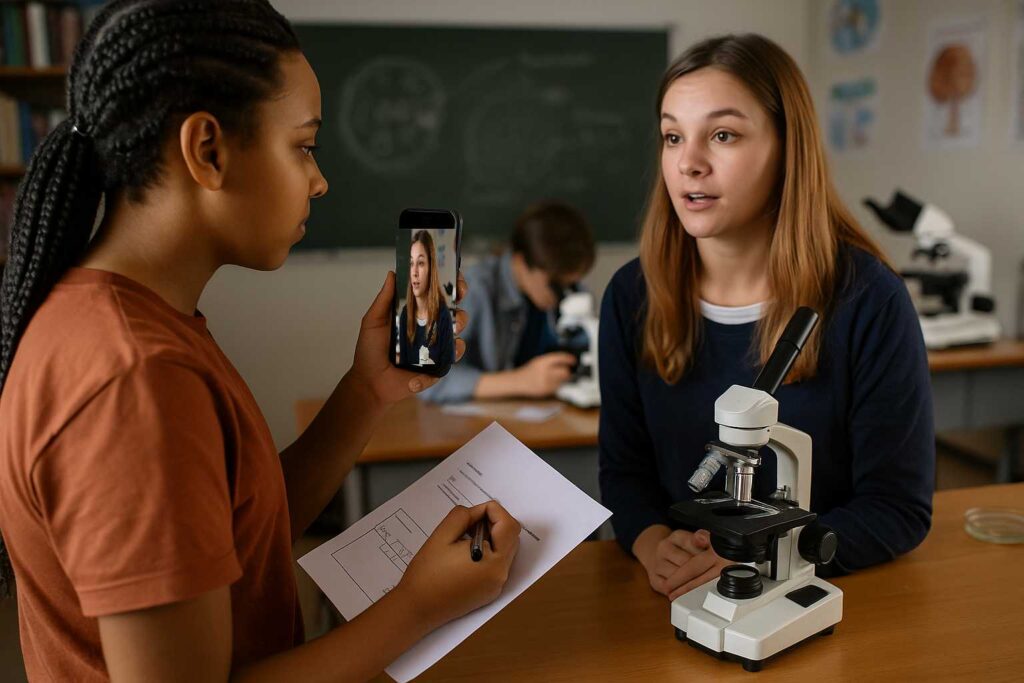
Turn a mitosis lab—microscope or VR biology—into a newsroom. A rotating “science-journalist” interviews teammates mid-experiment: Why does spindle-fiber formation matter? What shocked you about anaphase? Using a smartphone and a storyboard template, the journalist edits a sixty-second vertical video designed for eighth-grade viewers. The clip must avoid jargon, feature a vivid analogy, and end with a headline-style takeaway. Classmates vote on clarity and creativity, reinforcing the core communication soft skill of translating complex STEM ideas into everyday language.

Activity C — Math-Talk Relay


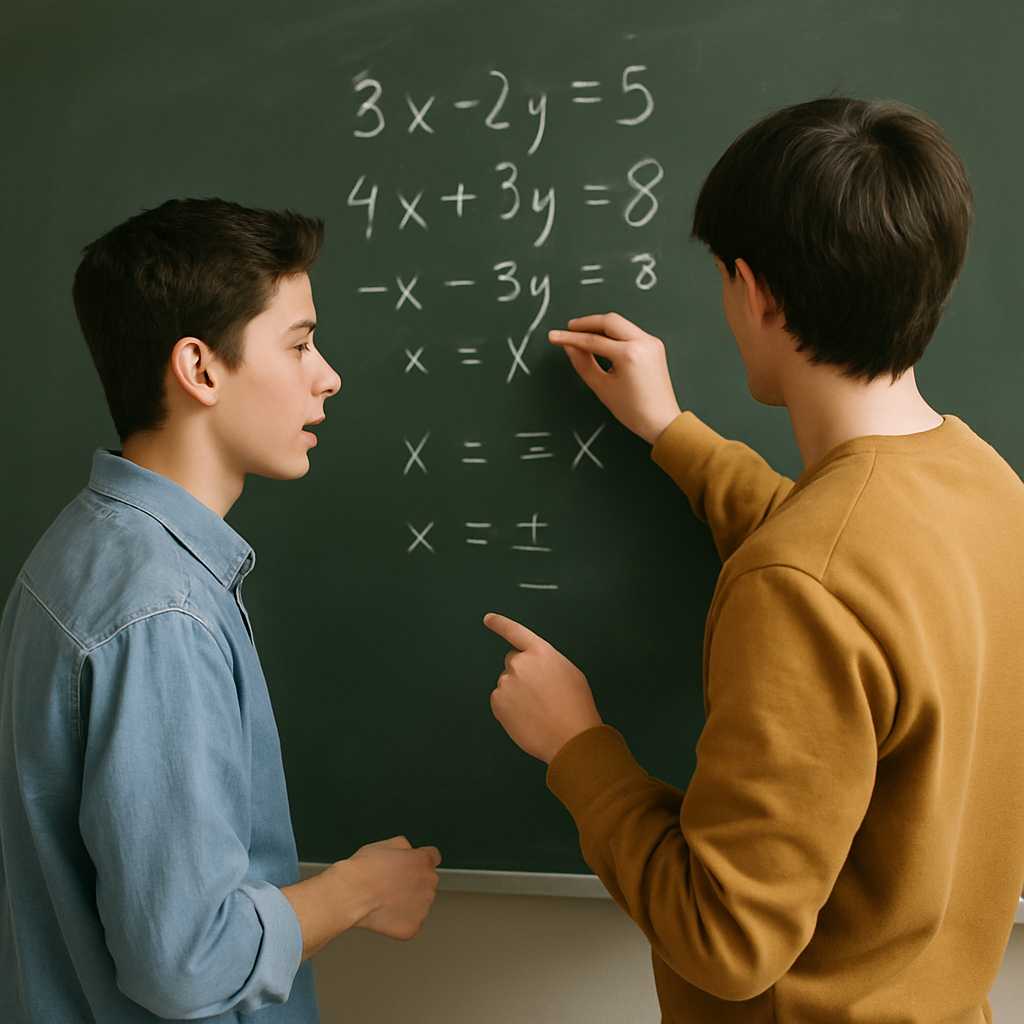
Two students work through a system of equations at the board. Partner A explains the first algebraic move aloud—“Subtract 3y from both sides to isolate x.” Without hesitation, Partner B paraphrases in fresh words—“You’re balancing by removing the same term on each side.” Roles switch at every step until they solve the problem. A quick reflection pinpoints which rephrased lines clarified the concept and where misunderstandings crept in. The relay sharpens active listening and real-time articulation—hallmark traits of effective communication—without extending the math period.


Data-Backed Benefits

  • Retention Spike: Students who explain a concept aloud remember 25 percent more after one week, per recent Journal of STEM Education findings.
  • Stress Drop: Structured dialogues reduce classroom-anxiety scores, making space for creative risk-taking.
  • Equity Lift: Clear-communication protocols give multilingual or neurodiverse students repeatable frameworks, shrinking participation gaps.

Layering Technology—When and Why

A once-a-week immersive session can turbo-charge empathy and body-language reading. XReady Lab’s cultural VR-labs, for example, drop learners into scenarios where gestures and eye-contact rules differ by region. Students must adapt in real time—skills that carry straight into global project teams. Because headset time is limited, it feels special, not gimmicky, and keeps our VR keyword footprint healthy.


Corporate Echo: What Employers Say

A 2025 LinkedIn Workplace Trends survey lists “multi-channel communication—including AI chatbots” as the second-most-desired competency, just behind adaptability. Biotech recruiters now expect junior lab technicians to draft plain-language explainer posts for investor newsfeeds. Even algorithms need human translators who can turn statistical output into a story a mayor—or a sixth-grader—understands.


Building a Long-Game Strategy

  1. Daily Micro-Moments
    Start each period with a 90-second “explain-it-back” ritual. One random student summarizes yesterday’s concept. Classmates snap fingers for clarity, clap for creativity. Quick, fun, and it trains spontaneity.
  2. Feedback in Two Directions
    Encourage students to critique how peers speak, not just what they say. Laddered feedback—voice tone, eye-contact, structure—normalizes constructive critique and polishes delivery.
  3. Cross-Curricular Showcases
    Pair physics-project demos with English-class podcast scripts. Let art students design infographics for chemistry data. Communication becomes the connective tissue across subjects, showing its real-world prevalence.

Where VR-Classrooms Fit

Used strategically, immersive tech amplifies verbal and non-verbal skills:

  • Team-based VR-physics challenges demand clear, time-boxed calls.
  • Virtual-tour storytelling in a digital-classroom pushes students to narrate while navigating 3-D worlds.
  • Real-time analytics on gaze and pause length help teachers coach pacing and engagement.

Count to eight: we’ve mentioned the main keyword just enough—no spamming, full impact.


From School Desk to Startup Pitch

Students who master communication pivot faster when industries pivot. They decode customer pain points, rally teammates, and sell ideas to investors—all before lunchtime. Whether they enter a STEM-lab meaning biotech research or launch a VR-learning platform, their words power their progress.


Move from Silent Worksheets to Vibrant Dialogue

Want to see how immersive tools can kick-start articulate, confident students? Request an XReady Lab demo and watch your classroom transform into a buzzing hub of discussion, debate, and discovery—skills no algorithm can automate.

Modern Kids, Modern Ethics: How Virtual‑Reality Classrooms Replace Animal Dissections in 2025

The smell of formaldehyde and the sight of a preserved frog on a tray once defined “hands‑on” biology. For Gen Alpha—the eco‑minded, cruelty‑conscious students now filling our schools—that scene feels dated, even disturbing. Plant‑based diets, climate‑activist role models, and nonstop social media have reshaped what young people consider ethical science. When a lesson crosses that line, engagement plummets.

So how do teachers protect the practical side of learning while respecting new values? Let’s dive into why expectations shifted, what alternatives work, and how virtual‑reality classrooms keep inquiry alive without a single scalpel.

1. Why Gen Alpha Rejects Traditional Dissection

• Compassion culture. YouTube channels showing rescued farm animals rack up millions of views. Cutting a creature open clashes with a daily feed of vegan recipes and wildlife‑rehab stories.
• Digital immersion from birth. Students used touchscreens before they could write cursive. If a digital‑classroom tool can reveal the inside of a lung in 8K detail, a preserved specimen looks crude.
• Climate and sustainability mindset. Reducing waste and protecting biodiversity feel urgent, not abstract. Preserving dozens of animals for annual labs sends the wrong signal.

2. Survey of Ethical, Hands‑On Alternatives

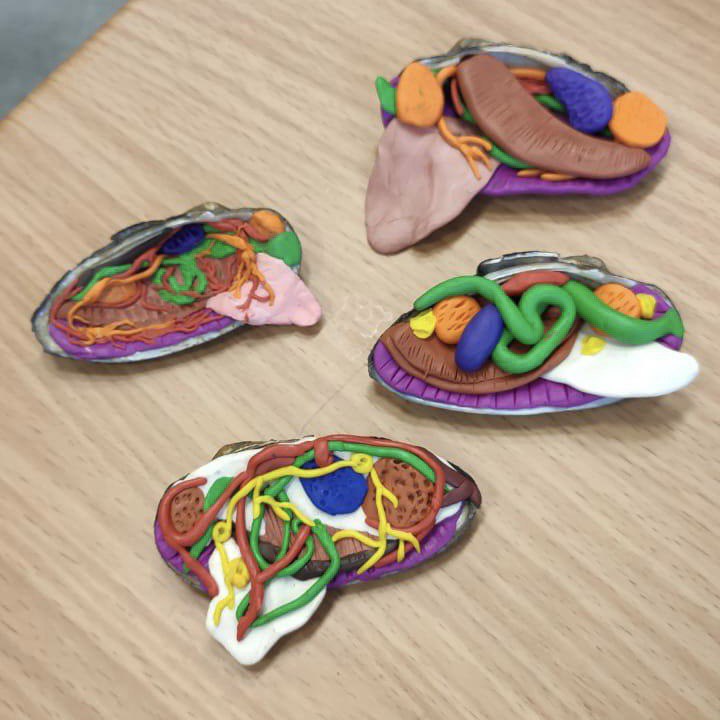
Photo by: https://www.linkedin.com/in/azamat-driaev-0b482bb3/
Method What Students Do Why It Clicks in 2025
Clay & Eco‑clay Models Sculpt hearts, neurons, or lungs from biodegradable materials. Boosts creativity and fine‑motor skills; zero ethical concerns.
High‑Fidelity Silicone Kits Reusable organs with realistic texture and color. No preservatives, repeatable for practice or make‑up labs.
Immersive Dissection Simulators Strap on a headset and peel back virtual frog tissues layer by layer. Delivers true interactivity, detailed visuals, and built‑in assessments.
Teacher tip: Combine approaches—start with clay to build spatial awareness, then move into a headset for step‑by‑step virtual exploration.

3. Case Study: Frog Dissection Goes Digital

Dissection Simulator: Frog Edition

The Dissection Simulator — Frog Edition on the Meta Quest store drops learners into a 3‑D lab where:

  • Each incision is guided by on‑screen prompts, so students can’t “do it wrong.”

  • A zoom function dives from whole body to cellular structures in seconds.

  • Unlimited resets let classes practice until the anatomy sticks.

Early trials show a double win: students remember more anatomy terms and report lower stress compared with physical labs.

4. Maintaining Rigor Across All Sciences

Ethical upgrades shouldn’t water down scientific rigor, and immersive technology proves they don’t have to. In physics, students can launch virtual projectiles from towering cliffs, recording trajectories and manipulating gravity without shattering a single beaker. Chemistry lessons move volatile experiments into a sealed digital hood, where learners tweak reagents and observe instant results—no fumes, no waste, just pure inquiry. Environmental‑science classes now model global carbon‑capture strategies on simulated planets, adjusting variables and watching real‑time climate data respond. By embedding these virtual reality learning experiences into the STEM lab, schools meet safety requirements, respect modern ethics, and still preserve the depth and excitement of a truly experiment‑driven curriculum.

5. Quick Wins for Teachers on Tight Schedules

  1. Ethics Warm‑Up (3 minutes). Start class with a question—“Should animals ever be used in research?”—and collect anonymous yes/no votes on a tablet. Reveal the split, then segue into your lesson.

  2. Build‑Then‑Explore (20 minutes). Students sculpt a simple organ (e.g., a heart) from eco‑clay, label parts, and photograph it. Next, they compare their model to the beating 3‑D version inside a headset.

  3. Reflection Reel (5 minutes). After each immersive session, kids record a 60‑second video log: “What surprised me?” These clips make quick formative assessments and showcase growth.

6. Why XReady Lab Fits the 2025 Classroom

XReady Lab’s catalog covers cell‑division mitosis, gas exchange, and other core topics—all aligned with U.S. and international standards. The modules run on popular headsets such as Meta Quest 2, Meta Quest Pro, Pico Neo 3, and Pico 4, meaning schools can repurpose existing devices. Built‑in analytics let teachers track time‑on‑task, quiz scores, and even eye‑gaze data to see where learners struggle

Is VR Education Really a Magic Bullet—or Just Hype?

Let’s be honest: virtual reality in education sounds like the coolest thing since sliced bread. The idea of students stepping into VR classrooms, exploring VR biology labs, or traveling across the solar system in VR physics is undeniably appealing. But is VR truly the all-encompassing cure that will magically fix disengaged students, outdated teaching methods, and complex STEM topics? Let’s take a closer look, referencing real examples of VR learning that bring this debate to life—and see where VR is brilliant and where it might fall short.

VR Brings Biology Alive—But Does It Fit Every Curriculum?

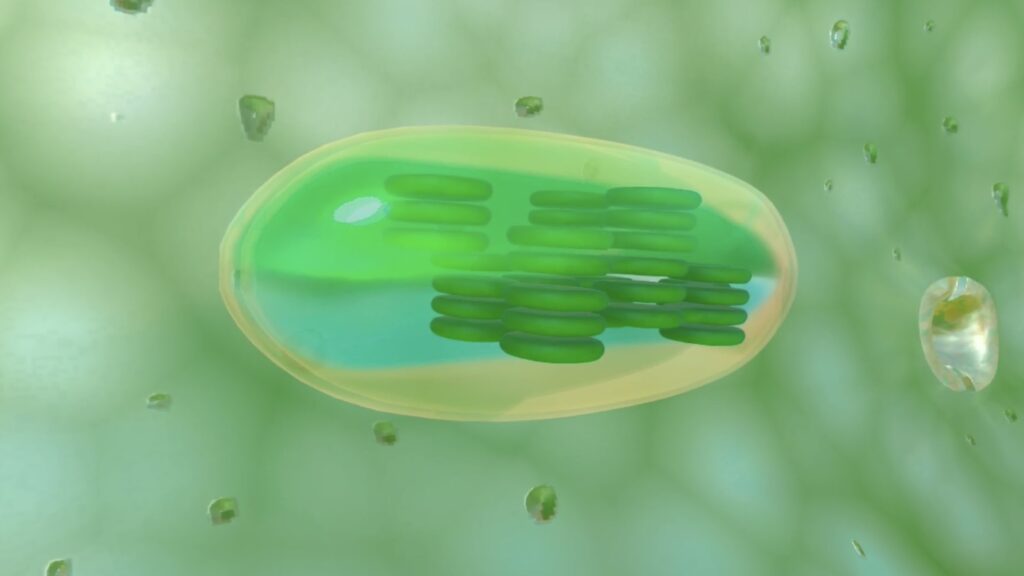
XReady Lab VR education: VR Photosynthesis laboratory

When people talk about VR for education, biology is often the first subject that comes to mind. Imagine your class exploring the inner workings of a cell in 3D rather than staring at flat illustrations.

  • Diving Inside Cells
    For instance, XReady Lab’s VR Cell showcases how students can “step into” organelles instead of just looking at them in a textbook. This approach transforms cell biology into a hands-on journey, helping learners to see the life and structure inside a plant or animal cell. The result? Real engagement with a topic that’s often seen as too abstract.
  • Making Mitosis Tangible
    Meanwhile, Mastering Mitosis with XReady Lab VR tackles the dreaded cell-division lesson. Rather than memorizing phases from a chart, students get to interact with chromatids, observe the nuclear membrane’s breakdown, and actually “feel” each stage of mitosis. That’s huge for retention and excitement. Still, teachers must ensure these tools align with their school’s curriculum, so it’s not just a flashy demo but an actual STEM lab experience that fits national standards.

Rocketing into Space or Exploring Physics—Potential vs. Reality

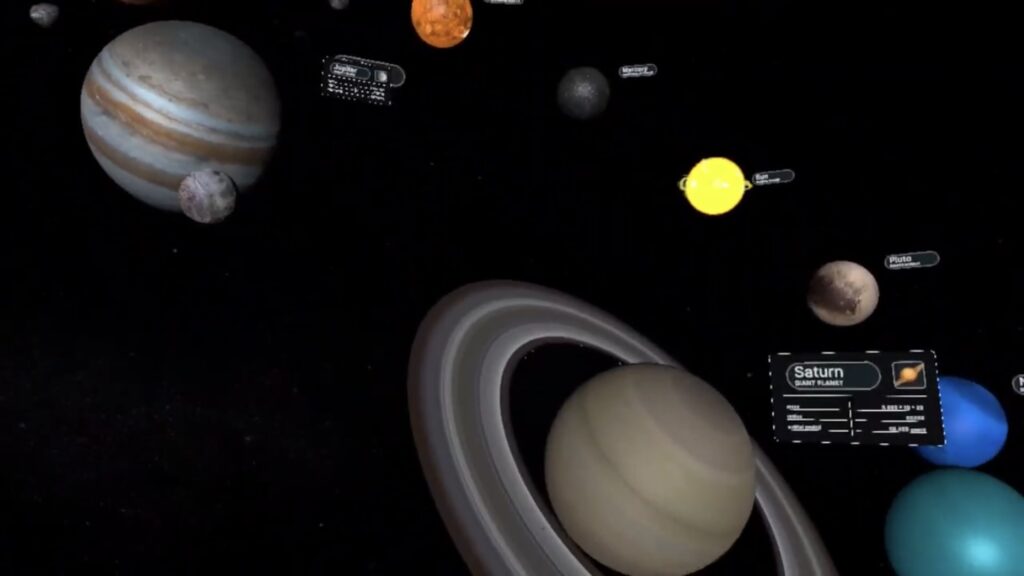
Solar System Xready Lab

Beyond biology, physics also benefits from immersive VR, letting students perform advanced experiments without the safety risks or expensive lab equipment.

  • VR Solar System Adventures
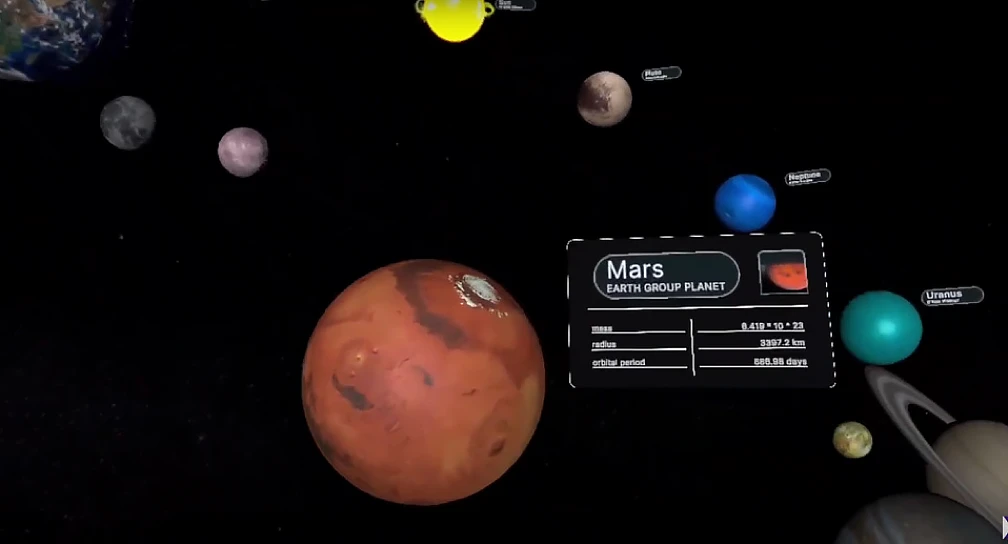
    Apps like XReady Lab’s VR Solar System transport learners into outer space. Students “land” on planets, adapt to extreme conditions, and digest cosmic facts that used to be too huge or too distant for them to grasp. It’s captivating and perfect for astronomy lessons, but it won’t replace a comprehensive physics curriculum by itself.
  • Electrifying Lessons
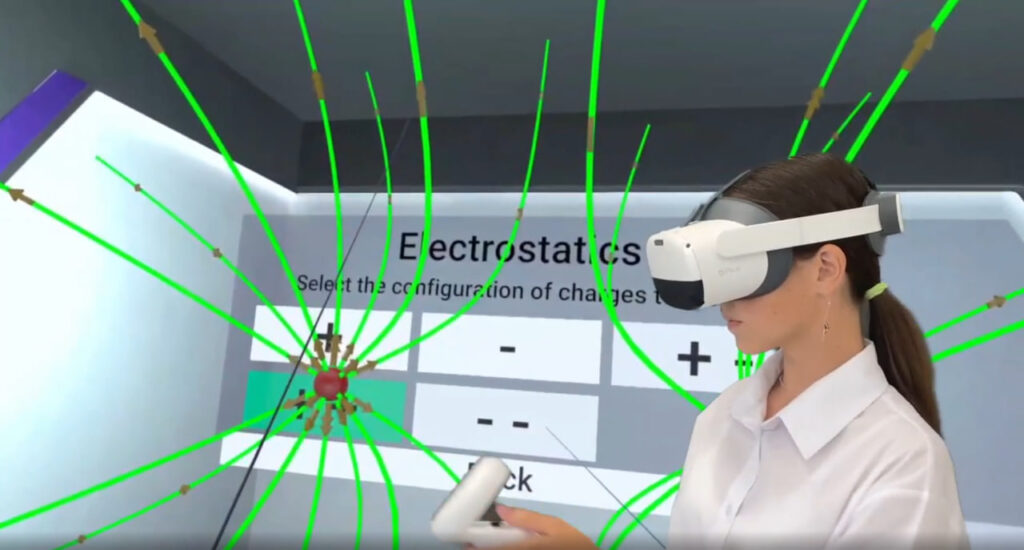
    Another example is the concept of electrification in physics, which might seem mysterious or dry until students see it in virtual reality. As highlighted in Exploring Electrification in Virtual Reality (note the same link covers multiple VR physics topics), VR can show electrons transferring during friction, contact, or induction. This clarity beats any blackboard diagram you’ve drawn. However, teachers still need to ensure alignment with official standards and confirm that students have the background knowledge to interpret what they see.

Beyond Academics: Tackling Social Issues and Safety with VR

The power of virtual reality education doesn’t stop at labs. It can also address critical social and emotional aspects of school life.

  • Bullying Intervention
    In Combating School Bullying with Virtual Reality, we see how VR scenarios can help students practice empathy and conflict resolution. Instead of a dull lecture on why bullying is wrong, kids immerse themselves in safe, realistic encounters that foster genuine understanding. Impressive, but again, schools need a broader anti-bullying framework to see major results.
  • Emergency Preparedness
    Similarly, Enhancing School Safety with Virtual Reality reveals VR’s potential to train staff and students for intruder or fire drills. You can simulate scenarios nobody wants to enact in real life, but the technology must be complemented by real-world protocols and teacher oversight.

At-Home STEM Exploration: Great, But Not Always Curriculum-Tied

XReady Lab VR education: VR Mitosis laboratory

It’s no secret that VR can also revolutionize home learning. Parents often panic when they see kids glued to gaming headsets or phones, assuming zero educational value. But that doesn’t have to be the case.

So, Is VR the Ultimate Fix?

Given these examples, it might seem VR is unstoppable. But is it really a “magic bullet” for every problem in education? Possibly not. Even the most engaging VR learning platform can’t fix every systemic issue:

  1. Alignment with Curriculum: Great VR apps are pointless if they don’t fit seamlessly into a recognized course of study. Tools like XReady Lab do a good job of referencing global standards, but many third-party apps don’t.
  2. Teacher Training: Fancy VR gear is worthless if teachers aren’t trained or lack time to integrate it properly. Time constraints and administrative burdens can stifle even the best-intentioned educational technology.
  3. Budget and Access: VR headsets for schools—particularly high-quality ones—can be expensive. Some VR solutions for schools are cost-effective, but not all.
  4. Educational Goals vs. Tech Demos: VR might wow students, but are they meeting required learning objectives? Educators must distinguish between novelty and deep, lasting knowledge.
  5. Student Safety and Health: Is virtual reality safe for extended use? Short sessions can be beneficial, but not everything needs to be in VR.

Conclusion: A Powerful Tool, Not a Cure-All

“VR education is awesome,” you say. “Why aren’t all schools using it?” The simple answer is that while VR offers incredible advantages—like interactive classroom activities, improved STEM lab experiences, and digital classroom innovations—it’s not the only path forward. Nor is it automatically the best solution for every challenge teachers and students face.

Still, the possibilities are thrilling. Through carefully designed VR lessons, students can explore everything from the internal structure of cells to electrification in physics, from bullying interventions to emergency responses. Used thoughtfully, VR can transform how we learn and teach.

Just remember: no single technology instantly solves all educational dilemmas. By blending virtual reality in education with strong pedagogy, relevant curricula, and ongoing teacher support, we stand a better chance of giving kids the rich, future-focused learning experiences they deserve.

Generation Alpha: Preparing Today’s Children for a Fast-Changing World

The alpha generation, born after 2010, is unlike any group of learners we’ve seen before. Raised in a world of digital classrooms, smartphones, and instant access to information, these children approach life and learning with fresh perspectives. Whether interacting with VR biology, exploring VR physics, or tackling STEM lab challenges, Gen Alpha thrives on immersive, tech-driven experiences that blend real and virtual worlds.

Understanding Generation Alpha

Defining the Alpha Generation

The alpha generation follows Gen Z, comprising children born in a hyper-connected era where digital devices have been part of their daily routines from early childhood. These youngsters fluidly navigate between offline and online spaces, making technology in education an essential factor in capturing their attention and fueling their curiosity.

Key Traits That Influence Learning

  1. Tech Immersion
    With gadgets and social platforms at their fingertips, alpha kids are well-versed in everything from VR learning apps to advanced VR education services. They demand interactive, visually captivating experiences.
  2. Rapid Information Processing
    accustomed to the internet’s fast pace, they can seamlessly absorb content that’s compact and interactive. VR in classrooms is ideal, offering interactive classroom activities that deliver dense material in engaging ways.
  3. Visual Preference
    Growing up amid memes, videos, and gaming, alpha learners lean toward vivid imagery. That’s why virtual reality in education—with its high-impact visuals—resonates strongly with them.
  4. Constant Connectivity
    Children enrolled in digital classes see no strict boundary between online and offline. A well-implemented VR classroom matches their expectations of fluid, tech-powered learning.

The Role of Virtual Reality in Meeting Gen Alpha’s Needs

Why VR?

Virtual reality can enhance both STEM lab lessons and creative activities, catering to students who crave dynamic, hands-on experiences. From VR biology to VR chemistry:

  • Visual Engagement: Seeing complex processes, like cell division, in 3D helps alpha learners internalize concepts faster.
  • Deep Interaction: Instead of passively listening, students participate in tasks like dissecting virtual cells or testing wave properties, bringing VR physics to life.
  • Instant Feedback: Gamified labs and VR learning platforms provide quick responses to actions, guiding and reinforcing correct practices in real time.

Examples of VR in Schools

  • XReady Lab VR Plant Cell: Offers an immersive exploration of cellular structures, aligning with IB, Cambridge, and other major curricula.
  • Optics Simulations: Students can manipulate lenses and prisms, witnessing refraction and diffraction in real time without the setup hassles of a physical lab.

By incorporating these VR solutions for schools, educators save time on preparation and free themselves to focus on interactive teaching.

Transforming Education for the Alpha Generation

Adapting Lesson Plans

Older approaches—like lectures or purely text-based assignments—may not keep alpha learners interested. Integrating technology used in education—ranging from classroom VR sets to fully intelligent classroom environments—can sustain engagement and improve comprehension.

Maintaining STEM Interest

As students progress to higher grades, challenging topics like advanced VR physics or VR chemistry can cause them to lose interest. By infusing lessons with benefits of virtual reality in education, teachers keep excitement levels high and demonstrate real-world applications.

Freeing Educators from Routine

Teachers benefit too. When a VR class replaces elaborate experiments, educators can dedicate more time to mentoring and inspiring students, rather than juggling equipment. Tools like AI or VR can offload mundane tasks, letting teachers do what they do best—guide, motivate, and personalize learning.

Real-World Benefits of VR Education

  1. Increased Engagement: Interactive classrooms using VR tech lead to better focus and enthusiasm.
  2. Stronger Understanding: Complex ideas—from genetics to optics—become clearer through hands-on, visual exploration.
  3. Confidence Building: Students experience success in a safe, virtual environment, motivating them to tackle challenging subjects.
  4. Future-Ready Skills: Familiarity with VR headsets for education and technology in schools prepares alpha kids for a workforce dependent on emerging technologies.

Ready to See the Power of VR in Action?

XReady Lab VR education: VR Mitosis laboratory

XReady Lab has developed VR simulations tailored for Gen Alpha learners, blending STEM lab meaning with captivating, interactive experiences. From VR biology modules like a plant cell deep dive to VR physics labs focusing on optics, our programs align with major curricula—ensuring seamless adoption in your VR classroom.

Request Your Free Demo Today

https://xreadylab.com/request-demo-page/

Discover how these short, impactful VR lessons can boost alpha students’ interest in science, enhance retention, and transform your teaching approach. Watch as kids immerse themselves in virtual reality classrooms, uncovering new dimensions in subjects they once found mundane.

Final Thoughts

Generation Alpha isn’t drifting away from learning; they’re demanding innovative approaches that match their highly connected lifestyles. By incorporating virtual reality in education, educators can unlock an immersive education experience that resonates with how alpha kids naturally absorb information.

Far from “dumbing down,” these young minds thrive on VR and education integrations. Embrace this shift, harness the benefits of VR in education, and help shape a forward-thinking, technology in learning environment where alpha students can truly excel.

Resist VR in Education All You Want—It’s Still Happening!

Did the title raise eyebrows? Let’s face it, these words capture a sentiment many educators feel: “We don’t need newfangled gadgets; we just want to teach like we always have.” But the world is evolving at breakneck speed, and VR in education is no exception. Even if you try to resist it, virtual reality in schools will inevitably become part of tomorrow’s classrooms.

Modern technology, from AI tools to immersive headsets, has already redefined multiple sectors. Look at AI—just a few years ago, it felt mysterious and out of reach for most. Now, anyone can use AI to write texts, craft presentations, analyze data, and even create videos. Those who still ignore or resist AI’s benefits risk being left behind. VR (or V/R) is on a similar trajectory. It can seem intimidating, conjuring images of people losing themselves in a digital realm. But like any powerful tool—be it AI or VR—the key lies in harnessing it responsibly and learning to benefit rather than suffer from its possible downsides.

Why the Resistance?

Many teachers are wary of VR learning. They’ve seen new fads come and go, or they simply don’t have time to explore untested methods. After all, they’re already juggling lesson plans, grading, and the everyday demands of a digital classroom. The idea of adding “VR class setups” can feel overwhelming.

Yet ironically, these educators are the same people who quickly adopted AI to handle routine tasks. Tools like the ones in our article on Top 5 AI Tools for Teachers show how easily technology can lighten workloads. The story with VR is similar: once teachers realize its potential to simplify certain aspects of teaching and inspire students, the resistance often melts away.

Tech for Good: Embracing Both Sides of Innovation

Technology isn’t always sunshine and rainbows. With the rise of AI, we’ve also seen an uptick in scams and spam. Similarly, VR can be used unproductively, leading to excessive screen time or even detachment from reality. However, this doesn’t mean schools should run in the opposite direction. Instead, it’s a call for teachers, parents, and authorities to establish clear boundaries and guidelines.

  • Children Need Guidance: They’re not equipped to discern the finer moral and practical lines of technology usage—that’s what adults are for. Just as we set rules about internet usage and social media, we can set norms for VR interactions.
  • More Than Gaming: VR extends far beyond gaming or “goofing off.” Tools like VR biology, VR physics, or VR chemistry create hands-on experiences that spark genuine curiosity. By using interactive classroom activities in a VR classroom, we help students explore complex subjects—like exploring cells in a STEM lab or interacting with wave optics in VR physics—in a way that fosters real understanding.

Real Benefits of VR in Education

XReady Lab VR education: VR laboratory

Despite the initial anxiety, benefits of virtual reality in education far outweigh potential pitfalls:

  1. Engagement
    Traditional classes can feel dull, especially when dealing with abstract concepts. VR for education transforms passive lectures into interactive explorations. Subjects like biology VR or physics become enthralling adventures as students dive into cellular structures or manipulate wave patterns.
  2. Practical STEM Labs
    Real-life labs are costly and time-consuming to set up, but a VR learning platform can simulate advanced STEM experiments with minimal fuss. Imagine a digital classroom where students harness VR solutions for schools to dissect organisms, measure chemical reactions, or study planetary orbits.
  3. Enhanced Understanding
    Many kids struggle to grasp ideas when they only see 2D diagrams. In VR, they can rotate a molecule, move virtual chromosomes around, or see how angles of reflection work in real-time. Such interactive classroom sessions drastically improve retention.
  4. Time-Saving for Educators
    Teachers often spend hours preparing labs and materials. VR can reduce this prep time, allowing instructors to focus on actual teaching rather than setup and teardown. This is similar to how AI can handle mundane tasks, letting teachers concentrate on student engagement.
  5. Future-Proof Education
    Schools that adopt smart classroom technology and VR in the classroom empower students with skills relevant to future job markets. From designing new engineering prototypes to exploring advanced medical procedures, VR in schools helps students think beyond textbooks.

The Rapidly Changing World

Yes, VR can feel like a massive leap. Yet only a few years back, AI was that “scary unknown.” Now, ignoring AI means you’re missing out on countless opportunities. VR follows the same path: if schools remain stuck in old methods, they’ll rob students of crucial experiential learning. The world is changing, and our technology in education must keep up.

It’s an Adult Responsibility

Children can’t be expected to set rules for themselves. They might not distinguish between beneficial VR sessions—like exploring the inside of a cell or analyzing wave interference—and purely entertaining or even harmful uses of the technology. That’s where adults come in, shaping virtual reality education to maximize learning and minimize risks.

  • Teachers: Set clear goals for VR activities and link them directly to the curriculum.
  • Parents: Encourage VR educational apps at home, turning screen time into a valuable learning experience.
  • Policymakers: Provide frameworks to make VR in classrooms accessible while safeguarding students’ well-being.

Request a Free Demo from XReady Lab

Curious about how VR can fit into your lesson plans? XReady Lab specializes in curriculum-aligned VR learning solutions that integrate seamlessly with official syllabi. Experience the benefits of VR education firsthand, see how it complements your teaching style, and discover why resisting VR is a losing battle.

Request Your Free Demo Today and see how VR can revolutionize your STEM lab meaning, support a VR physics experiment, or bring VR biology lessons to life without adding more stress to your day.


Final Thoughts

Like it or not, VR is coming. You can fight it, but the momentum is clear. Think of how quickly AI moved from “scary and inaccessible” to “essential and ubiquitous.” The same pattern emerges with VR in education. Yes, there are dangers—just as with any powerful technology—but the rewards are immense.

Modern kids are growing up in a world shaped by instant communication, interactive experiences, and boundless information. VR simply aligns with that reality. So, go ahead and resist all you want, but sooner or later, you’ll find yourself embracing virtual reality and education. And when you do, your students will thank you for taking the leap.


Resist VR in education if you must—but remember, the future won’t wait.

XReady Lab VR Solar System: Embark on an Epic Journey Through Space

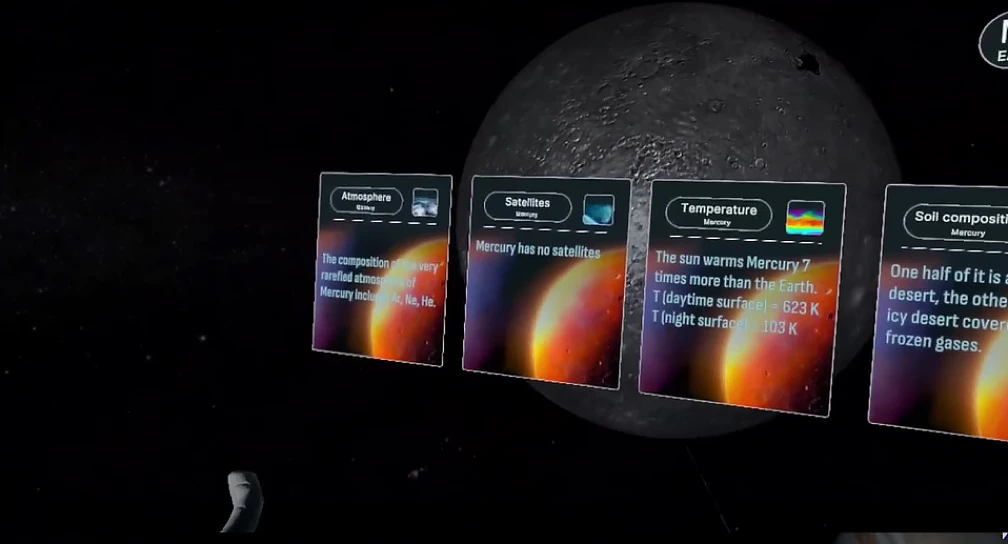
When it comes to immersive learning, many people think of VR biology first—like exploring a plant cell in 3D—yet VR physics is just as transformative. XReady Lab VR Solar System proves that space exploration can be every bit as engaging as diving into cellular biology. In this simulation, students don’t just memorize planetary facts; they become virtual astronauts on a mission to discover each planet’s unique atmosphere, temperature, and gravity.

Transforming Abstract Space Topics into Interactive Adventures

High school lessons about the solar system often turn into dull memorization of statistics: atmospheric composition, orbital periods, gravitational pulls. While these numbers are important, the traditional “textbook approach” can diminish excitement. VR education flips this script by making students active participants in their own learning:

  • Mission-Based Learning: Instead of passively reading about Jupiter’s storms or Mars’ surface temperature, students can land on these planets virtually, customize spacesuits to withstand extreme conditions, and tackle challenges unique to each world.
  • Hands-On Engagement: Learners see how environment changes (e.g., gravity differences) influence their movements in real time, fostering a more concrete understanding of planetary science.
  • Real-Time Feedback: As they “visit” Saturn or Mercury, students get instant cues on whether their suit parameters can handle local temperatures or lack of atmosphere.

This approach reignites enthusiasm for VR in schools, especially among teens who might otherwise find cosmic scales too large and abstract.

Why Space Exploration in VR Matters

Space topics rank among the most complex and “out of reach” subjects in high school STEM. Teens often lose interest when they feel overwhelmed by the vast distances, massive numbers, and intangible concepts. VR in the classroom resolves these issues by making the cosmos feel tangible:

  1. Immersive Learning Environment: Students step into a virtual reality classroom where planetary orbits and space physics are visual and interactive.
  2. Building STEM Confidence: By experiencing cosmic phenomena firsthand, learners see that space study isn’t just about memorizing data—it’s about exploration, problem-solving, and innovation.
  3. Addressing Declining STEM Interest: According to our article on Why Interest in STEM Declines and How VR Revives It, making lessons interactive is key to reversing disengagement.

A New Way to Teach Physics

A VR physics classroom eliminates much of the logistical hassle of teaching space topics. Traditional lessons require extensive theory or occasional planetarium visits, whereas VR brings the “field trip” directly into everyday instruction:

  • No Physical Equipment Overload: One VR learning platform can replace multiple labs or large-scale apparatus.
  • Time Saved for Teaching: Teachers spend less time prepping or cleaning up, freeing them to focus on interactive classroom activities and deeper insights.
  • Greater Curriculum Coverage: Because simulations are easily launched and re-set, educators can cover more content efficiently.

It’s Not Just Numbers—It’s an Adventure

Traditional teaching methods often reduce space science to memorizing facts like Jupiter’s diameter or Venus’ temperature. With VR technology in education, those facts transform into missions:

  • Customize a Spacesuit for Mars: Ensure survival in a thin CO₂ atmosphere.
  • Navigate Jupiter’s Moons: Manage gravitational differences and extreme weather conditions.
  • Explore Saturn’s Rings: Understand cosmic debris and orbital mechanics with an immersive viewpoint.

Such interactive learning fosters excitement and builds the critical thinking skills so essential for STEM success.

Linking Space Exploration to Other VR Topics

While VR Solar System is a standout example of VR physics done right, XReady Lab also offers a range of other VR experiences covering topics like VR biology (e.g., Plant Cell Exploration) and VR chemistry labs. This cross-curricular approach keeps students engaged across multiple disciplines and underscores the real-world interconnectedness of science.

Request Your Free Demo Today

A Classroom Upgrade for Future Generations

The concept of traveling through space is inherently exciting, tapping into childhood dreams of becoming an astronaut. By leveraging that interest with VR education:

  • Boosts Classroom Engagement: Interactive missions keep students curious and active.
  • Encourages Deeper Exploration: Students may pursue further research on astronomy, rocket science, or planetary geology.
  • Addresses STEM Lab Meaning: A single VR solution can serve as a multipurpose STEM lab, from exploring cosmic scales to investigating microscopic wonders.

Conclusion

XReady Lab VR Solar System exemplifies how modern technology can turn abstract science concepts into vivid, memorable adventures. Instead of rote learning, students embark on realistic space missions, customizing spacesuits and experiencing planetary environments. This approach not only revitalizes STEM education but also empowers teachers to inspire students without drowning in logistics and prep work.

In a world where children’s curiosity often collides with the complexities of advanced topics, VR stands out as a beacon of interactive classroom innovation—especially in the realm of space science. Embrace this transformation, let your students explore the cosmos, and see how virtual reality can foster a lifelong love for discovery.


Explore the solar system from your digital classroom and ignite a passion for science among your students. The stars are closer than you think with XReady Lab’s VR solutions.

VR Physics: Transforming How Students Learn Optics with XReady Lab

When we think about virtual reality in education, our minds often drift toward biology simulations—like exploring a plant cell in 3D—or immersive lessons on cell division, such as VR Mitosis. Yet, VR physics also stands as a powerful contender, offering students a chance to dive into complex topics like optics in ways never before possible. From understanding diffraction patterns to mastering the laws of reflection and refraction, VR brings abstract concepts to life through hands-on interaction and real-time feedback.

The Benefits of VR in Physics Education

Traditional physics instruction relies heavily on physical equipment—lenses, prisms, diffraction gratings, and more. Setting up these experiments can be time-consuming, and cleaning up afterward eats into valuable class time. Educators know the struggle of balancing lesson plans with workshop preparation, often leaving less time for actual teaching and exploration.

VR physics solutions streamline this process:

  • One VR Physics Classroom Replaces Multiple Labs: Instead of sourcing and maintaining expensive optics equipment, schools can rely on virtual simulations to cover a wide range of experiments. This cost-effective approach frees up budgets and simplifies logistics.
  • Save Time on Preparation: With virtual reality learning, educators can launch complex experiments at the click of a button. No need to assemble apparatus or measure materials—everything is ready to go in a digital classroom environment.
  • Maximize Teaching Opportunities: By reducing setup time, teachers can focus on delivering quality instruction, guiding students through experiments, and nurturing a deeper understanding of concepts.

Bringing Optics to Life Through VR

Optics is a cornerstone of high school physics curricula worldwide, and VR provides dynamic ways to explore this field. Instead of passively observing diagrams or watching the teacher adjust lenses and prisms, students become active participants in experiments aligned with global standards, including:

  • Cambridge (Science/Physics): From basic reflection and refraction at Lower Secondary levels to more advanced Fresnel and Fraunhofer diffraction at Upper Secondary and Pre-U, VR caters to every stage.
  • IB (Science/Physics): Middle Years Programme students can investigate Fresnel diffraction, while Diploma Programme learners dive into Fraunhofer diffraction and Snell’s law for refraction.
  • National Curriculum in England (Physics): VR supports Key Stage 3 and Key Stage 4 optics topics, allowing students to explore wave optics, interference, and refraction.
  • Indian Curriculum CBSE (Science/Physics): From Secondary stage classes 9-10 to CBSE Class 12 board exams, VR assists in mastering Fresnel and Fraunhofer diffraction and understanding wave behavior.
  • National Curriculum of the Netherlands (Physics): VMBO, HAVO, and VWO students benefit from exploring reflection, refraction, and various lens properties in an immersive setting.
  • Scuola Secondaria in Italia (Scienze/Physics): Italian students can engage with modules on reflection, refraction, and lens types at different educational stages.
  • Next-Generation Science Standards (Physical Sciences): Recommended for high school, VR simulations align with Wave and Electromagnetic Radiation standards, enabling students to understand interference, diffraction, and optical properties.

By meeting these curriculum requirements, VR physics tools ensure that students worldwide receive a consistent and high-quality education in optics.

Engaging Topics Made Accessible

Diffraction

XReady Lab VR education: VR Diffraction laboratory

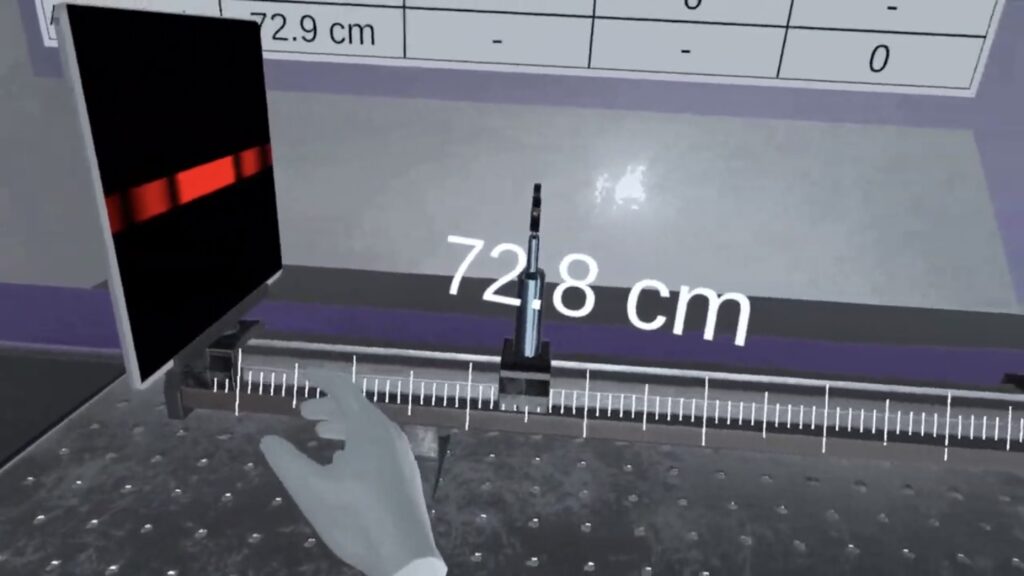
Diffraction is often a challenging concept for students to grasp, as it involves understanding how waves bend and spread out when passing through openings or around obstacles. In a traditional classroom setting, demonstrating diffraction patterns might rely on limited equipment and brief glimpses of results. However, with VR simulations, learners can interact with a laser light source passing through a slit, adjusting parameters like slit width and observing how these changes affect the intensity distribution of the diffraction pattern on a screen.

This hands-on approach transforms abstract wave principles into visual, interactive experiences. Rather than merely memorizing formulas or staring at static diagrams, students gain an intuitive understanding of how the thickness of the bands relates to the gap width. By exploring different configurations in real-time, they foster a deeper grasp of wave behavior that would be difficult to achieve with conventional methods.

Reflection and Refraction

XReady Lab VR education: VR Reflection and Refraction laboratory

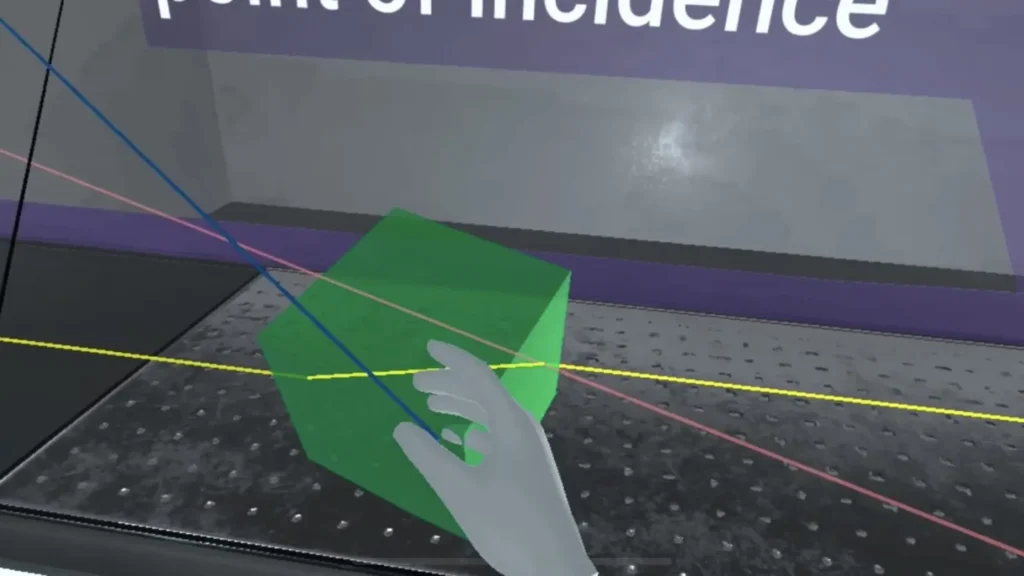
Shining light onto reflective and refractive objects can seem straightforward in theory, but truly understanding how angles of incidence and refraction relate to each other requires more than just reading from a textbook. In a VR physics environment, students can shine light on cubes with reflective and refractive surfaces, measure angles accurately, and see in real time how changes in materials or incident angles influence the path of light.

This direct manipulation offers immediate feedback, helping learners realize how the law of reflection ensures equal angles of incidence and reflection, and how the angle of refraction shifts depending on the medium. Such dynamic visualization solidifies their grasp of core optical principles far more effectively than static illustrations or brief class demonstrations.

Interference

XReady Lab VR education: VR Interference laboratory

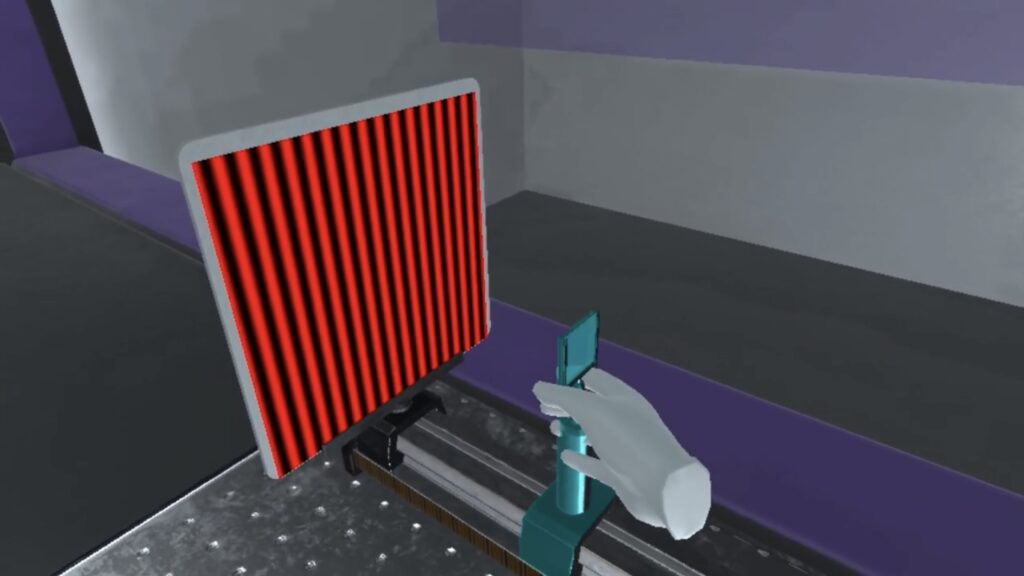
Interference patterns—whether produced by a biprism, double-slit arrangement, or other setups—are notoriously hard to comprehend with traditional teaching methods. Arranging these experiments in a physical lab can be time-consuming and delicate, and observing interference patterns requires precise alignment and stable conditions.

In VR, these issues vanish. Students can easily alter parameters, move the biprism, or adjust distances and observe how interference fringes form and shift. These interactive classroom activities allow learners to witness coherence, wave superposition, and the resulting bright and dark bands that define interference. This level of clarity can be pivotal for mastering concepts that often remain abstract when explained solely through lectures and pictures.

Lenses

XReady Lab VR education: VR Lenses laboratory

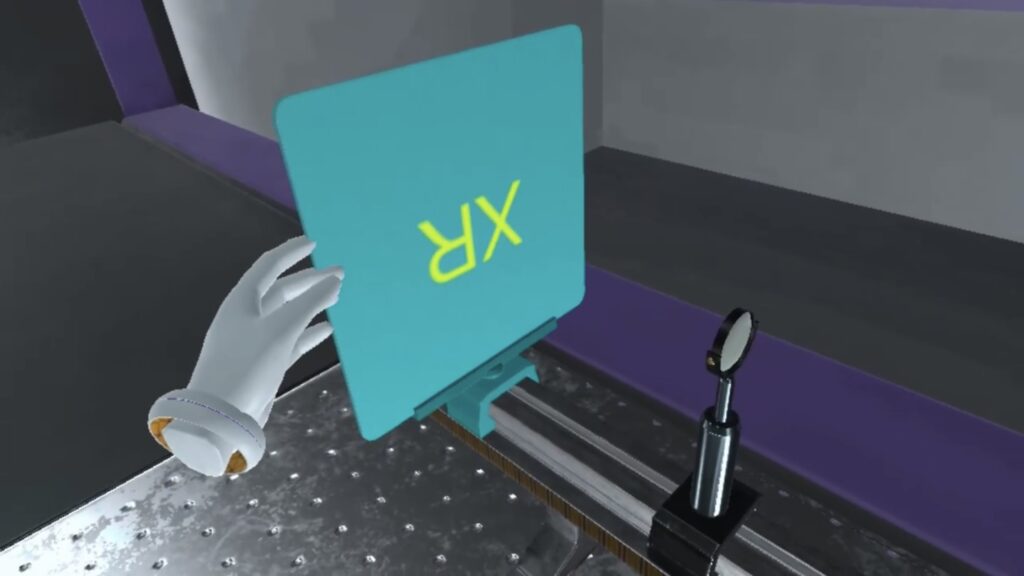
Exploring how lenses form images is essential in optics, but setting up lens experiments, aligning light sources, and ensuring proper measurements can be cumbersome in a physical lab. VR simulations simplify this process dramatically. Students can place converging or diverging lenses, observe image formation on a virtual screen, and measure linear dimensions to determine focal lengths and other lens parameters—all without guesswork or manual recalibration.

The clarity and precision offered by VR reduce confusion and let students focus on the underlying physics. By adjusting lens configurations and instantly seeing the effects, learners develop a more intuitive understanding of how changes in curvature or refractive indices influence image quality and position. Such direct, adaptable exploration supports the mastery of concepts that are often tricky to demonstrate in traditional labs.

By integrating VR into the classroom, teachers and students can shift from passive observation to active participation, fostering a learning environment where exploration and curiosity thrive. If you’re curious about how VR can transform your physics lessons and enhance student engagement, we invite you to experience it firsthand.

Request Your Free Demo Today

Broadening Horizons, Empowering Educators, and Renewing STEM Enthusiasm

While VR physics shines as a transformative tool for teaching optics and other physics concepts, its potential extends well beyond this single domain. VR biology, for example, enables students to delve into the structure of plant cells, as discussed in our VR Plant Cell Exploration article. Likewise, VR Mitosis simulations allow learners to experience cell division firsthand, providing a richer understanding than any static image or brief classroom activity could offer. By incorporating VR learning tools across various STEM fields, educators can keep students engaged, maintain their interest in science and technology, and ultimately improve academic success.

In addition to enriching learning experiences, VR also frees educators from routine, time-consuming tasks. Rather than spending valuable class time setting up and dismantling equipment, teachers can focus on guiding students, answering questions, and deepening conceptual understanding. This shift enables educators to do what they do best—inspire, mentor, and motivate—rather than juggle logistical duties. For further insights on how emerging technologies can streamline classroom management, consider exploring the Top 5 AI Tools for Teachers. While that article highlights AI solutions, the core principle is the same: advanced tools should lessen administrative burdens, empowering teachers to concentrate on meaningful teaching and mentoring.

As students advance through secondary school, their enthusiasm for STEM subjects often wanes, primarily due to the complexity and abstraction of the material. By making lessons interactive, tangible, and genuinely engaging, VR can help rekindle this enthusiasm. Instead of simply learning theories, students can live them out in immersive, virtual worlds, seeing for themselves how scientific principles operate. To understand how VR can help reverse the decline in STEM interest, take a look at our article Why Interest in STEM Declines and How VR Revives It.

By broadening subject matter, reducing educator workload, and increasing student engagement, VR stands as a powerful ally in cultivating a vibrant, future-focused STEM culture in classrooms worldwide.

Conclusion

VR physics: optics represents a quantum leap in how we teach and learn about the behavior of light, lenses, diffraction, and interference. By providing immersive, interactive simulations that align with global curricula, VR technology transforms complex concepts into accessible, hands-on experiences.

Adopting VR in the classroom means less time spent on setup and cleanup, more time for meaningful instruction, and, ultimately, more motivated and successful students. It also empowers teachers to go beyond traditional methods, nurturing curiosity, critical thinking, and a genuine love for STEM subjects.

As education continues to evolve, embracing VR solutions ensures that learning keeps pace with our rapidly changing world—offering students an exciting and engaging path to academic success and lifelong scientific curiosity.

Quick VR Sessions in the Classroom: Reinforcing Learning in Just Minutes

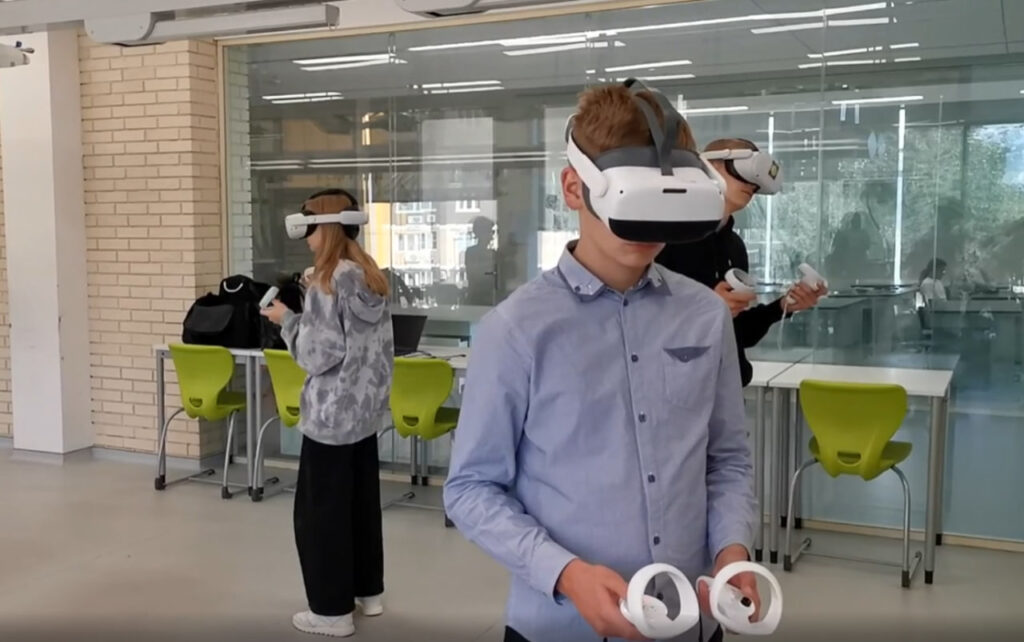
The world of education is evolving rapidly, and keeping students engaged can sometimes feel like an uphill battle. One emerging trend is the integration of virtual reality in education, not to replace teachers, but to enhance the learning process. There’s a lingering fear that VR headsets in VR in schools scenarios might lead to a future where devices take over the teacher’s role. Yet, this image is far from reality.

XReady Lab is committed to empowering educators by offering VR education tools that complement, rather than substitute, traditional teaching methods. The idea is not about automated lessons delivered by machines; it’s about giving teachers powerful resources that improve student engagement, streamline lesson preparation, and reinforce complex concepts through interactive classroom activities.

Reinforcing Knowledge with VR “Minutes”

Imagine a typical classroom scenario: a teacher has just explained a challenging concept in VR biology, VR physics, or VR chemistry. Students understand it in theory, but abstract topics—like cellular processes or particle interactions—can slip through their fingers without hands-on reinforcement. This is where short, bite-sized VR sessions (just a minute or two) come into play. These brief VR learning moments allow students to revisit and consolidate newly acquired knowledge in an immersive and engaging way.

Instead of expecting VR to deliver full lessons, think of these “VR minutes” as quick boosts of interactivity. After the teacher finishes explaining a concept, students don their headsets and spend a brief period exploring a STEM lab simulation aligned with the day’s topic. This can involve:

  • Reviewing cell structures after a biology lecture
  • Visualizing force vectors in a physics scenario
  • Observing chemical reactions at a molecular level in a chemistry context

The teacher remains central to the learning process, guiding students, answering questions, and ensuring that the content matches the curriculum. XReady Lab focuses on providing virtual reality for education that is easily integrated into existing lesson plans. The short passage time and intuitive interaction mean no extensive re-scheduling—just a quick, immersive recap that makes complex ideas stick.

Easing the Teacher’s Burden

Traditionally, educators invest significant time in searching for supplementary materials—videos, diagrams, physical models—that illustrate abstract topics. Some even craft their own simulations using cardboard and plastic. XReady Lab aims to reduce this additional workload:

  • Convenience for Teachers: No more scrambling to find the perfect video or printable diagram. Interactive VR simulations are ready at hand.
  • Curriculum Synchronization: Content is aligned with major educational standards so that teachers can seamlessly incorporate these “VR minutes” into their lesson plans.
  • Practical Resource: By eliminating the need for handcrafted models, educators can save hours of preparation time, focusing instead on teaching and supporting their students.

A Perfect Combo: Teacher Instruction + VR Reinforcement

The teacher remains the primary guide, explaining concepts and ensuring students grasp the fundamental theories. Once the explanation is complete, a short VR session can reinforce the lesson. Students interact with simulations that bring the subject matter to life, transforming abstract ideas into concrete experiences in a virtual reality classroom setting.

This approach can significantly enhance student engagement, improve retention, and even lead to better academic outcomes. By actively participating in virtual reality for learning, students become more confident in their understanding, and teachers, in turn, see improved performance in the classroom—potentially boosting their own professional standing and recognition.

Why VR Matters for Complex Topics

XReady Lab VR education: VR Mitosis laboratory

When dealing with concepts that can’t be directly observed—such as photosynthesis, cellular structure, or subatomic particles—simply looking at a flat diagram often isn’t enough. VR solutions for schools allow students to literally step inside these environments, observe processes like cell division from all angles, and manipulate components in real-time. This level of immersion fosters a deeper, more intuitive understanding, reducing the frustration often associated with abstract subjects.

Take mitosis, for example. Students commonly struggle with this process due to its complexity and microscopic scale. A quick VR minute after a teacher’s explanation can help them visualize chromosome alignment, spindle formation, and the separation of chromatids. Instead of memorizing stages from a textbook, they experience them, which makes all the difference.

Trying it Out: The VR Plant Cell Demo

XReady Lab VR education: VR Plant Cell laboratory

If you’re curious about how this approach can enhance lessons in fields like biology, consider exploring the VR plant cell demo kit. This brief interactive experience demonstrates how VR technology offers a hands-on approach to understanding cell structures—an invaluable tool for building foundational knowledge in biology and other STEM fields.

Request Your Free Demo Today

By experiencing the VR plant cell simulation, educators and students alike can witness firsthand the potential of these short VR sessions to clarify complex concepts, maintain student interest, and bolster long-term retention.

Conclusion: Embracing the Future of Education

The integration of quick VR “minutes” in the classroom represents a shift towards a more dynamic, student-centered approach to learning. XReady Labs vision is to provide educators with the tools to make lessons more engaging, interactive, and relevant to the digital age.

As virtual reality education continues to evolve, these short VR sessions will likely become an essential part of the modern classroom. By combining the irreplaceable insight and guidance of a teacher with cutting-edge VR technology in education, schools can transform complex, abstract topics into manageable, memorable learning experiences—ensuring students not only understand the material but also develop a genuine curiosity and enthusiasm for exploring more.


Discover the power of “VR minutes” in your classroom and help students unlock their full potential.

Empowering STEM Learning at Home: How Parents Can Support Their Children with VR