menu

Closing the Gender Gap in STEM: How Virtual Reality Empowers the Next Generation

Despite significant strides toward gender equality, the gender gap in STEM (Science, Technology, Engineering, and Mathematics) remains a pressing issue. No one has ever been able to prove that there are physiological differences causing differences in STEM abilities between boys and girls. Yet, stereotypes and myths about girls’ lesser ability in STEM sciences still flourish in society, influencing perceptions and opportunities.

The Vicious Cycle of Gender Stereotypes

A vicious cycle perpetuates the gender disparity in STEM fields:

  1. Adults Pass on Gender Stereotypes to Children: Parents, teachers, and media often unconsciously convey the message that STEM is more suited for boys. Phrases like “boys are better at math” or the lack of female representation in STEM-related media reinforce these stereotypes.
  2. Girls Are Pushed Away from STEM: Internalizing these stereotypes, girls may doubt their abilities in math and science, leading them to disengage from these subjects early on.
  3. Fewer Girls Pursue STEM Careers: With diminished encouragement and self-confidence, fewer girls choose STEM majors in higher education, resulting in a lower number of women in STEM professions.
  4. Lack of Female Role Models: The scarcity of women in STEM fields means fewer role models for young girls. Without visible examples of successful women in STEM, girls may find it harder to envision themselves in such careers.
  5. Reinforcement of Misconceptions: Society observes the low number of women in STEM and misinterprets it as evidence that men are inherently more capable in these areas, thus restarting the cycle.

Breaking this cycle is essential to ensure that all individuals, regardless of gender, have the opportunity to pursue their interests and talents in STEM.

Pressures Influencing Girls’ STEM Participation

Girls face multiple pressures that can deter them from engaging with STEM subjects:

  • Self-Perceptions: Based on limited life experiences and exposure, girls may develop a belief that STEM fields are not for them.
  • Parental Influence: Parents might unconsciously steer their daughters away from STEM by providing more STEM-related toys to sons or encouraging different extracurricular activities.
  • Societal Attitudes: Media representations often lack female STEM professionals, and societal expectations may label STEM fields as masculine.
  • Educational Environment: Teachers, even well-meaning ones, can inadvertently push girls away from STEM due to their own biases or stereotypes.

The Role of Teachers: A Study on Gender Bias

A pivotal study published in the Journal of Educational Psychology (Ganley et al., 2018) examined how teachers’ gender stereotypes affect their recommendations to students regarding academic path choices. The study found that:

  • Teachers were more likely to recommend boys for math and science majors even when girls had similar or higher abilities in these subjects.
  • Girls were often recommended for humanities majors, aligning with traditional gender roles.

This bias can significantly impact students’ self-confidence and interest in STEM. Teachers play a crucial role in shaping STEM preferences in boys and aversion to STEM in girls by influencing their perceptions of their own abilities and suitability for these fields.
Empowering Girls Through Education Systems

Addressing the gender gap requires a multifaceted approach within educational systems:
  • Professional Development for Teachers: Training educators to recognize and counteract their own biases can lead to more equitable encouragement and support for all students.
  • Curriculum Inclusivity: Incorporating examples of female scientists and engineers in teaching materials can provide girls with relatable role models.
  • Encouraging Participation: Creating an inclusive classroom environment where girls are encouraged to participate in STEM activities builds confidence and interest.
  • Parental Involvement: Schools can engage parents to foster supportive attitudes toward girls pursuing STEM subjects.

Leveraging Virtual Reality to Bridge the Gap

One innovative solution to engage girls in STEM is through virtual reality (VR) education. VR offers interactive, hands-on experiences that make STEM subjects more accessible and engaging.

How VR Makes a Difference

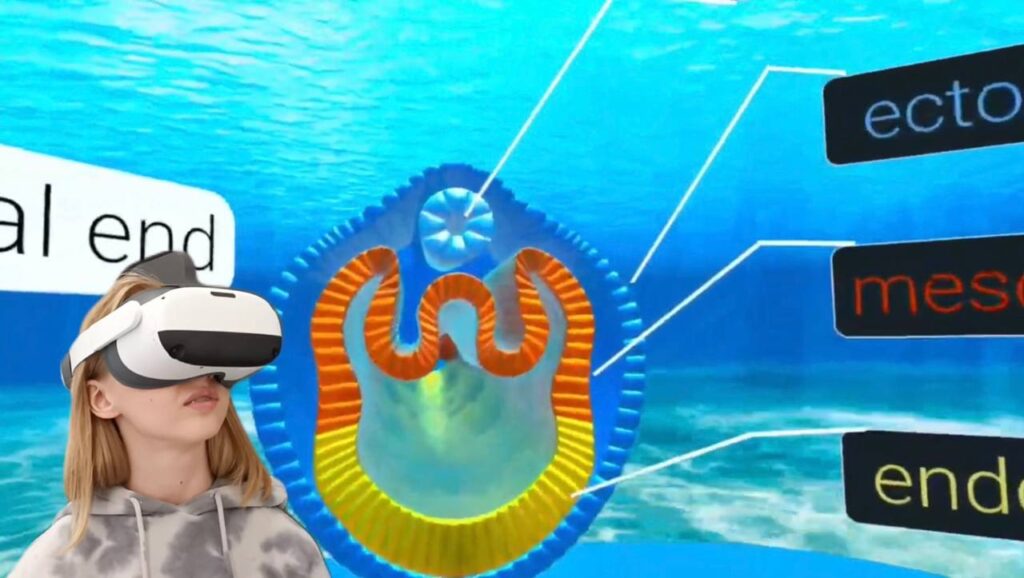
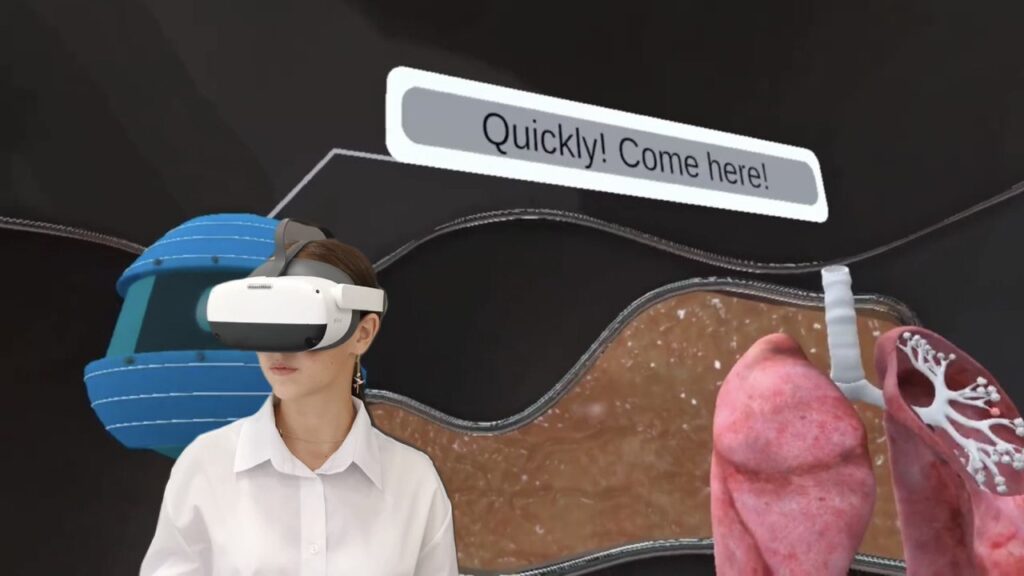
  • Immersive Experiences: VR simulations in VR biology, VR physics, and VR chemistry allow students to perform experiments and explore concepts in a virtual environment that might be impractical or impossible in a traditional classroom.
  • Role-Playing as STEM Professionals: Students can try on the exciting experience of a STEM researcher while navigating scientific virtual simulations. This immersive role-playing helps girls envision themselves as scientists or engineers.
  • Personalized Learning: VR provides vivid personalized experiences that cater to individual learning styles, helping students grasp complex concepts more effectively.
  • Overcoming External Pressures: Positive experiences in VR can help girls resist adult attempts to steer them down a different academic path, especially if they genuinely enjoy STEM subjects.

Benefits of VR in Education

  • Equal Access: VR creates a level playing field where all students have the same opportunities to engage with STEM content.
  • Increased Engagement: The interactive nature of VR keeps students engaged, enhancing their interest and motivation.
  • Safe Learning Environment: Students can experiment without the risks associated with physical laboratories, encouraging exploration and creativity.

Take the Next Step: Request a Free Demo

Experience the transformative power of VR in education. Our demo package offers a glimpse into how VR can inspire and empower students in STEM.

👉 Request your free demo today and discover how VR can make a difference in your classroom.

The Broader Context: Addressing Declining Interest in STEM

The gender gap is not the only challenge facing STEM education. There is a general decline in interest in STEM subjects among students, which exacerbates the shortage of future professionals in these fields. In our recent article, Why Interest in STEM Declines and How VR Revives It, we explore this issue in depth.

The Responsibility of the Education System

  • Fostering a Love for STEM: Educators must find innovative ways to make STEM subjects engaging and relevant to students’ lives.
  • Preparing Future Professionals: The world needs doctors, engineers, environmentalists, and high-tech professionals to address global challenges.
  • Promoting Diversity: A diverse STEM workforce brings a variety of perspectives, leading to more innovative solutions.

Conclusion: Breaking the Cycle

Closing the gender gap in STEM is essential for fostering innovation and meeting the demands of the future. By addressing stereotypes, supporting educators, and leveraging technologies like VR, we can create an environment where girls feel confident and excited about pursuing STEM subjects.

  • Empowerment Through Experience: VR provides girls with firsthand experiences that build confidence and interest in STEM.
  • Challenging Stereotypes: By showcasing successful women in STEM and providing equal opportunities, we can dismantle the myths that deter girls from these fields.
  • Collective Effort: It requires collaboration among educators, parents, and technology providers to make lasting change.

Let’s break the cycle of gender stereotypes and open the doors of STEM to everyone, regardless of gender. Together, we can nurture the next generation of innovators and problem-solvers.

11 / 18 / 2024

You may like it

Frequently Asked

Your questions, Answered!

How large is the library of XReady Lab content in VR, Web, and PC formats?

XReady Lab offers the largest K–12 STEM VR and Web/PC library with an AI Tutor. The packages include biology, physics, chemistry, and math, covering topics from primary school through high school.


All content is designed to align with major curricula and deliver engaging, interactive learning experiences. New simulations are added monthly.

Which curriculum alignment do you have?

XReady Lab’s simulations are aligned with IB, Cambridge IGCSE, AS & A Levels, NGSS, College Board, Common Core, TEKS, CBSE, BNCC, the National Curriculum for England, the Italian secondary school curriculum (Scuola Secondaria), and the National Curriculum of the Netherlands (VMBO, HAVO, VWO).

What are Career Packs, and which careers do they cover?

Career Packs are VR simulation bundles that let students explore STEM careers in practice. Current packs include: Future Doctor, Future Nurse, Future Engineer, Future HVAC Engineer, Future Biotechnologist, Future Astronomer, Future Neuroscientist.


New Career Packs are added regularly.

What makes XReady Lab’s AI Tutor different from other AI tutors and AI tools?

XReady Lab Superhuman AI Tutor works like a real tutor, guiding students step by step instead of giving ready-made answers. It focuses on reasoning, problem-solving, and explaining mistakes to build real understanding.

Created by international STEM Olympiad winners and coaches, it helps prepare for exams, increases memory retention by 40%, and works in real time in both VR and desktop formats with an internet connection.

What are Lesson Plans, Engagement Playbooks, and classroom scenarios?

XReady Lab packages include complimentary teacher training and ready-to-use Lesson Plans and Engagement Playbooks to support engaging lessons.

They guide teachers in integrating VR/web/PC simulations with clear objectives, step-by-step instructions, classroom management strategies, reflection activities, assessments, and technical checklists — helping teachers run effective lessons beyond the simulations themselves.

How to try XReady Lab for free?

Simply fill out the free demo form here to get access to demo XReady Lab simulations.

How do we plan and purchase a VR classroom?

  1. We start with consultation: our team helps plan the VR classroom for your school. You need internet access and a suitable room — allocate about 5 x 5 feet (1.5 x 1.5 m) per student. One headset per two students works well.
  2. Devices and licenses: schools can use existing Meta Quest or Pico devices and purchase licenses, or we can offer discounted devices or a turnkey solution with pre-installed content.

What happens after purchasing a VR classroom?

After purchase, we guide device setup and content installation and provide teacher training.

Teachers learn how to run VR lessons using Lesson Plans and Engagement Playbooks, manage screen casting and paired learning, and keep students engaged.

Ongoing support is always available.

What technical requirements and internet access are needed?

  • For Desktop or Tablet: Simulations run directly from the personal account and work without internet. If you want the AI Tutor in real time, a stable internet connection is required.
  • For VR headsets (Meta Quest or Pico): Internet is needed only to activate licenses. After activation, simulations work autonomously offline. To use the AI Tutor in real time, internet is required. Make sure your room has power outlets to recharge devices.

VR lessons: duration, class size, screen casting and teacher tools?

VR lessons typically last 5–15 minutes, depending on the simulation, with a recommended class size of up to 20 students. Screen casting is supported and compatible with selected teacher management systems, allowing teachers to launch simulations remotely, monitor progress, and view all devices during lessons.

Teachers are supported with Lesson Plans and Engagement Playbooks that include learning objectives, step-by-step lesson flow, classroom scenarios, reflection questions, practical assignments, and assessment guidance.

In which countries and languages is XReady Lab offered?

XReady Lab is available worldwide and supports 75+ languages. Today, it is used by 800+ schools and 150,000+ students across the globe.

What licensing and pricing options are available?

XReady Lab simulations are offered through flexible licensing packages, depending on the format and subjects you need:

  • VR simulation packages with AI Tutor: simulations are sold in subject-based bundles with an annual license per device. VR Biology + Physics + Chemistry: $975 per year per device.
  • Web version with AI Tutor for home or classroom use without VR headsets: $9.99 per month per user.

If you already have VR headsets, you only purchase licenses. If not, we can also help you choose the most cost-effective setup and licensing model for your school or family.

Which VR headsets are supported?

XReady Lab works with the most widely used standalone VR headsets in schools:

  • Meta Quest: Quest 2, Quest Pro, Quest 3, Quest 3S
  • PICO: Neo 3, Neo 3 Pro, Neo 4, Neo 4 Enterprise

All supported devices are standalone (no PC required), making them easy to deploy and manage in a school environment.

Does XReady Lab allow third-party VR content?

Yes. XReady Lab supports open ecosystems, not closed platforms. Schools can freely use third-party VR content alongside XReady Lab on Meta Quest and PICO headsets.

We encourage schools to diversify their VR classrooms with high-quality educational apps and can recommend tested solutions, helping expand learning beyond STEM into subjects like design, history, environmental studies, and soft skills.

What are the safety guidelines for VR?

XReady Lab follows school VR safety best practices. VR is recommended for students 10–12+, with short 5–15 minute sessions and seated or safe-zone use under teacher supervision, supported by screen casting.

First-time users adapt gradually. Students with medical conditions require parental and school approval, and hygiene is ensured through regular headset cleaning and replaceable face covers.

For families: What home-use options are available?

Families can access XReady Lab simulations at home in two ways:

  • Web version: Here, families can use simulations on computers or tablets with a subscription—no VR headset required.
  • VR home use: To get started, fill out the form and select the role “Parent” to receive a free demo. Our team will then contact you to discuss access and purchase options.