In today’s fast-paced world, many of us find ourselves constantly doing—whether it’s working, scrolling through social media, or juggling endless to-do lists. Yet, despite this perpetual busyness, we often feel a sense of emptiness or disconnection, as if we’re merely going through the motions rather than truly living. The secret to reigniting our zest for life and enhancing our mental and physical well-being may lie in a simple yet profound concept: fun.
But what is fun, really? Contrary to popular belief, fun isn’t just about laughter or engaging in activities labeled as “fun” that leave us feeling unfulfilled. According to Catherine Price, in her enlightening TED Talk, fun is a deeper, more meaningful experience characterized by three key elements: playfulness, connection, and flow. By redefining fun through this lens, we can tap into its remarkable ability to energize us, foster presence, and improve our overall health.
Playfulness doesn’t necessarily mean playing games or engaging in make-believe. Instead, it’s about adopting a lighthearted attitude, doing things for the sheer joy of them without worrying excessively about the outcome. It’s letting go of perfectionism and allowing ourselves to be spontaneous and open to new experiences. When we’re playful, we lower our guard and stop taking ourselves too seriously, which opens the door to genuine enjoyment.
Connection refers to experiencing a special bond during an activity, often shared with others. While it’s possible to have fun alone—feeling connected to oneself, nature, or the activity itself—most peak fun experiences involve other people. This holds true even for introverts. Shared laughter, mutual participation, and the exchange of ideas deepen our sense of connection and enrich the fun we experience.
Flow is the state of being so fully immersed and engaged in an activity that we lose track of time. It’s when we’re “in the zone,” whether we’re playing a musical instrument, engaging in a sport, or absorbed in a creative project. Flow requires complete focus and presence, allowing us to experience activities at their most rewarding level. While it’s possible to be in flow without having fun (such as during an intense debate), it’s impossible to have fun without entering a state of flow.
Redefining fun to encompass playfulness, connection, and flow elevates it from a trivial pursuit to a powerful catalyst for mental and physical health.
Fun injects a burst of energy into our lives. Unlike activities that drain us, fun replenishes our internal reserves. It leaves us feeling invigorated rather than exhausted, ready to embrace new challenges with enthusiasm.
In an age where distractions are omnipresent, achieving a state of presence is increasingly challenging. Fun naturally draws us into the present moment. When we’re genuinely having fun, we’re fully engaged with our surroundings and experiences, freeing us from worries about the past or future.
Chronic stress and feelings of isolation can have detrimental effects on our health, increasing the risk of various illnesses. Fun counteracts these effects by reducing stress hormones and promoting social interaction. Engaging in fun activities can lower blood pressure, boost the immune system, and improve mental health by reducing anxiety and depression.
Fun fosters deeper connections with others. It breaks down barriers, allowing us to relate to people beyond superficial levels. Shared fun experiences can improve relationships, enhance communication, and build a sense of community.
The importance of fun extends beyond personal well-being; it plays a crucial role in education. Students today face immense pressure to perform academically, often at the expense of their mental health. Incorporating fun into learning can alleviate stress, increase engagement, and improve educational outcomes.
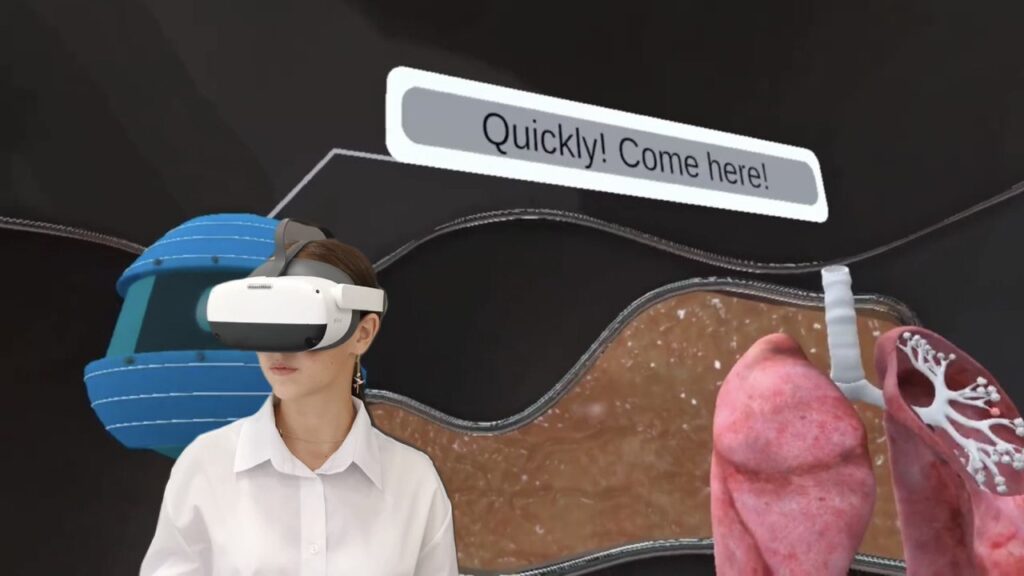
At XReadyLab, we are passionate about integrating fun into education through innovative technologies like virtual reality (VR). We believe that VR is uniquely positioned to provide the three essential elements of fun—playfulness, connection, and flow—thereby enhancing both learning and well-being.
Traditional education often involves passive learning from textbooks, which can be monotonous and disengaging. VR transforms this experience by immersing students in interactive, colorful worlds where they can actively participate in their education. For example:
By making learning playful, VR encourages students to embrace new concepts enthusiastically.
VR’s immersive nature helps students enter a state of flow more readily. When students put on a VR headset, they are transported to a different world where distractions fade away. This level of engagement allows them to focus deeply on the task at hand, whether it’s solving a complex problem in VR physics or exploring historical events in a virtual time machine.
While VR is often perceived as a solitary experience, it has significant potential for fostering connection:
At XReadyLab, we recognize the importance of connection in education and are actively working on implementing and enhancing multi-user experiences in our VR solutions.
In our previous article on Teacher Mental Health, we discussed the significant stressors educators face and the importance of mental well-being. By integrating fun into educational settings, we not only support students but also create a more positive and fulfilling environment for teachers.
Fun should not be an afterthought or a rare indulgence; it should be a fundamental component of our daily lives and educational systems. Here are some steps we can take to prioritize fun:
If you’re interested in exploring how VR can revolutionize education by incorporating fun into learning, we invite you to experience it firsthand. Our VR solutions offer immersive STEM labs and educational experiences that align with curriculum standards while making learning enjoyable and engaging.
Discover how VR can make a difference in your educational environment:
👉 Request your free demo today and take the first step toward transforming education through fun.
For more insights on the intersection of mental health and VR education, check out our recent article on Balancing Mental Health and Academic Success with VR Education.
Redefining fun as a combination of playfulness, connection, and flow reveals its true power as a catalyst for better mental and physical health. Fun is not a frivolous luxury; it’s a vital component of a fulfilling life and an effective educational tool.
By embracing fun in our personal lives and integrating it into educational systems through technologies like VR, we can:
At XReadyLab, we are committed to bringing the benefits of fun to education through our innovative VR solutions. Together, we can create a world where learning is not just effective but also joyful and enriching.
Let’s redefine fun and unlock its potential to transform lives and education. Embrace playfulness, seek connection, and find your flow with VR education.
Frequently Asked
XReady Lab offers the largest K–12 STEM VR and Web/PC library with an AI Tutor. The packages include biology, physics, chemistry, and math, covering topics from primary school through high school.
All content is designed to align with major curricula and deliver engaging, interactive learning experiences. New simulations are added monthly.
XReady Lab’s simulations are aligned with IB, Cambridge IGCSE, AS & A Levels, NGSS, College Board, Common Core, TEKS, CBSE, BNCC, the National Curriculum for England, the Italian secondary school curriculum (Scuola Secondaria), and the National Curriculum of the Netherlands (VMBO, HAVO, VWO).
Career Packs are VR simulation bundles that let students explore STEM careers in practice. Current packs include: Future Doctor, Future Nurse, Future Engineer, Future HVAC Engineer, Future Biotechnologist, Future Astronomer, Future Neuroscientist.
New Career Packs are added regularly.
XReady Lab Superhuman AI Tutor works like a real tutor, guiding students step by step instead of giving ready-made answers. It focuses on reasoning, problem-solving, and explaining mistakes to build real understanding.
Created by international STEM Olympiad winners and coaches, it helps prepare for exams, increases memory retention by 40%, and works in real time in both VR and desktop formats with an internet connection.
XReady Lab packages include complimentary teacher training and ready-to-use Lesson Plans and Engagement Playbooks to support engaging lessons.
They guide teachers in integrating VR/web/PC simulations with clear objectives, step-by-step instructions, classroom management strategies, reflection activities, assessments, and technical checklists — helping teachers run effective lessons beyond the simulations themselves.
Simply fill out the free demo form here to get access to demo XReady Lab simulations.
We start with consultation: our team helps plan the VR classroom for your school. You need internet access and a suitable room — allocate about 5 x 5 feet (1.5 x 1.5 m) per student. One headset per two students works well.
Devices and licenses: schools can use existing Meta Quest or Pico devices and purchase licenses, or we can offer discounted devices or a turnkey solution with pre-installed content.
After purchase, we guide device setup and content installation and provide teacher training.
Teachers learn how to run VR lessons using Lesson Plans and Engagement Playbooks, manage screen casting and paired learning, and keep students engaged.
Ongoing support is always available.
VR lessons typically last 5–15 minutes, depending on the simulation, with a recommended class size of up to 20 students. Screen casting is supported and compatible with selected teacher management systems, allowing teachers to launch simulations remotely, monitor progress, and view all devices during lessons.
Teachers are supported with Lesson Plans and Engagement Playbooks that include learning objectives, step-by-step lesson flow, classroom scenarios, reflection questions, practical assignments, and assessment guidance.
XReady Lab is available worldwide and supports 75+ languages. Today, it is used by 800+ schools and 150,000+ students across the globe.
XReady Lab simulations are offered through flexible licensing packages, depending on the format and subjects you need:
If you already have VR headsets, you only purchase licenses. If not, we can also help you choose the most cost-effective setup and licensing model for your school or family.
XReady Lab works with the most widely used standalone VR headsets in schools:
All supported devices are standalone (no PC required), making them easy to deploy and manage in a school environment.
Yes. XReady Lab supports open ecosystems, not closed platforms. Schools can freely use third-party VR content alongside XReady Lab on Meta Quest and PICO headsets.
We encourage schools to diversify their VR classrooms with high-quality educational apps and can recommend tested solutions, helping expand learning beyond STEM into subjects like design, history, environmental studies, and soft skills.
XReady Lab follows school VR safety best practices. VR is recommended for students 10–12+, with short 5–15 minute sessions and seated or safe-zone use under teacher supervision, supported by screen casting.
First-time users adapt gradually. Students with medical conditions require parental and school approval, and hygiene is ensured through regular headset cleaning and replaceable face covers.
Families can access XReady Lab simulations at home in two ways: