menu

Are Modern Kids Really Getting Dumber??? The Surprising Truth About Education Today

Did the title evoke emotions? Let’s be honest, these are often the exact words we use in everyday conversations when we complain about kids. When adults see them glued to their phones, making silly videos, and seemingly ignoring academic pursuits, it’s easy to assume that today’s youth are on a downward intellectual spiral. Many believe modern children are “getting dumber,” but this quick judgment is rooted in misunderstanding rather than reality.

In truth, children have not become any less capable. On the contrary, the world in which they’re growing up—defined by advanced technology, rapid information flow, and countless opportunities to innovate—can help them reach intellectual heights previous generations never imagined. The key is recognizing that virtual reality in education, VR learning, and other cutting-edge tools can unlock their potential when used thoughtfully.

Rethinking Our Perceptions of Modern Youth
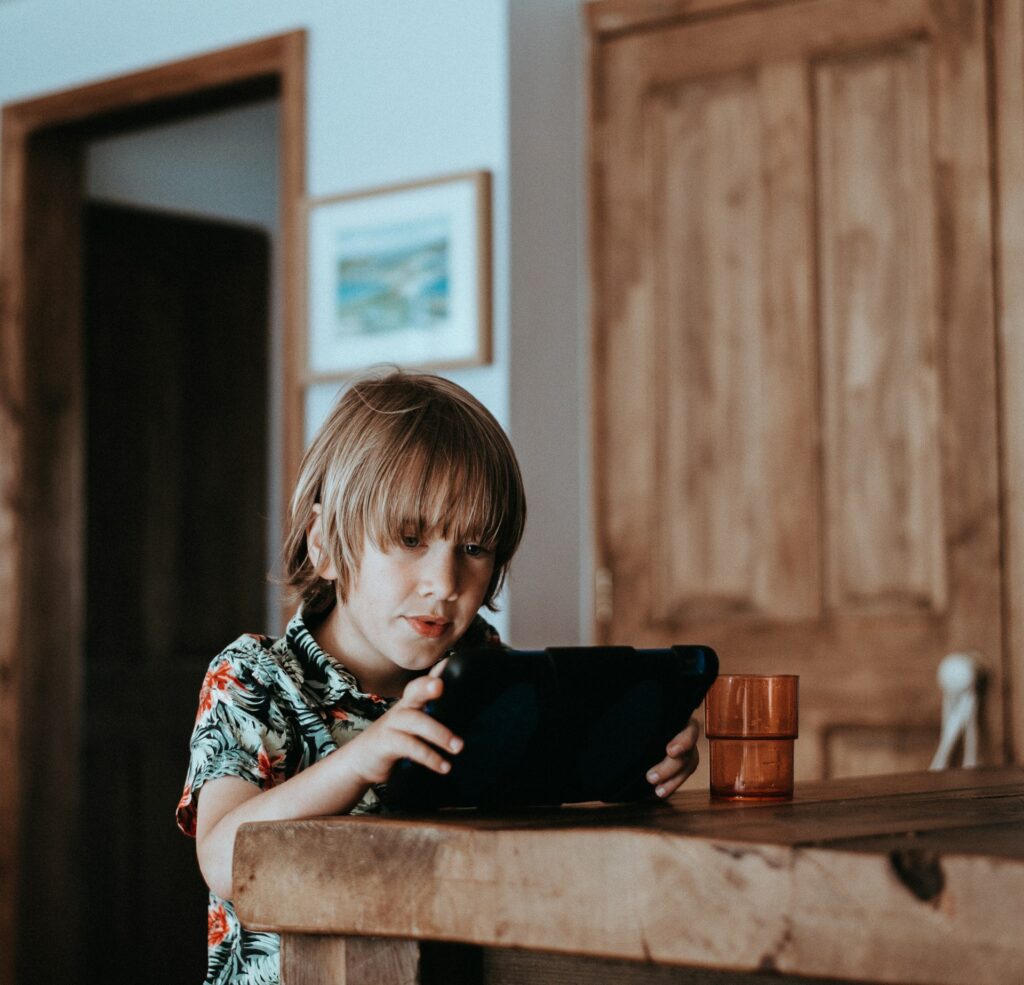
Labeling today’s kids as “dumb” simply because they spend time on social media making short videos overlooks a deeper reality. True, their digital habits differ vastly from older generations, but this shift doesn’t equate to a loss of intelligence. Instead, it reflects a world where technology and interactive platforms are second nature—environments in which today’s youth thrive.

  • Technology is Second Nature to Them: Modern children have grown up surrounded by smartphones, tablets, and online communities. They navigate digital classrooms and interact with VR education tools without missing a beat. This proficiency allows them to adapt rapidly to new learning scenarios, whether it’s using VR for education, exploring a virtual reality classroom, or participating in interactive classroom activities.
  • They’re More Resourceful Than You Think: Far from just posting videos, many young people are launching startups, experimenting with cutting-edge technology, and participating in global conversations about innovation. They are using VR biology, VR physics, and VR chemistry simulations to deepen their understanding of complex concepts. Where older generations saw boundaries, these kids see opportunities to solve real-world problems and improve upon existing ideas.
  • Adaptation Is Everything: The world is changing faster than our education systems can keep pace. Young learners need new subjects, updated teaching methods, and more relevant learning materials to remain engaged and excel academically. This challenge isn’t about lowering standards; it’s about broadening horizons. Embracing technology in education, leveraging VR for learning, and transforming classrooms into STEM labs are just a few steps toward ensuring that the next generation is prepared to tackle future challenges.

Embracing Change in Education

A pivotal shift is required to acknowledge the environment in which modern students live. Gone are the days when memorizing facts from textbooks sufficed. Today’s learners require adaptive, interactive education that mirrors their world—one saturated with digital content, instant communication, and diverse information sources.

Our article on Adapting Education for the Alpha Generation demonstrates how educators must consider the unique characteristics of modern learners. These children aren’t less intelligent; they need an education that respects their digital fluency and leverages technology in schools.

With information at their fingertips, critical thinking and creativity are no longer luxury skills—they’re essential. Students must evaluate sources, synthesize insights, and generate original ideas. As we explore in Unlocking Creativity and Developing Critical Thinking Skills, these abilities are crucial for navigating a world where knowledge is abundant but discernment is rare.

Cultivating STEM Interest and Engagement

Another pressing issue is the declining interest in STEM subjects among teenagers. Many find topics like advanced mathematics, physics, or chemistry too abstract and unrelatable, ultimately losing their motivation to learn. Traditional approaches, reliant on textbooks and lectures, often fail to spark genuine enthusiasm.

This is where virtual reality and related educational technologies come into play. VR in the classroom allows students to interact with once-intangible concepts, bringing them to life. STEM labs equipped with VR technology enable students to conduct experiments, visualize phenomena, and engage deeply with the material—turning a passive learning experience into an active, exploratory journey.

For instance, VR biology simulations let learners explore microscopic cell structures, while VR physics tools can demonstrate complex principles like optics or kinematics in a tangible, visually captivating manner. These innovations, as discussed in our article on Why Interest in STEM Declines and How VR Revives It, can reignite students’ curiosity and passion for science and technology, thereby nurturing a generation of creative, confident problem-solvers.

Empowering Parents and Home Learning

Parents often worry that their child’s free time at home is wasted on phones and games. But consider this: kids are naturally curious. They want to learn, discover, and create. With the right guidance, they can turn screen time into valuable learning sessions. A VR education platform or VR education services can transform a headset into a VR classroom, making learning interactive and fun.

Encourage your child to explore educational VR apps, allowing them to engage in interactive classroom activities right at home. Our insights in Encouraging STEM at Home and Gamifying STEM with VR offer practical tips on turning leisure time into a springboard for intellectual growth.

Addressing Systemic Issues in Education

While technology like VR helps immensely, the education system itself must evolve. We need new subjects and updated approaches to match the challenges of the 21st century. For instance, consider integrating VR storytelling, VR technology in education, and intelligent classroom platforms to prepare students for real-world tasks. Learn more about new subjects for education and how VR can help in our piece on Introducing New Subjects for the Modern World.

Moreover, we can’t ignore the media’s role in influencing students’ STEM career interests. If kids mostly see influencers encouraging trivial pursuits, it’s no wonder some drift from academic goals. Adults should provide kids with role models and content that spark curiosity about science, innovation, and problem-solving. Our article on Media Influence on STEM Education delves into the importance of inspiring STEM-focused media.

No Simple Solutions, But Clear Directions

There’s no overnight fix for closing the gap between today’s rapidly evolving world and yesterday’s education model. Still, we can start by embracing new technologies, enhancing teaching methods, and guiding children towards meaningful content.

Today’s youth aren’t dumb; they’re navigating a world vastly different from the one older generations knew. They need our support to harness the power of modern tools—like VR learning platforms, virtual reality classrooms, and VR for education—to become the brilliant thinkers, doers, and creators of tomorrow.


The future of learning is here, and it’s time we recognize that today’s kids are more than ready to rise to the challenge. Let’s update our perspective, adopt new methods, and watch young minds thrive.

12 / 19 / 2024

You may like it

Frequently Asked

Your questions, Answered!

How large is the library of XReady Lab content in VR, Web, and PC formats?

XReady Lab offers the largest K–12 STEM VR and Web/PC library with an AI Tutor. The packages include biology, physics, chemistry, and math, covering topics from primary school through high school.


All content is designed to align with major curricula and deliver engaging, interactive learning experiences. New simulations are added monthly.

Which curriculum alignment do you have?

XReady Lab’s simulations are aligned with IB, Cambridge IGCSE, AS & A Levels, NGSS, College Board, Common Core, TEKS, CBSE, BNCC, the National Curriculum for England, the Italian secondary school curriculum (Scuola Secondaria), and the National Curriculum of the Netherlands (VMBO, HAVO, VWO).

What are Career Packs, and which careers do they cover?

Career Packs are VR simulation bundles that let students explore STEM careers in practice. Current packs include: Future Doctor, Future Nurse, Future Engineer, Future HVAC Engineer, Future Biotechnologist, Future Astronomer, Future Neuroscientist.


New Career Packs are added regularly.

What makes XReady Lab’s AI Tutor different from other AI tutors and AI tools?

XReady Lab Superhuman AI Tutor works like a real tutor, guiding students step by step instead of giving ready-made answers. It focuses on reasoning, problem-solving, and explaining mistakes to build real understanding.

Created by international STEM Olympiad winners and coaches, it helps prepare for exams, increases memory retention by 40%, and works in real time in both VR and desktop formats with an internet connection.

What are Lesson Plans, Engagement Playbooks, and classroom scenarios?

XReady Lab packages include complimentary teacher training and ready-to-use Lesson Plans and Engagement Playbooks to support engaging lessons.

They guide teachers in integrating VR/web/PC simulations with clear objectives, step-by-step instructions, classroom management strategies, reflection activities, assessments, and technical checklists — helping teachers run effective lessons beyond the simulations themselves.

How to try XReady Lab for free?

Simply fill out the free demo form here to get access to demo XReady Lab simulations.

How do we plan and purchase a VR classroom?

We start with consultation: our team helps plan the VR classroom for your school. You need internet access and a suitable room — allocate about 5 x 5 feet (1.5 x 1.5 m) per student. One headset per two students works well.

Devices and licenses: schools can use existing Meta Quest or Pico devices and purchase licenses, or we can offer discounted devices or a turnkey solution with pre-installed content.

What happens after purchasing a VR classroom?

After purchase, we guide device setup and content installation and provide teacher training.

Teachers learn how to run VR lessons using Lesson Plans and Engagement Playbooks, manage screen casting and paired learning, and keep students engaged.

Ongoing support is always available.

What technical requirements and internet access are needed?

  • For Desktop or Tablet: Simulations run directly from the personal account and work without internet. If you want the AI Tutor in real time, a stable internet connection is required.
  • For VR headsets (Meta Quest or Pico): Internet is needed only to activate licenses. After activation, simulations work autonomously offline. To use the AI Tutor in real time, internet is required. Make sure your room has power outlets to recharge devices.

VR lessons: duration, class size, screen casting and teacher tools?

VR lessons typically last 5–15 minutes, depending on the simulation, with a recommended class size of up to 20 students. Screen casting is supported and compatible with selected teacher management systems, allowing teachers to launch simulations remotely, monitor progress, and view all devices during lessons.

Teachers are supported with Lesson Plans and Engagement Playbooks that include learning objectives, step-by-step lesson flow, classroom scenarios, reflection questions, practical assignments, and assessment guidance.

In which countries and languages is XReady Lab offered?

XReady Lab is available worldwide and supports 75+ languages. Today, it is used by 800+ schools and 150,000+ students across the globe.

What licensing and pricing options are available?

XReady Lab simulations are offered through flexible licensing packages, depending on the format and subjects you need:

  • VR simulation packages with AI Tutor: simulations are sold in subject-based bundles with an annual license per device. VR Biology + Physics + Chemistry: $975 per year per device.
  • Web version with AI Tutor for home or classroom use without VR headsets: $9.99 per month per user.

If you already have VR headsets, you only purchase licenses. If not, we can also help you choose the most cost-effective setup and licensing model for your school or family.

Which VR headsets are supported?

XReady Lab works with the most widely used standalone VR headsets in schools:

  • Meta Quest: Quest 2, Quest Pro, Quest 3, Quest 3S
  • PICO: Neo 3, Neo 3 Pro, Neo 4, Neo 4 Enterprise

All supported devices are standalone (no PC required), making them easy to deploy and manage in a school environment.

Does XReady Lab allow third-party VR content?

Yes. XReady Lab supports open ecosystems, not closed platforms. Schools can freely use third-party VR content alongside XReady Lab on Meta Quest and PICO headsets.

We encourage schools to diversify their VR classrooms with high-quality educational apps and can recommend tested solutions, helping expand learning beyond STEM into subjects like design, history, environmental studies, and soft skills.

What are the safety guidelines for VR?

XReady Lab follows school VR safety best practices. VR is recommended for students 10–12+, with short 5–15 minute sessions and seated or safe-zone use under teacher supervision, supported by screen casting.

First-time users adapt gradually. Students with medical conditions require parental and school approval, and hygiene is ensured through regular headset cleaning and replaceable face covers.

For families: What home-use options are available?

Families can access XReady Lab simulations at home in two ways:

  • Web version: Here, families can use simulations on computers or tablets with a subscription—no VR headset required.
  • VR home use: To get started, fill out the form and select the role “Parent” to receive a free demo. Our team will then contact you to discuss access and purchase options.