Modern technology has sparked a flurry of discussions about the future of education. Some speculate that immersive tools will take over schools, rendering human teachers obsolete. In reality, this assumption overlooks the crucial role played by passionate educators who guide and inspire. Let’s explore why advanced methods—like three-dimensional simulations—are transforming STEM learning, yet still depend on a skilled teacher’s touch.
STEM subjects (Science, Technology, Engineering, and Mathematics) often demand more than a textbook page. Complex topics in biology or physics can’t always be conveyed through static illustrations. Teachers frequently spend personal time crafting innovative props from cardboard, balloons, or even random household items to help students grasp abstract ideas.
Check out this inspiring video where an educator demonstrates how to illustrate intricate concepts using everyday objects. Do you recognize yourself in such creativity? While these methods can be highly effective, they’re also time-consuming, and the search for additional electronic materials online can become overwhelming: Is the explanation accurate enough? Does it align with the curriculum? Is there extra material that might confuse students?

Responsible educators aren’t just lesson presenters; they’re also content curators. Whether you’re teaching in a STEM lab or juggling multiple digital resources, your day might look like this:
It’s a lot of work. No wonder some educators wonder if modern technology could lighten these burdens.

One promising development involves three-dimensional interactive environments. These allow students to manipulate, observe, and even “walk around” scientific processes. Teachers can embed such experiences into their lessons, deepening understanding:
A prime example is virtual reality in the classroom, where students find themselves inside a digital environment representing molecular structures or astronomical models. This can significantly raise excitement and retention rates.
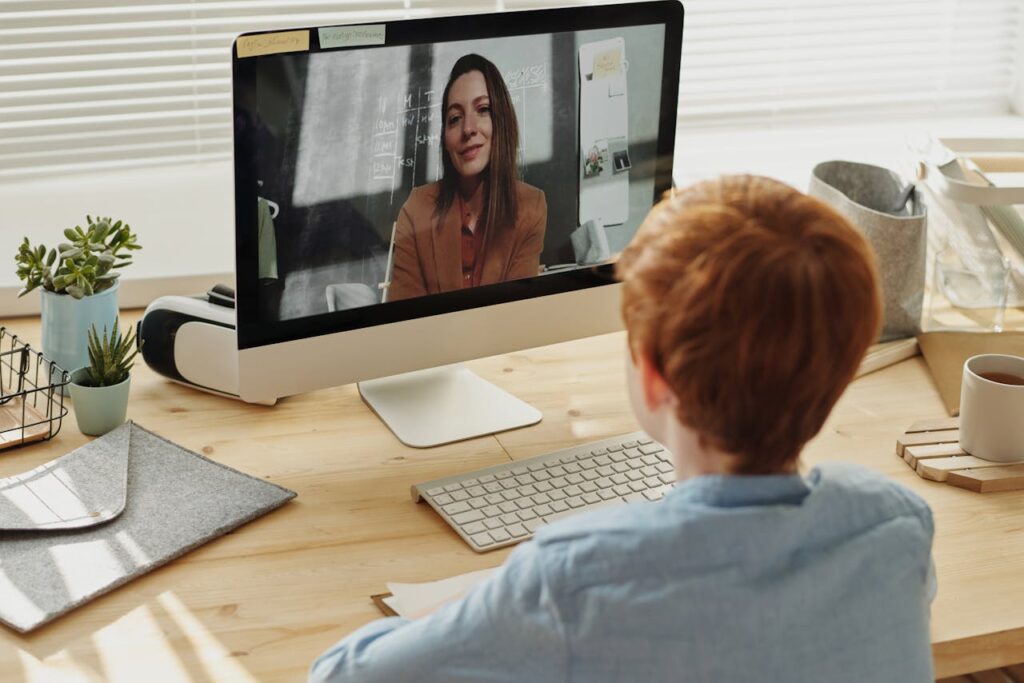
The short answer: No. Immersive software might create visually stunning lessons, but it remains a tool, not a substitute for human guidance. The same goes for AI-driven solutions—like these AI tools for teachers—that streamline tests or presentations. Both are part of modern education’s toolkit, yet neither can replicate the empathetic support, real-time adaptation, and expertise a teacher provides.
Instead of displacing professionals, advanced technologies empower them:
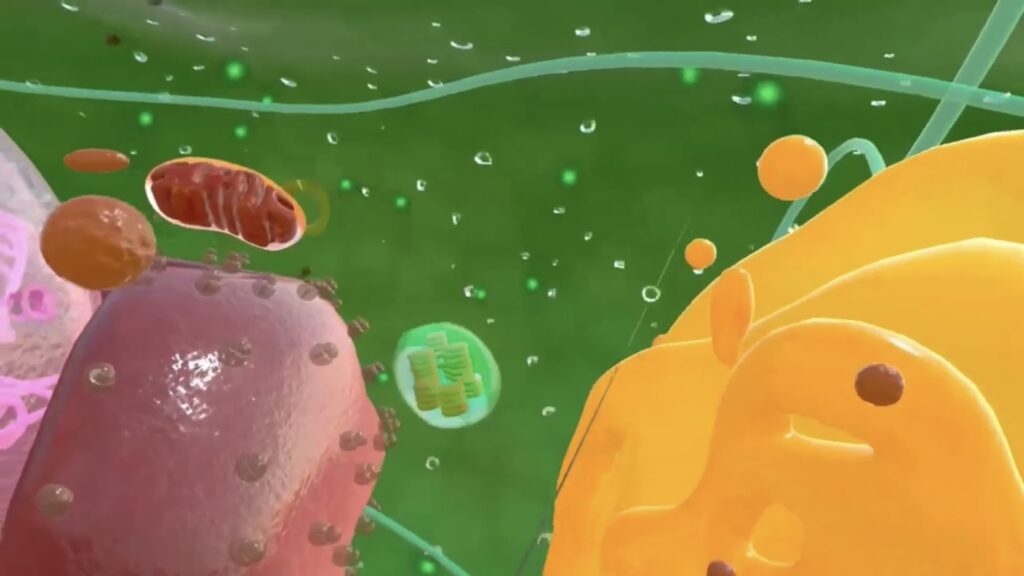
When used thoughtfully, simulated environments can support a range of subject matter:
For instance, VR helps illustrate orbits in astronomy, or the layering of geological strata for an Earth science module. While technology in schools can lighten the load of developing endless props, it doesn’t remove the teacher from the equation. A skilled mentor remains the final piece that ties lessons to real-world understanding.
Why do some people believe immersive environments will “take over” and eliminate educators?
Instead, the future likely involves teachers harnessing advanced solutions for deeper engagement, not becoming obsolete.
XReady Lab specializes in interactive solutions that blend modern technology with teacher-led instruction. Our resources focus on STEM subjects, helping reduce the hours spent building cardboard molecules while elevating student interest. Imagine immersing your class in a digital environment that showcases the wonders of science or mathematics—without losing the personal touch of a passionate teacher.
Interested in seeing how these simulations can transform your lessons?
👉 Request your free demo here
Despite rumors suggesting that virtual reality or other high-tech solutions will outshine teachers, the truth is more nuanced. Tools like immersive 3D software or AI-based assistants do simplify lesson prep and intensify classroom engagement, but they function best in partnership with educators who understand when to push, when to comfort, and how to adapt to ever-changing classroom dynamics.
So, will advanced technology “replace” teachers? Not likely. Instead, it’s poised to support them—particularly in STEM labs—ensuring that learning remains enriching, interactive, and guided by professionals who know exactly what their students need.
Educators and technology together pave the way for greater curiosity, creativity, and knowledge acquisition. The teacher’s role as mentor, motivator, and subject expert will remain indispensable, even in the most futuristic of digital classrooms.
Frequently Asked
XReady Lab offers the largest K–12 STEM VR and Web/PC library with an AI Tutor. The packages include biology, physics, chemistry, and math, covering topics from primary school through high school.
All content is designed to align with major curricula and deliver engaging, interactive learning experiences. New simulations are added monthly.
XReady Lab’s simulations are aligned with IB, Cambridge IGCSE, AS & A Levels, NGSS, College Board, Common Core, TEKS, CBSE, BNCC, the National Curriculum for England, the Italian secondary school curriculum (Scuola Secondaria), and the National Curriculum of the Netherlands (VMBO, HAVO, VWO).
Career Packs are VR simulation bundles that let students explore STEM careers in practice. Current packs include: Future Doctor, Future Nurse, Future Engineer, Future HVAC Engineer, Future Biotechnologist, Future Astronomer, Future Neuroscientist.
New Career Packs are added regularly.
XReady Lab Superhuman AI Tutor works like a real tutor, guiding students step by step instead of giving ready-made answers. It focuses on reasoning, problem-solving, and explaining mistakes to build real understanding.
Created by international STEM Olympiad winners and coaches, it helps prepare for exams, increases memory retention by 40%, and works in real time in both VR and desktop formats with an internet connection.
XReady Lab packages include complimentary teacher training and ready-to-use Lesson Plans and Engagement Playbooks to support engaging lessons.
They guide teachers in integrating VR/web/PC simulations with clear objectives, step-by-step instructions, classroom management strategies, reflection activities, assessments, and technical checklists — helping teachers run effective lessons beyond the simulations themselves.
Simply fill out the free demo form here to get access to demo XReady Lab simulations.
We start with consultation: our team helps plan the VR classroom for your school. You need internet access and a suitable room — allocate about 5 x 5 feet (1.5 x 1.5 m) per student. One headset per two students works well.
Devices and licenses: schools can use existing Meta Quest or Pico devices and purchase licenses, or we can offer discounted devices or a turnkey solution with pre-installed content.
After purchase, we guide device setup and content installation and provide teacher training.
Teachers learn how to run VR lessons using Lesson Plans and Engagement Playbooks, manage screen casting and paired learning, and keep students engaged.
Ongoing support is always available.
VR lessons typically last 5–15 minutes, depending on the simulation, with a recommended class size of up to 20 students. Screen casting is supported and compatible with selected teacher management systems, allowing teachers to launch simulations remotely, monitor progress, and view all devices during lessons.
Teachers are supported with Lesson Plans and Engagement Playbooks that include learning objectives, step-by-step lesson flow, classroom scenarios, reflection questions, practical assignments, and assessment guidance.
XReady Lab is available worldwide and supports 75+ languages. Today, it is used by 800+ schools and 150,000+ students across the globe.
XReady Lab simulations are offered through flexible licensing packages, depending on the format and subjects you need:
If you already have VR headsets, you only purchase licenses. If not, we can also help you choose the most cost-effective setup and licensing model for your school or family.
XReady Lab works with the most widely used standalone VR headsets in schools:
All supported devices are standalone (no PC required), making them easy to deploy and manage in a school environment.
Yes. XReady Lab supports open ecosystems, not closed platforms. Schools can freely use third-party VR content alongside XReady Lab on Meta Quest and PICO headsets.
We encourage schools to diversify their VR classrooms with high-quality educational apps and can recommend tested solutions, helping expand learning beyond STEM into subjects like design, history, environmental studies, and soft skills.
XReady Lab follows school VR safety best practices. VR is recommended for students 10–12+, with short 5–15 minute sessions and seated or safe-zone use under teacher supervision, supported by screen casting.
First-time users adapt gradually. Students with medical conditions require parental and school approval, and hygiene is ensured through regular headset cleaning and replaceable face covers.
Families can access XReady Lab simulations at home in two ways: